Introduction to CNC Lathe Machines
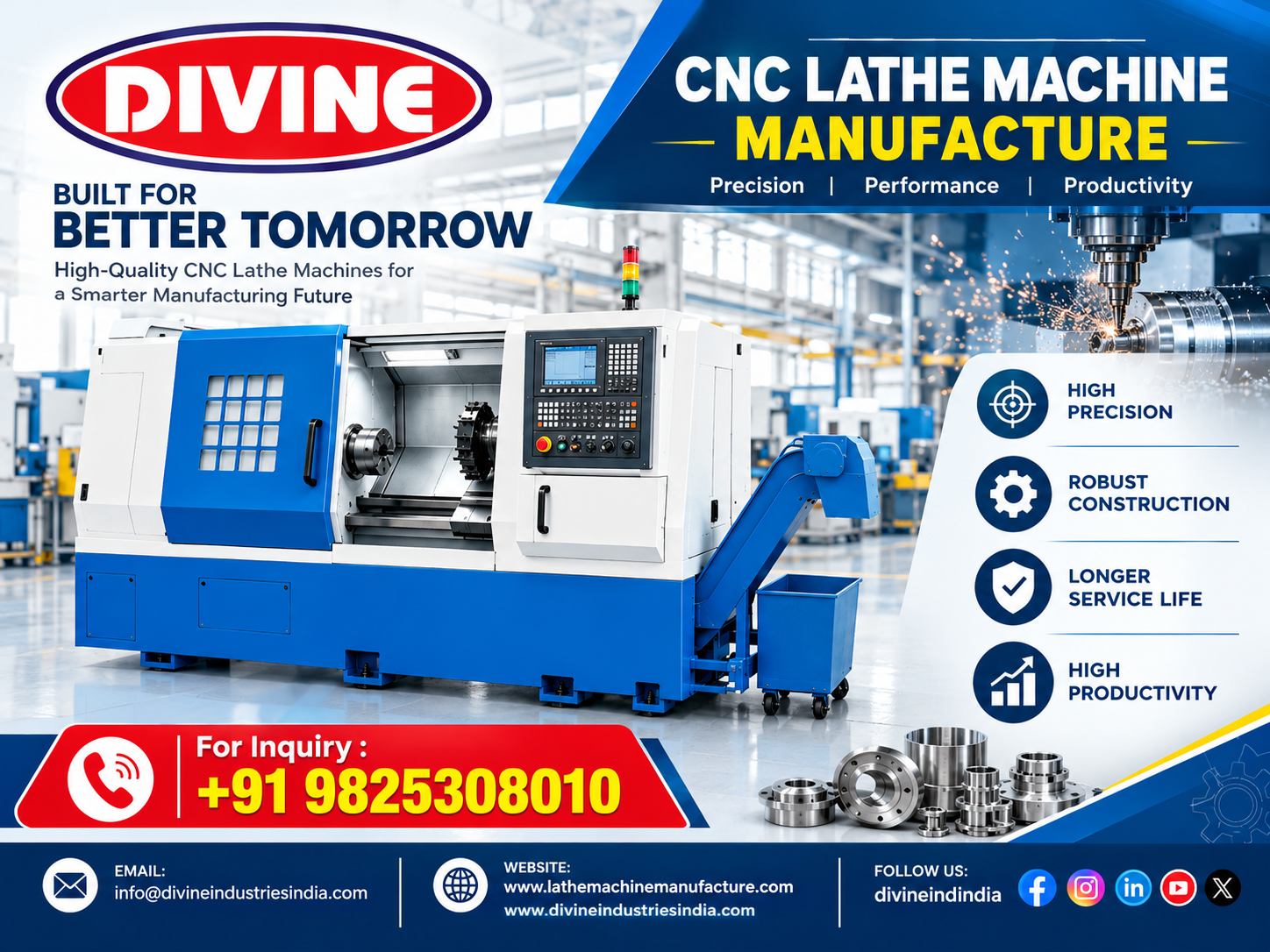
In modern manufacturing, precision, productivity, and consistent quality are essential for business growth. A CNC lathe machine is an advanced machine tool designed to produce accurate cylindrical components through computer-controlled machining operations. It is widely used in automotive manufacturing, aerospace, engineering, industrial equipment, and metalworking industries.
Unlike conventional lathes, CNC lathe machines use programmed instructions to control cutting tools, spindle speed, feed rate, and machining movements. This automation helps manufacturers produce complex components with improved accuracy, repeatability, and efficiency.
Whether you manufacture shafts, bushings, threaded components, pins, or precision metal parts, choosing the right CNC lathe machine can improve production performance and help reduce machining errors.
What Is a CNC Lathe Machine?
A CNC lathe machine is a computer numerical control machine that rotates a workpiece while a cutting tool removes material to achieve the required shape, size, and surface finish.
The machine operates using programmed instructions, commonly written in G-code and M-code, depending on the control system and application. Once the program and setup are verified, the machine can perform machining operations with consistent tool movements and repeatable results.
CNC turning machines can process materials such as mild steel, stainless steel, aluminium, brass, and certain engineering plastics, depending on the machine configuration and tooling.
How Does a CNC Lathe Machine Work?
The CNC turning process involves several important steps:
- Workpiece loading: The raw material is secured in a chuck or suitable workholding device.
- Program setup: The operator selects or prepares the machining program based on the component drawing.
- Tool selection: Suitable cutting tools and inserts are selected according to the material and operation.
- Machining process: The spindle rotates the workpiece while the cutting tool moves along programmed axes to remove material.
- Component inspection: The finished part is checked against dimensional tolerances and surface-finish requirements.
- Production cycle: After the setup and process are validated, the machine can repeat the operation for additional components.
The actual cycle time and accuracy depend on the machine, workpiece material, tooling, programming, workholding, and operating conditions.
Key Features of a CNC Lathe Machine
Modern CNC lathe machines offer a range of features to support precision manufacturing.
1. High Precision and Repeatability
Computer-controlled movements help maintain consistent component dimensions across production batches when the machine is properly set up and maintained.
2. Automated Machining
Programmed operations reduce the need for manual tool movements and help standardize repetitive production tasks.
3. Multiple Turning Operations
Depending on the configuration, a CNC lathe can perform facing, straight turning, taper turning, grooving, threading, boring, and drilling operations.
4. Improved Productivity
Optimized toolpaths, appropriate cutting parameters, and efficient setups can reduce cycle times and improve machine utilization.
5. Flexible Manufacturing
Programs and tooling can be changed to manufacture different components, making CNC turning useful for both repeat production and selected small-batch jobs.
6. Advanced Control Systems
Depending on the model, machines may include conversational programming, tool offsets, tool-life management, automatic tool changers, bar feeders, and production-monitoring features.
Types of CNC Lathe Machines
Selecting the right machine depends on the component design, production volume, material, and required machining operations.
Flat-bed CNC lathe: Often selected for particular job-shop applications, larger workpieces, and setups that benefit from a flat-bed configuration.
Slant-bed CNC lathe: Commonly used for production turning because its design can support chip evacuation, rigidity, and efficient operation.
Two-axis CNC turning machine: Suitable for many standard turning applications involving longitudinal and cross-axis movements.
CNC turning centre: May include additional features such as powered tooling, a second spindle, or a Y-axis to perform more operations in a single setup.
Swiss-type CNC lathe: Designed for suitable small-diameter, high-precision components, particularly where bar-fed production and part support are important.
The best option is determined by machining requirements rather than machine type alone.
Applications of CNC Lathe Machines
CNC lathe machines are used across a wide range of industrial sectors.
- Automotive industry: Shafts, pins, bushes, spacers, and selected transmission components.
- Aerospace manufacturing: Precision-turned components produced to demanding specifications.
- General engineering: Machine parts, threaded components, sleeves, and cylindrical fittings.
- Oil and gas equipment: Selected connectors, fittings, and turned components designed for specific service requirements.
- Electrical and electronics manufacturing: Metal housings, connectors, and precision pins.
- Medical equipment manufacturing: Suitable precision components produced under the applicable quality and regulatory requirements.
- Industrial machinery: Rollers, shafts, couplings, and custom-engineered parts.
Component suitability depends on the machine's capacity, material compatibility, required tolerances, and applicable industry standards.
Benefits of Using a CNC Lathe Machine
Investing in a CNC lathe machine can offer several advantages when the equipment matches the production requirement.
Consistent component quality: Programmed machining helps maintain repeatability across production runs.
Reduced manual intervention: Automation reduces repetitive manual operations, although skilled operators remain essential for setup, inspection, and process control.
Better production planning: Predictable machining cycles can support scheduling and capacity planning.
Material efficiency: Appropriate tooling and cutting strategies can reduce unnecessary material removal and scrap.
Complex component manufacturing: Advanced configurations can produce features that may be difficult or time-consuming on conventional machines.
Scalable production: Suitable automation and process optimization can support higher output as demand increases.
Actual savings depend on utilization, tooling costs, maintenance, programming time, labour, and the complexity of the component.
How to Choose the Right CNC Lathe Machine
Before purchasing a CNC lathe machine, manufacturers should evaluate the following factors:
- Component size: Check maximum turning diameter, turning length, chuck size, and bar capacity.
- Material type: Consider the hardness, machinability, and cutting requirements of the workpiece material.
- Required accuracy: Define dimensional tolerances, surface-finish expectations, and inspection methods.
- Production volume: Determine whether the machine is intended for job work, small batches, or continuous production.
- Machine configuration: Evaluate the number of axes, spindle arrangement, turret capacity, and powered-tool requirements.
- Control system: Consider programming requirements, operator familiarity, service support, and compatibility with existing processes.
- After-sales service: Review installation, training, spare parts availability, and maintenance support.
- Total ownership cost: Compare the machine price alongside tooling, energy consumption, maintenance, and expected utilization.
A detailed review of actual component drawings and production targets helps identify the most suitable CNC turning solution.
CNC Lathe Machine for Indian Manufacturing Industries
India's manufacturing sector includes automotive suppliers, engineering workshops, component manufacturers, industrial machinery producers, and precision machining businesses. These companies may use CNC lathe machines to improve production consistency and manufacture components for domestic and export markets.
Manufacturers in industrial regions such as Ahmedabad, Rajkot, Pune, Coimbatore, Bengaluru, and Chennai may evaluate CNC turning solutions based on their specific production needs.
For businesses searching for a CNC lathe machine in India, it is important to compare machine specifications, technical support, delivery terms, installation services, and suitability for the intended component. Local service availability can be particularly important for minimizing downtime.
Buyers should request a machining demonstration or component trial when practical and confirm the expected performance using their own material and drawings.
CNC Lathe Machine Maintenance Tips
Regular maintenance helps preserve machining performance and equipment reliability.
- Inspect and clean the chuck, workholding devices, and machine enclosure.
- Follow the manufacturer's lubrication and coolant-maintenance schedules.
- Check cutting tools and replace worn inserts when necessary.
- Monitor spindle condition, vibration, unusual noise, and temperature.
- Inspect critical dimensions and compensate for tool wear when appropriate.
- Keep the machine's electrical cabinet and cooling systems maintained according to manufacturer instructions.
- Back up approved CNC programs and important machine parameters.
- Schedule preventive maintenance and operator training.
Maintenance procedures should always follow the machine manufacturer's recommendations and applicable safety requirements.
Frequently Asked Questions About CNC Lathe Machines
What is a CNC lathe machine used for?
A CNC lathe machine is used to manufacture precision components by rotating a workpiece and removing material with a computer-controlled cutting tool. Common operations include turning, facing, threading, grooving, and boring.
What is the difference between a CNC lathe and a conventional lathe?
A conventional lathe generally relies more on manual control, while a CNC lathe follows programmed machining instructions. CNC machines are especially useful for repeatable production, complex tool movements, and consistent component manufacturing.
Which materials can a CNC lathe machine process?
Depending on machine capacity, tooling, and cutting parameters, CNC lathes can process materials such as aluminium, brass, mild steel, stainless steel, and selected engineering plastics.
How much does a CNC lathe machine cost in India?
The price varies according to machine size, configuration, control system, spindle capacity, tooling, automation, and manufacturer. Buyers should request a quotation based on their required specifications rather than relying on a single general price.
Is a CNC lathe machine suitable for small manufacturing businesses?
Yes. A CNC lathe can suit small workshops and job shops when the expected workload, component requirements, operating costs, and available technical skills justify the investment.
How do I choose a CNC lathe machine manufacturer?
Compare technical specifications, machining capability, product quality, installation and training services, warranty terms, spare-parts support, and the manufacturer's ability to meet your component requirements.
What is the difference between a CNC lathe and a CNC turning centre?
A CNC lathe primarily performs turning operations, while a CNC turning centre may provide additional capabilities such as powered tooling, multiple spindles, or extra axes. The exact differences depend on the model.
Conclusion
A CNC lathe machine is an important manufacturing solution for businesses seeking precision, repeatability, and efficient metalworking operations. From basic cylindrical components to advanced precision-turned parts, the right CNC turning system can support a wide range of industrial applications.
Before investing, evaluate the workpiece dimensions, materials, tolerances, production volume, machine configuration, and after-sales support. A machine selected around real manufacturing requirements is more likely to deliver long-term operational value.
For manufacturers planning to upgrade their machining capabilities, understanding CNC lathe machine specifications is the first step toward making a practical and informed purchasing decision.
Keywords