Conventional Lathe Machine: A Practical Guide to Precision, Performance, and Industrial Use
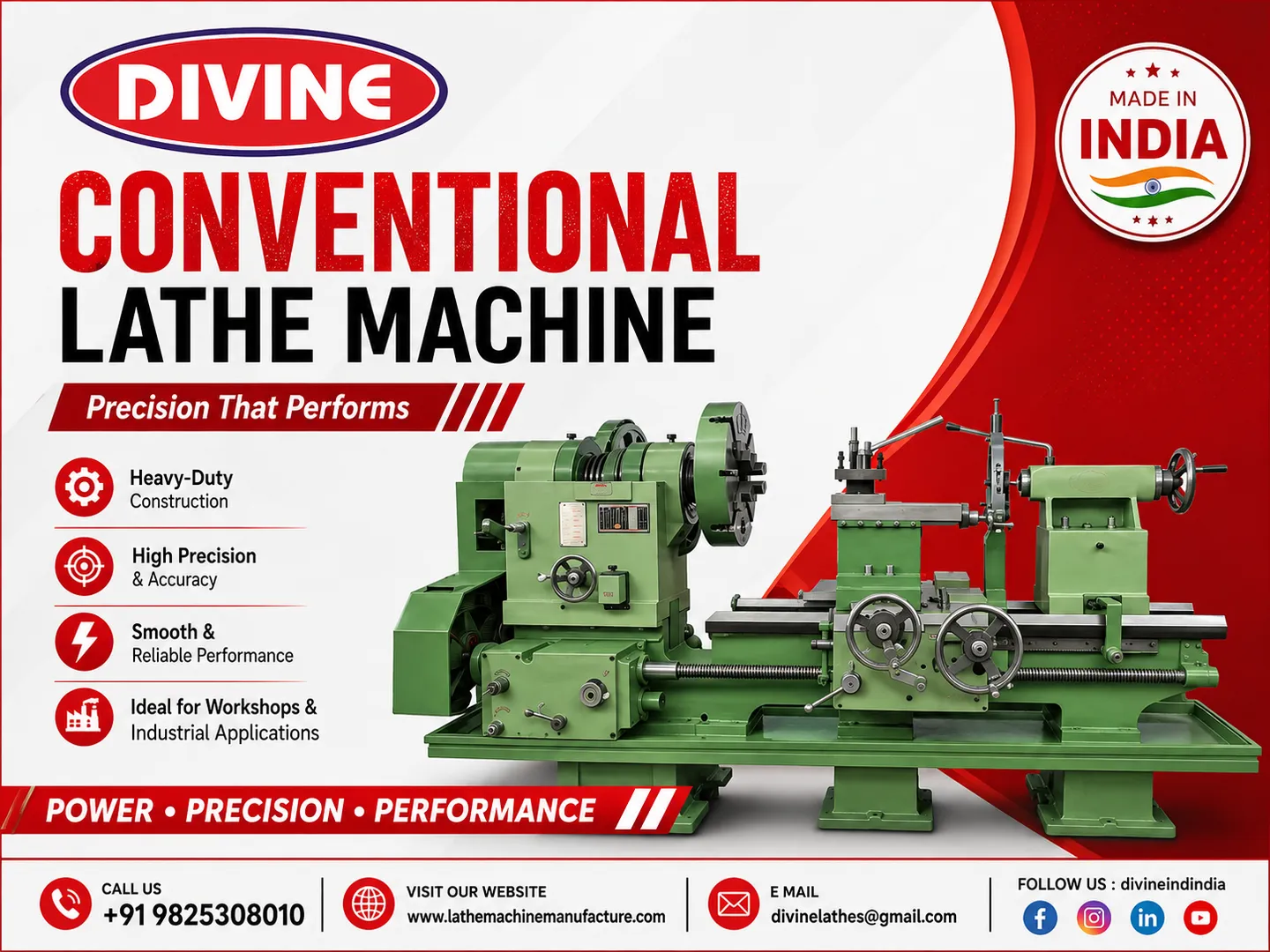
A conventional lathe machine is one of the most widely used machines in metalworking and general engineering workshops. It is designed to rotate a workpiece while a cutting tool removes material to produce the required shape, diameter, length, thread, or surface finish.
Unlike CNC machines, conventional lathes are operated manually, allowing skilled machinists to control cutting operations directly. This makes them particularly useful for repair work, job-work applications, maintenance departments, educational workshops, and manufacturing environments where flexibility is important.
What Is a Conventional Lathe Machine?
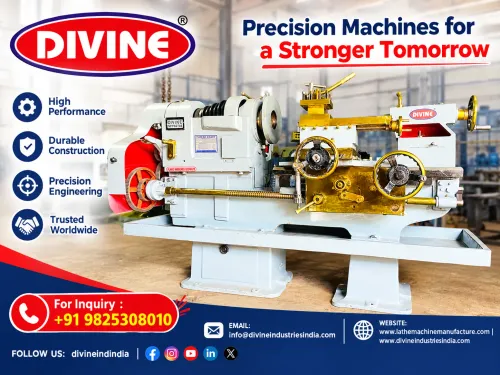
A conventional lathe machine is a mechanical machining tool used primarily for turning cylindrical components. The workpiece is securely held in a chuck or between centers and rotated by the spindle. A cutting tool mounted on the tool post then moves against the rotating material to perform the machining operation.
Depending on the job, operators can carry out different processes such as:
- External and internal turning
- Facing
- Thread cutting
- Grooving
- Knurling
- Taper turning
- Boring
- Chamfering
- Parting
The machine can work with materials such as mild steel, stainless steel, aluminium, brass, cast iron, and various engineering alloys, provided the machine and tooling are suitable for the application.
Main Parts of a Conventional Lathe
Understanding the major components helps users operate and maintain the machine effectively.
Headstock: Houses the main spindle, speed-changing mechanism, and related drive components. It provides rotational movement to the workpiece.
Tailstock: Supports longer jobs and can also hold tools such as drills and reamers.
Carriage: Guides the cutting tool along the bed and supports controlled machining movements.
Tool Post: Holds the cutting tool securely and allows the operator to position it according to the machining requirement.
Lathe Bed: Forms the rigid foundation of the machine. Its strength and alignment are important for maintaining machining accuracy.
Lead Screw and Feed Mechanism: Help provide controlled tool movement for operations such as threading and automatic feed.
Why Choose a Conventional Lathe Machine?
One of the biggest advantages of a conventional lathe is its versatility. A trained operator can adjust the cutting speed, feed, depth of cut, and tool position according to the material and job requirements.
Other important benefits include:
- Simple and practical operation
- Suitable for maintenance and repair work
- Flexible for low-volume production
- Easy setup for many machining jobs
- Long service potential with proper maintenance
- Useful for custom and job-work components
- Lower dependence on complex programming compared with CNC equipment
For workshops handling different types of components every day, this flexibility can make a conventional lathe a valuable production asset.
Applications of Conventional Lathe Machines
Conventional lathes are used across many engineering sectors. They are commonly found in fabrication workshops, automobile repair facilities, machine manufacturing units, maintenance departments, educational institutions, and general job-work shops.
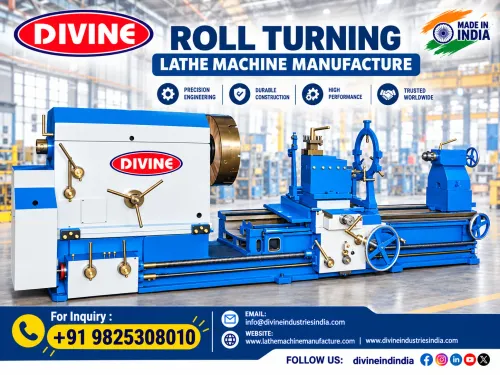
Typical applications include manufacturing and repairing shafts, bushes, pins, spacers, sleeves, threaded components, rollers, and other cylindrical parts.
The right machine specification should be selected according to the size and weight of the workpiece, required machining operations, desired accuracy, spindle capacity, motor power, and production requirements.
How to Select the Right Conventional Lathe
Before purchasing a conventional lathe machine, buyers should evaluate the machine according to their actual workload rather than choosing only by price.
Important factors include swing over bed, distance between centers, spindle bore, spindle speed range, motor capacity, bed construction, chuck size, feed options, and overall machine rigidity.
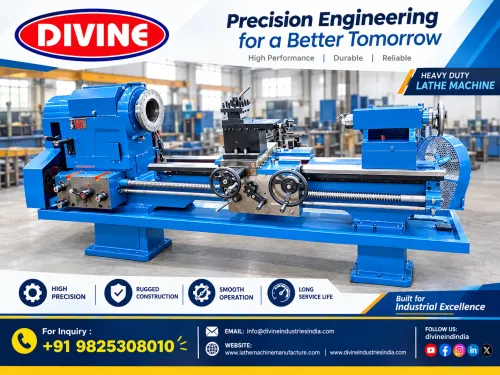
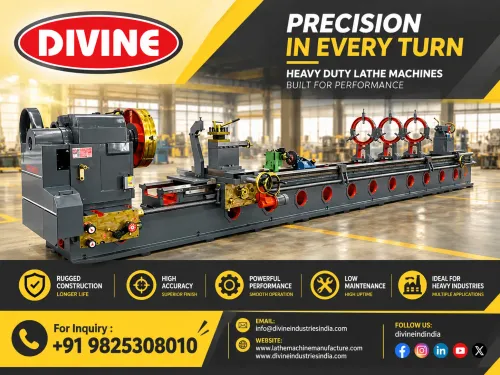
For heavy-duty machining, a robust bed and rigid construction can help reduce vibration and support consistent performance. For general workshop use, a versatile machine with practical speed and feed settings may be more suitable.
Maintenance Tips for Better Machine Life
Regular maintenance plays an important role in keeping a lathe reliable. Operators should clean chips and metal particles after machining, lubricate moving parts according to manufacturer recommendations, inspect belts and drive components, and check the condition of the chuck and tooling.
It is also important to maintain proper alignment and avoid using cutting tools that are damaged or unsuitable for the material. Good housekeeping around the machine improves both machine performance and workplace safety.
Conventional Lathe Machine for Modern Workshops
Even with the growth of CNC technology, conventional lathe machines continue to have an important role in engineering and manufacturing. Their straightforward operation, versatility, and ability to handle customized machining work make them practical for many workshops.
A well-built conventional lathe machine can be a dependable solution for turning, facing, threading, boring, and other machining requirements. Selecting the correct specifications and maintaining the equipment properly can help workshops achieve reliable results over many years.
Conclusion
A conventional lathe is more than a basic turning machine—it is a versatile piece of workshop equipment capable of handling a wide range of machining tasks. From repairing individual components to producing small batches of precision parts, it remains a useful choice for many industrial applications.
When selecting a machine, focus on construction quality, machining capacity, accuracy, ease of operation, service support, and long-term reliability. A machine matched correctly to your production requirements can improve workshop productivity while providing dependable machining performance.
Keywords