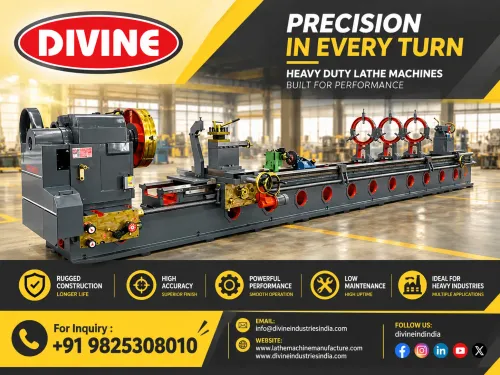
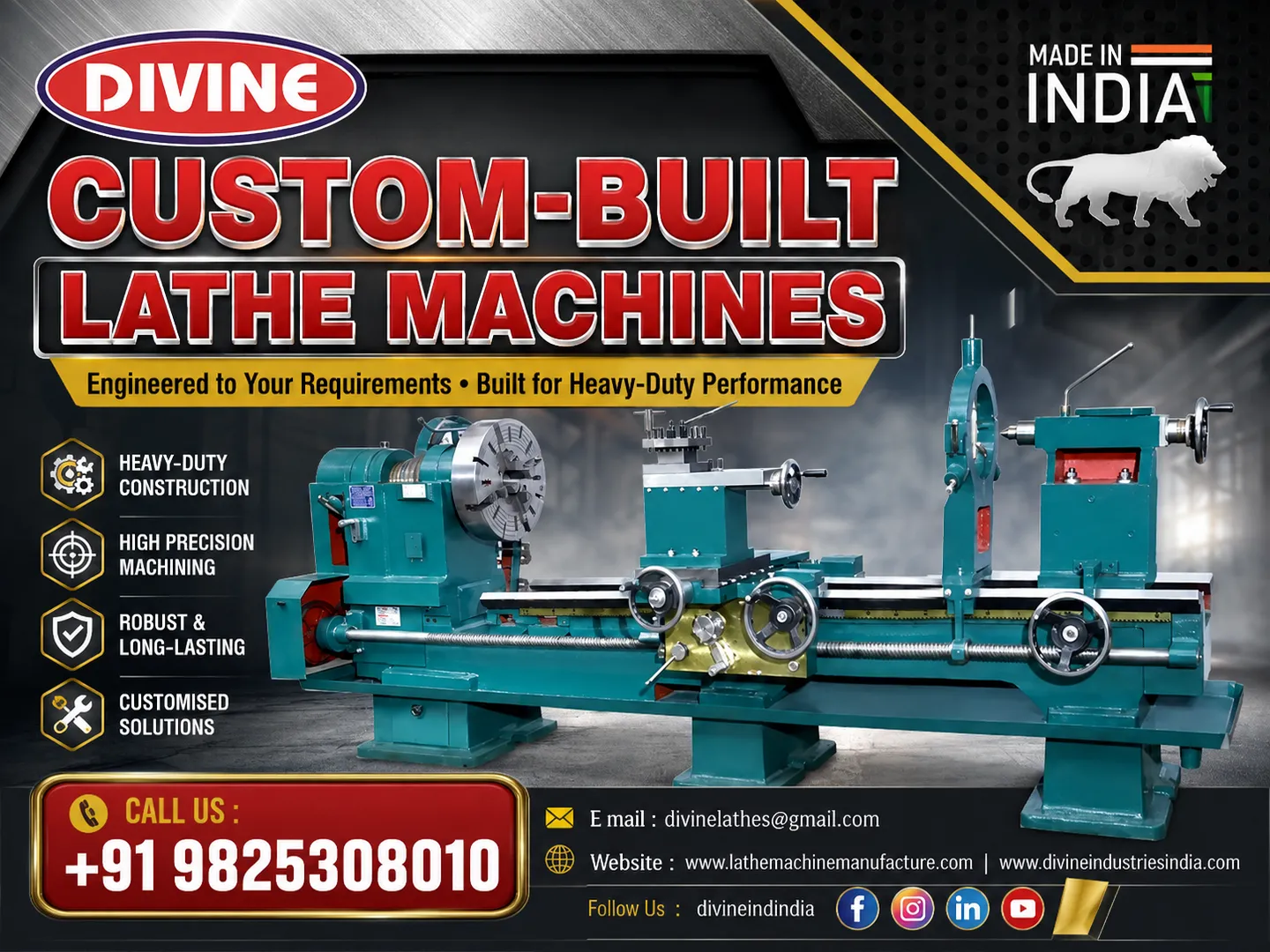
Custom Lathe Machine Manufacturer: Precision-Built Solutions for Specialized Machining
A custom lathe machine is designed for machining requirements that cannot always be handled efficiently by a standard, off-the-shelf lathe. Industries working with unusual component sizes, specific machining operations, heavy workpieces, or specialized production requirements often need a machine configured around their actual application. Choosing an experienced custom lathe machine manufacturer helps ensure that the machine is engineered with the right combination of strength, accuracy, capacity, and operating features.
What Is a Custom Lathe Machine?
A custom lathe machine is manufactured according to the customer's machining requirements rather than following only a standard machine configuration. Depending on the application, important parameters such as bed length, centre height, spindle bore, motor capacity, chuck size, threading range, gearbox arrangement, and other machine features can be selected or modified.
This approach is particularly useful when manufacturers need to machine long shafts, large-diameter components, heavy industrial parts, or components requiring specific turning and threading operations.
Why Choose a Custom Lathe Machine?
Every manufacturing unit has different production conditions. A machine suitable for one workshop may not provide the required capacity or flexibility for another. Customization allows the lathe to be developed around the intended job.
Key advantages include:
- Machine dimensions matched to the workpiece
- Suitable centre height and swing capacity
- Spindle bore selected according to component requirements
- Heavy-duty construction for demanding applications
- Customized chuck and tooling arrangements
- Appropriate motor and drive configuration
- Threading and feed options suited to production needs
- Better compatibility with existing workshop processes
- Improved productivity for specialized machining jobs
Custom Lathe Machine Manufacturing Process
Reliable custom machine manufacturing begins with understanding the application. The manufacturer evaluates factors such as component dimensions, material, weight, machining operations, production volume, required accuracy, and available workshop space.
Based on these requirements, the machine can be engineered with an appropriate bed structure, headstock, spindle system, carriage assembly, tailstock, drive mechanism, and control arrangement. Manufacturing and assembly are then carried out with attention to alignment and mechanical stability.
Before delivery, important machine functions should be inspected and tested to help ensure dependable performance during actual production.
Applications of Custom Lathe Machines
Custom-built lathes can be useful across a wide range of industrial sectors. They are commonly considered for applications involving:
- Long shafts and rollers
- Heavy engineering components
- Industrial cylinders
- Flanges and large-diameter parts
- Pump and valve components
- Automotive and machinery components
- Fabrication and repair work
- General engineering production
- Maintenance workshops
- Specialized turning and threading operations
The final configuration depends on the component and machining process rather than simply selecting a machine based on size.
Important Specifications to Consider
When purchasing a custom lathe, buyers should discuss the complete machining requirement with the manufacturer. Some of the most important specifications include centre height, swing over bed, distance between centres, spindle bore, spindle speed range, bed length, chuck capacity, motor power, feed range, and threading capability.
For oversized or heavy components, bed rigidity and overall machine construction become particularly important. For precision work, spindle alignment, guideway quality, and machine stability deserve close attention.
Selecting the Right Custom Lathe Machine Manufacturer
A capable manufacturer should be able to understand the machining application and translate it into a practical machine design. Buyers should consider manufacturing experience, engineering capability, machine construction quality, customization options, testing procedures, after-sales support, and availability of spare parts.
Clear communication is also important. Providing accurate information about the component size, material, weight, machining operation, production requirements, and desired specifications allows the manufacturer to recommend a more suitable configuration.
Custom Engineering for Long-Term Performance
Customization should not mean adding unnecessary features. The objective is to create a machine that provides the required performance while remaining practical to operate and maintain. A well-engineered custom lathe can offer a useful balance between machining capacity, rigidity, productivity, and operational convenience.
For companies handling specialized or non-standard components, working directly with a custom lathe machine manufacturer can be a more effective approach than adapting a conventional machine beyond its intended capacity.
Conclusion
A custom lathe machine provides manufacturers with the flexibility to build machining equipment around specific industrial requirements. From machine dimensions and spindle capacity to drive systems and application-specific features, the configuration can be developed according to the workpiece and production process.
For industries seeking dependable equipment for specialized turning applications, selecting an experienced custom lathe machine manufacturer is an important step toward achieving consistent machining performance, practical operation, and long-term value.
Keywords