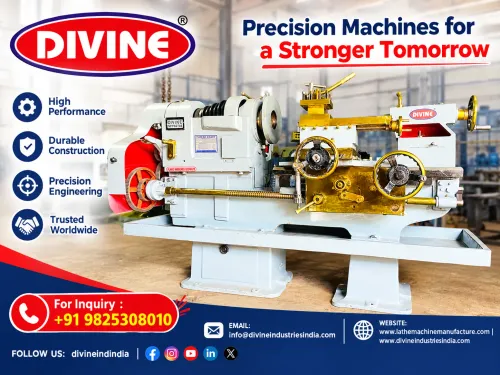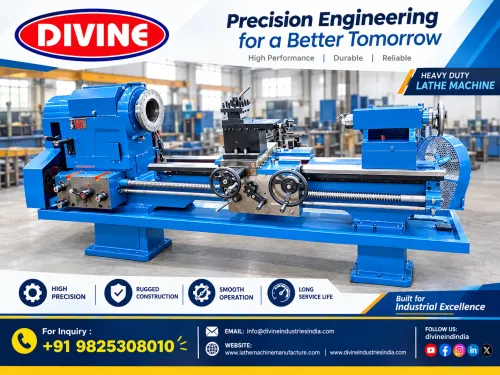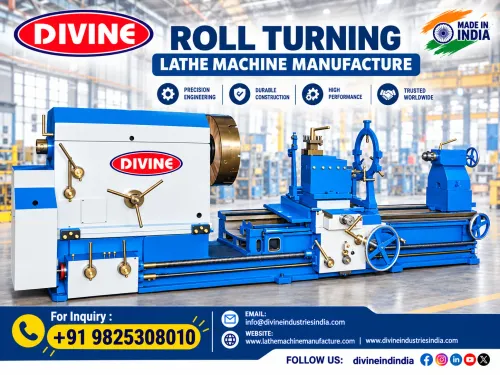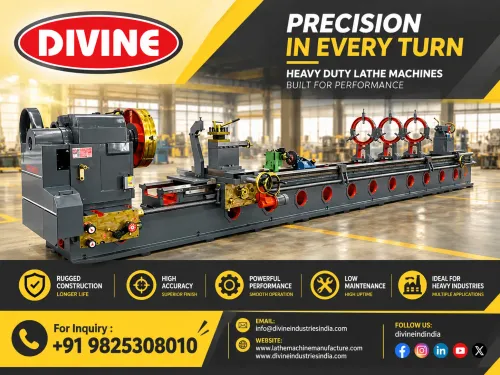
Details and Benefits of a Heavy Duty Lathe Machine
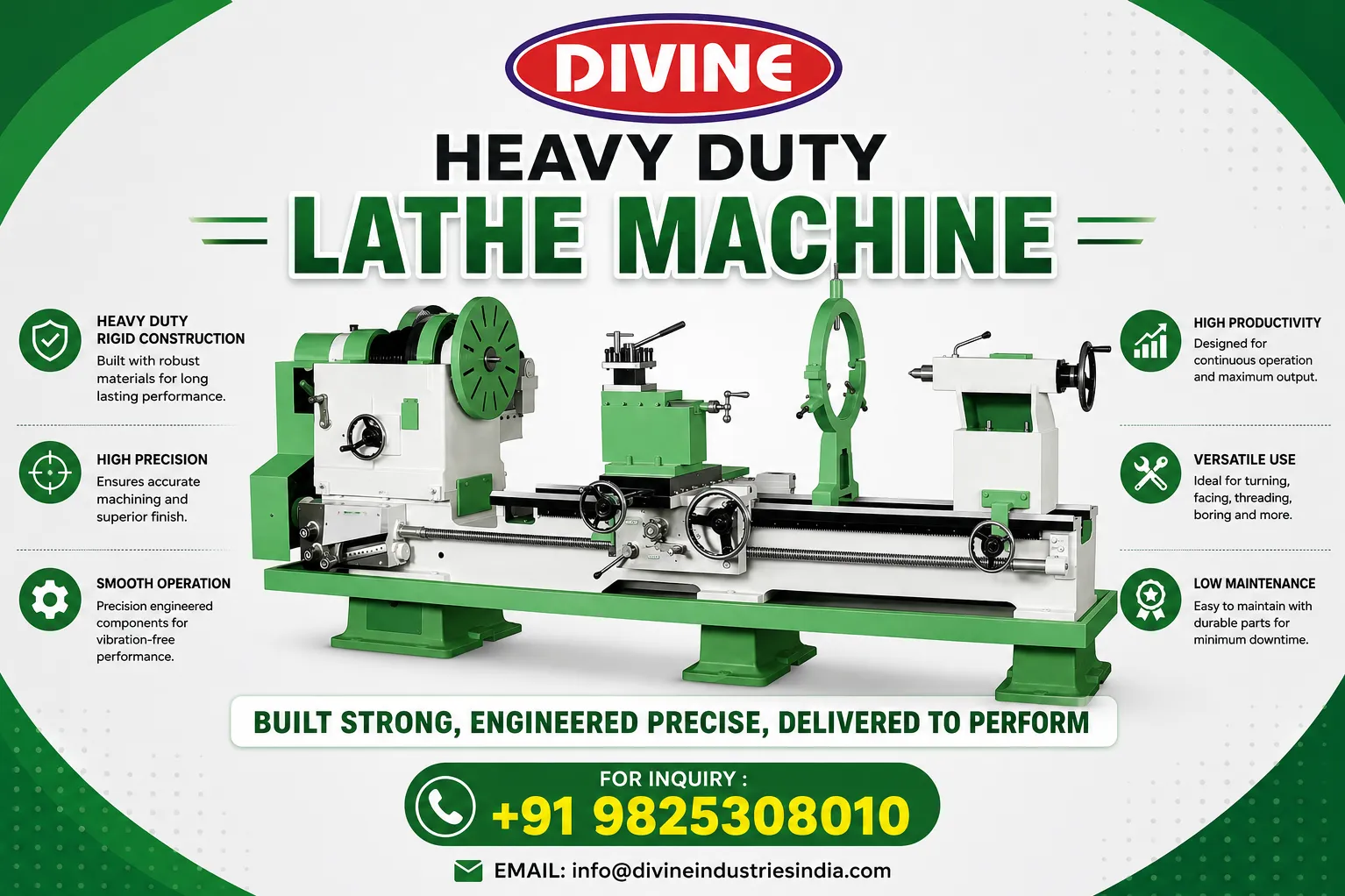
A heavy-duty lathe machine is an essential piece of equipment for industries that require precision machining, high production capacity, and the ability to handle large and heavy workpieces. Designed for demanding industrial applications, these machines are commonly used in engineering, manufacturing, fabrication, power generation, automotive, and other heavy industries.
Unlike standard lathes, heavy-duty models are built with a stronger structure, powerful drive systems, and durable components to perform machining operations continuously under challenging working conditions.
What Is a Heavy Duty Lathe Machine?
A heavy-duty lathe machine is an industrial machine tool used to rotate a workpiece while a cutting tool removes material from its surface. Depending on the application, it can perform operations such as turning, facing, threading, boring, drilling, and tapering.
The machine is generally manufactured with a rigid bed and robust construction to minimize vibration while machining large-diameter or heavy components. This stability helps operators achieve better dimensional accuracy and a consistent surface finish.
Important Details of a Heavy Duty Lathe Machine
When selecting a heavy-duty lathe, several technical and construction features should be considered.
1. Strong Machine Bed
The machine bed is designed to provide maximum rigidity and support. A heavy and properly engineered bed helps reduce vibration and maintains alignment during machining.
2. Powerful Spindle
A high-performance spindle provides the torque required for machining large and tough components. Spindle capacity and speed range can be selected according to the material and type of operation.
3. Robust Headstock
The headstock houses important components such as the spindle and drive mechanism. In heavy-duty machines, it is built to withstand high machining loads and extended operation.
4. Large Workpiece Capacity
These machines are designed to accommodate large and heavy components. The maximum turning diameter, distance between centers, and load capacity are important specifications when choosing a machine.
5. Heavy-Duty Tailstock
A strong tailstock provides additional support for long workpieces. It helps maintain stability and improves machining accuracy during turning and drilling operations.
6. Durable Cutting System
Heavy-duty lathes can be equipped with suitable tool holders and cutting tools for different machining requirements. Proper tooling improves productivity and extends tool life.
7. Reliable Drive System
A powerful motor and reliable transmission system allow the machine to handle high-load machining operations while maintaining stable performance.
Benefits of a Heavy Duty Lathe Machine
High Machining Capacity
One of the biggest advantages is its ability to handle large, heavy, and long components that may not be suitable for conventional machines.
Excellent Stability
The rigid construction minimizes vibration during machining. Better stability can result in improved dimensional accuracy and surface quality.
Increased Productivity
A powerful drive system and efficient machining capabilities allow operators to remove material effectively and complete demanding jobs in less time.
Versatile Applications
Heavy-duty lathes can perform several machining operations on different types of components. This makes them useful across a wide range of industrial applications.
Suitable for Continuous Operation
Industrial manufacturing environments often require machines to operate for long periods. Heavy-duty construction makes these lathes suitable for demanding production schedules when properly maintained.
Improved Accuracy
A rigid machine structure, stable spindle, and properly aligned components help achieve consistent dimensions and repeatable machining results.
Long Service Life
Heavy-duty machines are manufactured using robust components designed to withstand demanding working conditions. Regular maintenance and correct operation can further increase machine life.
Cost-Effective Production
Although the initial investment can be higher than that of a standard lathe, the machine's capacity, durability, productivity, and versatility can make it a valuable long-term investment for heavy machining applications.
Common Applications
Heavy-duty lathe machines are widely used for machining components such as:
- Shafts and axles
- Rollers
- Cylinders
- Flanges
- Bushes
- Large pipes and fittings
- Gear components
- Industrial machine parts
- Power plant components
- Heavy engineering components
They are particularly useful where large dimensions, high material removal, and reliable machining performance are required.
How to Choose the Right Heavy Duty Lathe Machine
Before purchasing a machine, manufacturers should evaluate the type and size of components they intend to machine. Important factors include:
- Maximum turning diameter
- Distance between centers
- Maximum workpiece weight
- Spindle bore and speed
- Motor power
- Machine bed construction
- Available tooling
- Control system
- Required machining accuracy
- Maintenance and service support
Choosing specifications based on actual production requirements can help avoid unnecessary costs while ensuring the machine delivers the required performance.
Maintenance Tips
Regular maintenance is important for keeping a heavy-duty lathe operating efficiently. Operators should inspect and lubricate moving components, maintain proper alignment, clean chips and debris, check electrical and drive components, and monitor cutting tools for wear.
Following the manufacturer's maintenance schedule can help reduce unexpected downtime and maintain machining accuracy.
Conclusion
A heavy-duty lathe machine is a reliable solution for industries that need to machine large and demanding components with precision and efficiency. Its rigid construction, powerful spindle, high load capacity, and versatile machining capabilities make it suitable for a wide range of heavy engineering applications.
For businesses handling large-scale machining work, investing in the right heavy-duty lathe can improve productivity, machining consistency, and long-term operational efficiency. The ideal machine should always be selected according to workpiece dimensions, material, production volume, accuracy requirements, and available shop-floor facilities.
Keywords