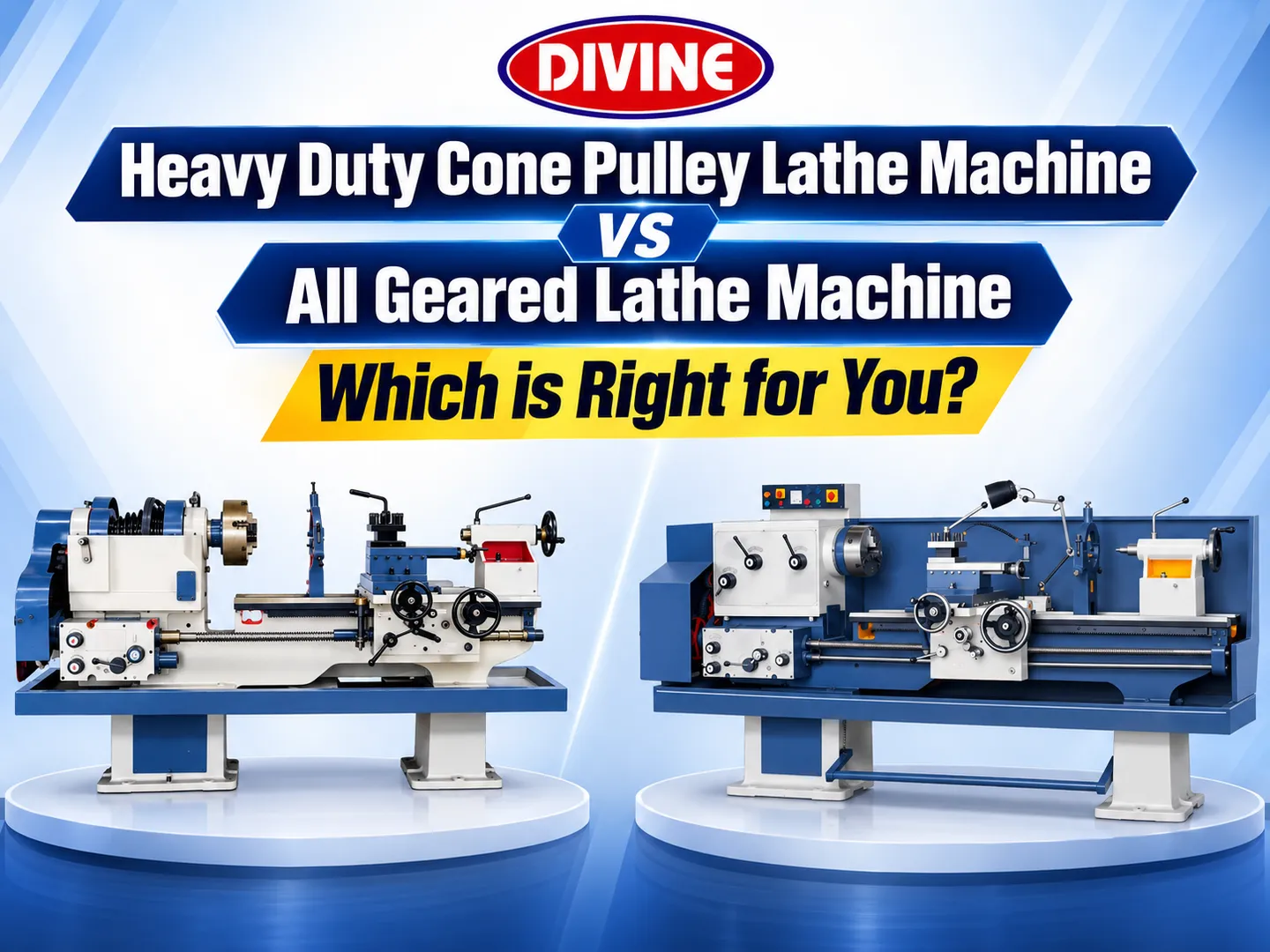
Heavy Duty Cone Pulley Lathe Machine vs All Geared Lathe Machine – Which Is Right for You?
Choosing the right lathe machine is an important decision for any engineering workshop, manufacturing unit, repair shop, or industrial facility. Among the commonly used options, the Heavy Duty Cone Pulley Lathe Machine and All Geared Lathe Machine are two popular choices.
Although both machines are designed for metal turning and machining operations, their drive systems, speed adjustment methods, operating convenience, and ideal applications are different.
So, which one should you choose?
The answer depends on your workload, component size, production requirements, available budget, and the level of speed control you need.
What Is a Heavy Duty Cone Pulley Lathe Machine?
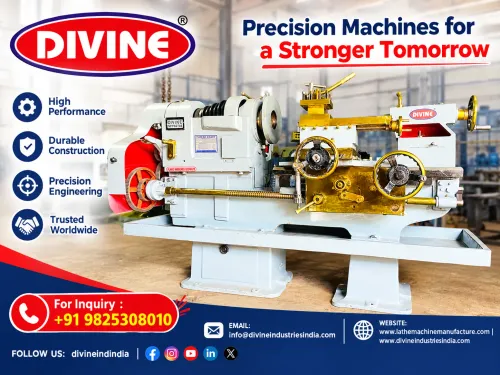
A Heavy Duty Cone Pulley Lathe Machine uses a stepped pulley and belt arrangement to transmit power to the spindle. Different spindle speeds are obtained by shifting the belt between pulley steps.
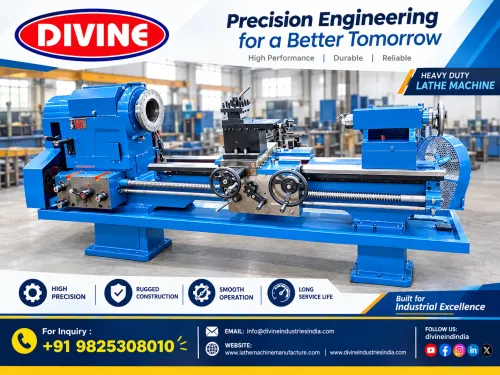
Heavy-duty versions are generally built with a rigid machine bed, strong headstock, robust tailstock, and components designed to withstand demanding machining operations. Some models also incorporate back-gear arrangements or gearboxes to provide additional speed and torque options.
These machines are commonly considered for applications involving large shafts, maintenance work, general engineering, dies, and other heavy components.
Key Features of a Heavy Duty Cone Pulley Lathe
- Strong and rigid machine construction
- Cone pulley and belt-based speed transmission
- Suitable for large and heavy workpieces
- Good torque for heavy cutting applications
- Relatively straightforward mechanical design
- Suitable for general-purpose machining
- Available in different bed lengths and swing capacities
- Can be configured with accessories such as steady rests, faceplates, and taper-turning attachments
The exact specifications vary between manufacturers and models, so buyers should compare spindle speed range, motor power, swing over bed, bed length, spindle bore, and other technical specifications before purchasing.
What Is an All Geared Lathe Machine?
An All Geared Lathe Machine uses a geared headstock to transfer power and provide different spindle speeds. Instead of manually moving a belt across pulley steps for every speed adjustment, the operator selects the required speed using the machine's controls.
This arrangement can make speed selection quicker and more convenient, particularly when machining operations frequently require different spindle speeds. Industrial all-geared machines are available with multiple speed ranges and can be designed for precision as well as heavy machining.
Depending on the model, an all-geared lathe may also offer features such as hardened guideways, multiple feeds, thread-cutting capabilities, and separate controls for forward, reverse, and other operations.
Heavy Duty Cone Pulley vs All Geared Lathe: Main Difference
The biggest difference is the method used to transmit power and change spindle speed.
A cone pulley lathe primarily uses a belt and stepped pulley arrangement, while an all-geared lathe uses gears inside the headstock for speed selection.
Feature
Heavy Duty Cone Pulley Lathe
All Geared Lathe
Drive system
Belt and cone pulley
Geared headstock
Speed selection
Pulley/belt adjustment
Gear selection
Speed-change convenience
More manual
Faster and easier
Heavy cutting
Very suitable on appropriate models
Very suitable
Maintenance
Generally simple mechanical arrangement
Requires attention to gears and lubrication
Operator convenience
Traditional operation
More convenient speed control
Typical use
General engineering and heavy jobs
Production, precision and demanding machining
Initial investment
Can be economical depending on configuration
Usually higher for comparable specifications
Production efficiency
Suitable for varied workshop work
Better suited to frequent speed changes
The actual performance of either machine depends heavily on its design, construction quality, spindle specifications, motor capacity, tooling, and application.
1. Speed Control
Speed control is one of the most noticeable differences.
With a cone pulley machine, the operator changes the belt position to select a different pulley ratio. This is a traditional and mechanically simple approach.
An all-geared lathe allows spindle speeds to be selected through gear controls. This can reduce the time required when different machining operations demand frequent speed changes.
For workshops where speed changes are frequent, an All Geared Lathe Machine can therefore provide greater operating convenience.
2. Heavy Cutting Performance
For heavy-duty machining, machine rigidity is extremely important.
A properly designed heavy-duty cone pulley lathe can handle substantial components and rough machining operations. Heavy-duty models may feature wide beds, robust guideways, substantial castings, and high-torque transmission arrangements.
All-geared machines can also deliver strong torque and stable power transmission, making them suitable for industrial machining applications.
Instead of choosing solely based on the drive type, check the machine's bed rigidity, spindle diameter, spindle bore, motor power, swing capacity, gearbox design, and maximum permissible workpiece weight.
3. Ease of Operation
For operators who regularly change spindle speeds, an all-geared machine can be more convenient because speed selection is performed through levers or controls rather than repositioning the drive belt.
A cone pulley machine has a more traditional operating method. Operators familiar with conventional lathes may find this system easy to understand and maintain.
Therefore:
For quicker speed changes: All Geared Lathe
For straightforward traditional operation: Cone Pulley Lathe
4. Maintenance Requirements
Maintenance is another factor to consider.
Cone pulley machines have a relatively straightforward belt-and-pulley transmission arrangement. Belts require inspection and eventual replacement, while pulley alignment and belt condition can affect performance.
All-geared machines contain more gears and moving components within the headstock. Proper lubrication and routine inspection are important for maintaining smooth operation and extending component life.
The maintenance cost should therefore be evaluated over the machine's complete working life rather than simply comparing the purchase price.
5. Production Requirements
If your workshop performs repetitive jobs and frequently changes spindle speeds, an all-geared machine may improve operator convenience and workflow.
For general-purpose workshops, maintenance departments, repair operations, and applications where production speed is less critical, a heavy-duty cone pulley machine can remain a practical choice.
For continuous industrial work, compare not only the lathe type but also:
- Spindle speed range
- Number of spindle speeds
- Feed range
- Thread-cutting range
- Motor capacity
- Spindle bore
- Bed length
- Swing over bed
- Swing over cross slide
- Workpiece weight capacity
- Tool-post configuration
6. Initial Cost vs Long-Term Value
Price is often one of the first considerations when purchasing a lathe.
A cone pulley machine can be attractive when the buyer wants a robust machine with a relatively conventional mechanical arrangement. However, the cheapest machine is not necessarily the most economical option.
An all-geared lathe may require a higher initial investment, but its easier speed selection and production-oriented features can provide greater value when the machine is used intensively.
The right question is not simply:
'Which machine costs less?'
Instead, ask:
'Which machine will give me the lowest total machining cost over its working life?'
Which Machine Is Better for Heavy-Duty Work?
Both types can be suitable for heavy-duty work when correctly specified.
A Heavy Duty Cone Pulley Lathe Machine may be a strong choice when your priorities include:
- Large workpieces
- General engineering
- Maintenance jobs
- Shaft machining
- Heavy turning
- Robust construction
- Straightforward mechanical operation
An All Geared Lathe Machine may be better when your priorities include:
- Frequent spindle-speed changes
- Higher operator convenience
- Production machining
- Precision-oriented work
- Greater control over feeds and speeds
- Regular industrial use
Modern heavy-duty all-geared machines are also available with rigid beds, hardened guideways, multiple feeds, and extensive threading capabilities.
Heavy Duty Cone Pulley Lathe Machine: Pros and Cons
Advantages
- Robust construction options
- Traditional and straightforward design
- Suitable for heavy machining
- Useful for general engineering work
- Can be a cost-effective option depending on specifications
- Familiar operating principle for conventional lathe users
Limitations
- Speed changes can require more manual intervention
- Belt condition can influence power transmission
- Less convenient for operations requiring frequent speed changes
- Operator efficiency may be lower for certain production environments
All Geared Lathe Machine: Pros and Cons
Advantages
- Convenient spindle-speed selection
- Well suited to industrial workshops
- Efficient for jobs requiring frequent speed changes
- Strong torque transmission
- Available with a wide range of feeds and threads
- Suitable for production and precision machining
Limitations
- Generally more mechanically complex
- Gearbox lubrication and maintenance are important
- Initial investment can be higher
- Repairing internal gearbox components can require specialist attention
Which Lathe Machine Should You Choose?
There is no single answer for every workshop.
Choose a Heavy Duty Cone Pulley Lathe Machine if you need a robust conventional lathe for heavy components, general engineering, repair work, and applications where spindle speed does not need to be changed constantly.
Choose an All Geared Lathe Machine if your workshop needs faster speed selection, frequent machining operations, higher operator convenience, and a machine designed around more production-oriented requirements.
Quick Decision Guide
Choose Cone Pulley if:
- Your budget is an important consideration
- You perform general-purpose machining
- Heavy and large components are common
- Speed changes are relatively infrequent
- You prefer a conventional mechanical design
Choose All Geared if:
- You frequently change spindle speeds
- Operator productivity is important
- Your workshop handles regular production work
- You need a wider range of feeds and speeds
- Precision and convenience are high priorities
Final Thoughts
The choice between a Heavy Duty Cone Pulley Lathe Machine and an All Geared Lathe Machine should be based on your actual machining requirements rather than the machine name alone.
Cone pulley machines continue to be useful for robust, general-purpose and heavy engineering applications. All-geared machines offer greater convenience in speed selection and can be particularly valuable in production-focused workshops.
Before making a purchase, compare the machine's capacity, spindle bore, speed range, motor power, bed construction, guideways, feeds, threading options, accessories, service support, spare-parts availability, and total ownership cost.
A properly specified lathe machine can deliver reliable performance for years, so selecting the right configuration for your specific work is more important than simply choosing one machine type over another.
Frequently Asked Questions
1. Is a cone pulley lathe suitable for heavy-duty work?
Yes. Heavy-duty cone pulley models are available with rigid construction, large bed capacities, and high-torque configurations designed for demanding machining applications.
2. Is an all-geared lathe better than a cone pulley lathe?
Not universally. An all-geared machine can be more convenient for frequent speed changes and production work, while a cone pulley machine can be a practical choice for general and heavy-duty machining.
3. Which lathe is easier to operate?
For frequent spindle-speed changes, an all-geared lathe is generally more convenient because speeds can be selected using gear controls.
4. Which machine is better for a general engineering workshop?
It depends on the jobs performed. A cone pulley machine can be a good option for conventional and heavy work, while an all-geared model can be advantageous where speed changes and production efficiency are important.
5. What should I check before buying a lathe machine?
Check swing over bed, swing over cross slide, bed length, spindle bore, spindle-speed range, motor power, feeds, thread-cutting capacity, machine weight, guideway design, accessories, service support, and availability of replacement parts.
Keywords