

Heavy Duty Lathe Machine for Industrial Use
In modern manufacturing, precision, strength, and consistent performance are essential for producing high-quality components. A Heavy Duty Lathe Machine for Industrial Use is designed to handle demanding machining operations where large workpieces, continuous production, and accurate results are required.
Heavy duty lathe machines are widely used in engineering workshops, fabrication units, automobile industries, construction equipment manufacturing, foundries, and other industrial applications. Their robust construction and powerful machining capability make them suitable for turning, facing, threading, boring, and other operations on heavy and oversized components.
What Is a Heavy Duty Lathe Machine?
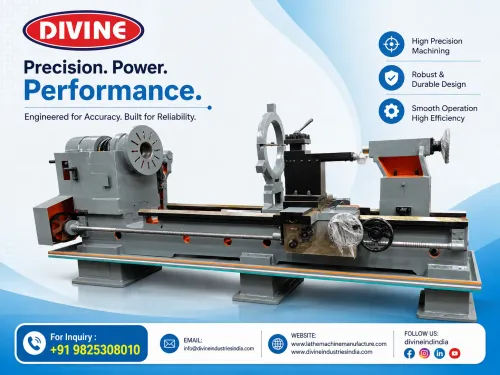
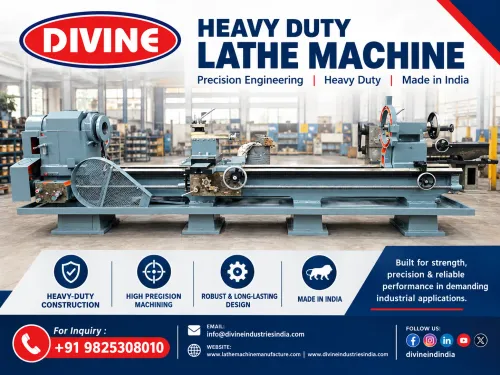
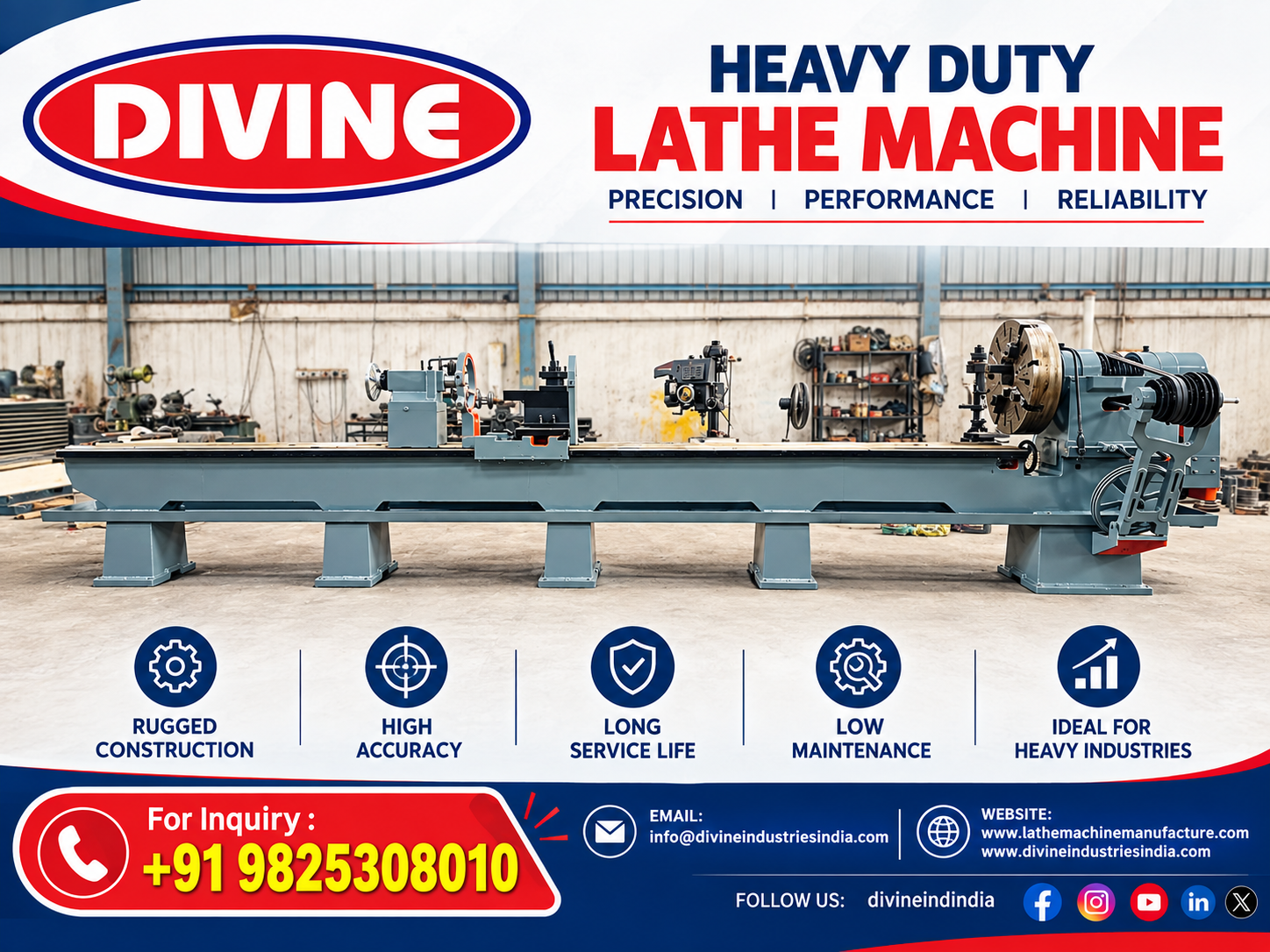
A heavy duty lathe machine is an industrial machining machine designed to rotate a workpiece while a cutting tool removes material from its surface. Compared with standard lathes, heavy duty models are generally built with stronger beds, rigid structures, powerful drive systems, and components designed to withstand high machining loads.
These machines are suitable for industries that process large shafts, rollers, pipes, cylinders, flanges, bushings, and other heavy components.
Key Features of Heavy Duty Lathe Machines
A quality heavy duty lathe machine can provide several features that support demanding industrial production.
1. Strong Machine Construction
The machine bed and main structure are engineered for rigidity. A stable structure helps reduce unwanted vibration during machining and supports consistent cutting performance.
2. High Load-Capacity Design
Heavy duty lathes are suitable for machining large and heavy workpieces. Their design allows manufacturers to perform machining operations on components that may be unsuitable for conventional workshop lathes.
3. Powerful Spindle Performance
A robust spindle system provides the required torque for demanding machining operations. Depending on the machine configuration, different spindle speeds can be selected according to the workpiece and cutting requirements.
4. Precision Machining
Industrial components often require accurate dimensions and good surface finishing. A properly maintained heavy duty lathe can support precise turning, facing, boring, and threading operations.
5. Versatile Applications
One machine can perform multiple operations, making it useful for general engineering and specialized industrial production.
Industrial Applications
Heavy duty lathe machines are used across many manufacturing sectors, including:
- Heavy engineering industries
- Automobile component manufacturing
- Steel and metal processing
- Oil and gas equipment manufacturing
- Power plant equipment
- Construction machinery manufacturing
- Railway component machining
- Shipbuilding and repair
- Pump and valve manufacturing
- General engineering workshops
- Fabrication and maintenance workshops
Large shafts, rollers, sleeves, pipes, cylinders, bushings, flanges, and other cylindrical components can be machined using suitable heavy duty lathe configurations.
Common Operations Performed
A heavy duty industrial lathe can be used for several machining processes.
Turning
Turning removes material from the external diameter of a rotating workpiece to achieve the required size and shape.
Facing
Facing creates a flat surface at the end of a workpiece and is commonly performed before other machining operations.
Threading
The machine can be configured for producing internal or external threads according to the required specifications.
Boring
Boring enlarges or improves the accuracy of an existing hole in a workpiece.
Grooving
Grooving creates a narrow recess or channel on the workpiece.
Taper Turning
Taper turning is used when the component requires a gradually changing diameter along its length.
Advantages of Using a Heavy Duty Lathe Machine
Choosing an appropriately configured heavy duty lathe can provide important benefits for industrial manufacturing.
High machining capacity:
The robust design makes these machines suitable for heavy and large workpieces.
Improved production capability:
A versatile lathe can perform multiple machining operations without requiring separate machines for every basic process.
Long-term industrial use:
Strong construction and appropriate maintenance can help a machine remain reliable over an extended operating period.
Consistent machining:
Rigid machine construction can help minimize vibration and support dimensional consistency.
Suitable for customized production:
Industrial workshops can select machine specifications according to component size, machining requirements, and production volume.
How to Choose a Heavy Duty Lathe Machine
Before purchasing a heavy duty lathe machine, buyers should carefully evaluate the machine specifications and their actual production requirements.
Consider the Maximum Swing
The swing over the bed determines the approximate maximum diameter of a workpiece that can rotate over the machine bed.
Check the Distance Between Centers
Distance between centers is particularly important when machining long shafts, rollers, and similar components.
Evaluate Bed Width and Rigidity
A rigid and appropriately sized bed is important when machining heavy components and performing high-load cutting operations.
Review Spindle Specifications
Spindle bore, spindle speed range, spindle nose configuration, and drive power should be selected according to the components being machined.
Check Motor Power
The required motor capacity depends on the material, workpiece size, cutting depth, and machining conditions.
Consider Available Accessories
Depending on production requirements, buyers may need accessories such as different chucks, steady rests, tool posts, faceplates, centers, or other supporting equipment.
Heavy Duty Lathe Machine for Different Industries
Every industry has different machining requirements. For example, an engineering workshop may need a versatile machine for various components, while a specialized manufacturer may require a lathe designed around long shafts, large diameters, or repetitive production.
Therefore, selecting a machine based only on price may not provide the best long-term value. Buyers should compare construction quality, specifications, application suitability, service support, spare-part availability, and operating requirements.
Maintenance of a Heavy Duty Lathe Machine
Regular maintenance is essential for reliable machine performance. Operators should follow the manufacturer's maintenance recommendations and regularly inspect lubrication systems, belts, gears, bearings, electrical components, chuck condition, and other critical parts.
The machine should also be cleaned regularly to prevent chips and debris from affecting moving components. Proper alignment and lubrication can help maintain machining accuracy and reduce unnecessary wear.
Why Industrial Buyers Prefer Heavy Duty Lathes
For industries working with large metal components, machine rigidity and load-handling capability are important considerations. A heavy duty lathe provides a practical machining solution for operations involving large diameters, long components, and demanding cutting conditions.
Its ability to perform several machining operations on one platform can also make it useful for production, repair, and maintenance applications.
Conclusion
A Heavy Duty Lathe Machine for Industrial Use is an important piece of equipment for manufacturers handling large and demanding machining jobs. Its robust construction, high load capacity, versatile machining operations, and industrial-oriented design make it suitable for a wide range of engineering applications.
Before purchasing, businesses should carefully compare machine dimensions, swing capacity, distance between centers, spindle specifications, motor power, construction quality, accessories, after-sales support, and their specific production requirements.
Selecting the right heavy duty lathe machine can help an industrial workshop achieve reliable machining performance while supporting long-term manufacturing requirements.
Frequently Asked Questions
Q1. What is a heavy duty lathe machine used for?
A heavy duty lathe is primarily used for machining large and heavy cylindrical components through operations such as turning, facing, boring, threading, grooving, and taper turning.
Q2. Which industries use heavy duty lathe machines?
They are commonly used in heavy engineering, automobile, steel, power, oil and gas equipment, railway, construction machinery, shipbuilding, pump manufacturing, and general engineering industries.
Q3. What should I check before buying a heavy duty lathe?
Important specifications include swing over bed, distance between centers, spindle bore, spindle speed, motor power, bed width, machine rigidity, workpiece capacity, accessories, and service support.
Q4. Can a heavy duty lathe machine handle large shafts?
Yes. Machines with suitable swing capacity, center distance, spindle specifications, and load-bearing capability can be used for machining large shafts and other long cylindrical components.
Q5. Is a heavy duty lathe suitable for industrial production?
Yes. It can be suitable for industrial production, repair, maintenance, and general engineering applications when the machine specifications match the required workpiece and machining process.