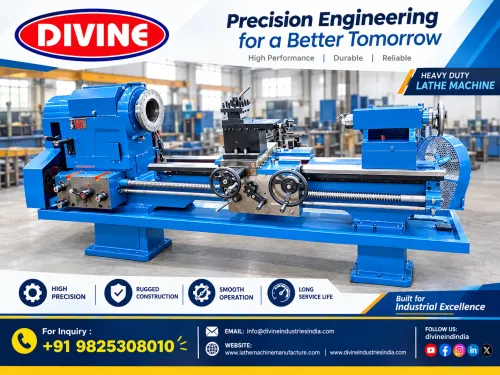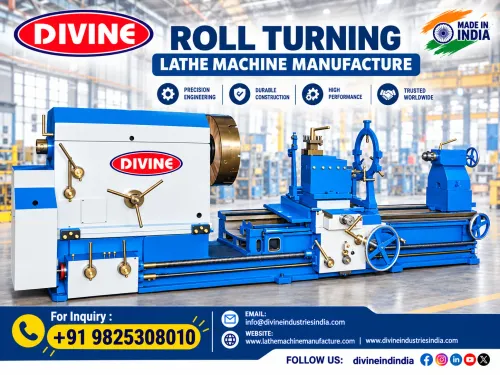
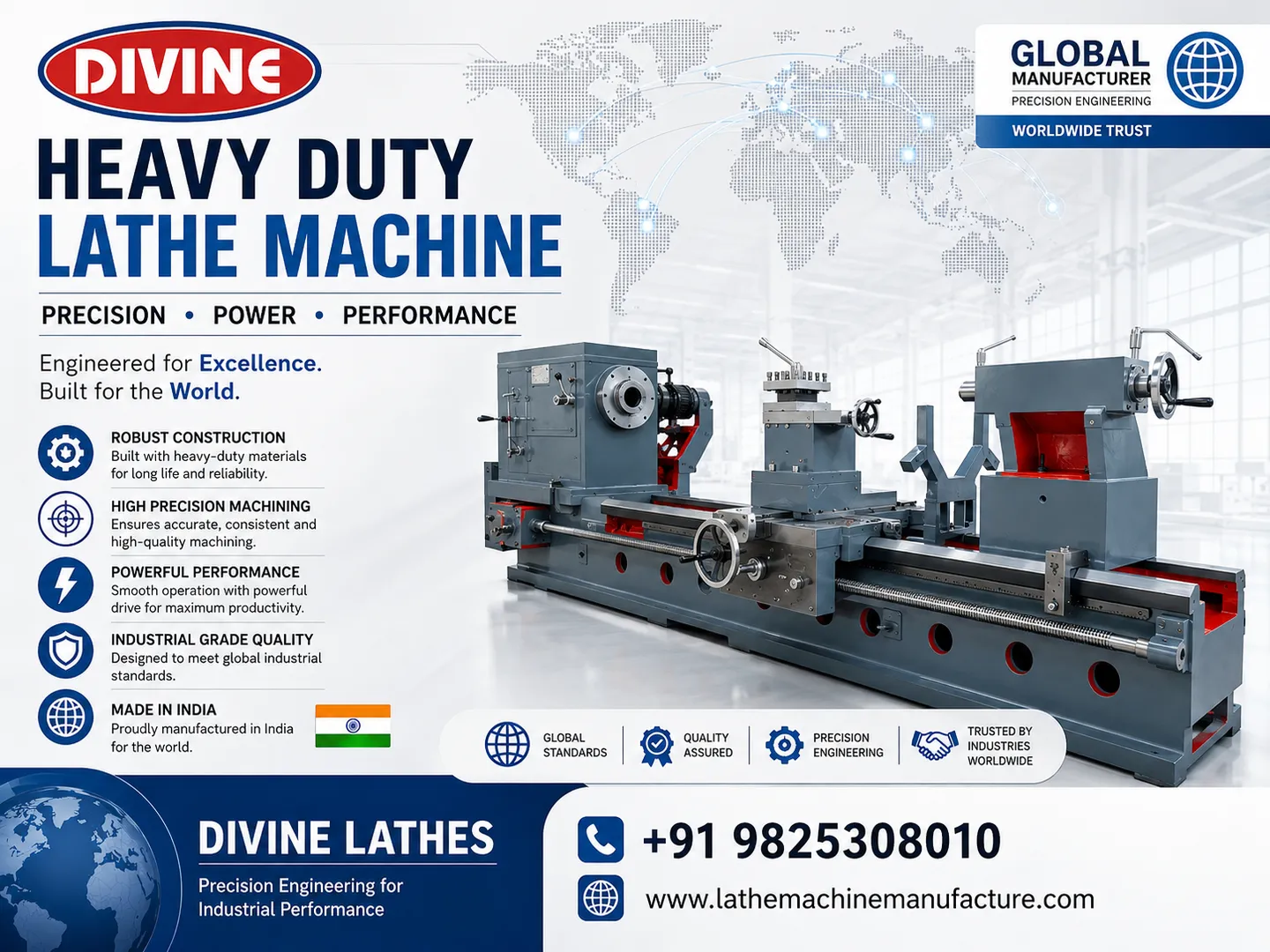
Heavy Duty Lathe Machine: Powerful, Precise and Reliable Machining Solution
In modern manufacturing, industries often need to machine large metal components with accuracy, consistency, and reliability. A Heavy Duty Lathe Machine is designed specifically for these demanding machining requirements. With a rigid structure, powerful drive system, strong spindle arrangement, and stable cutting performance, heavy duty lathes are widely used for turning large and heavy workpieces.
From engineering workshops and fabrication units to steel plants, power plants, railway workshops, and heavy engineering industries, a heavy duty lathe machine can provide the strength and stability required for continuous industrial machining.
What Is a Heavy Duty Lathe Machine?
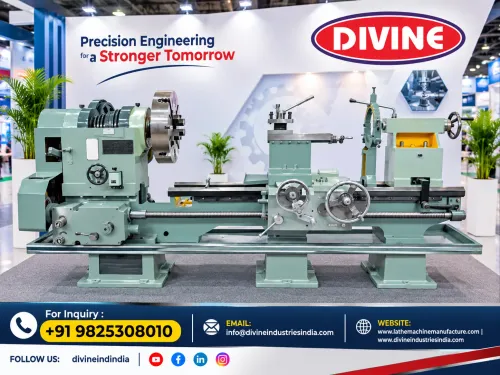
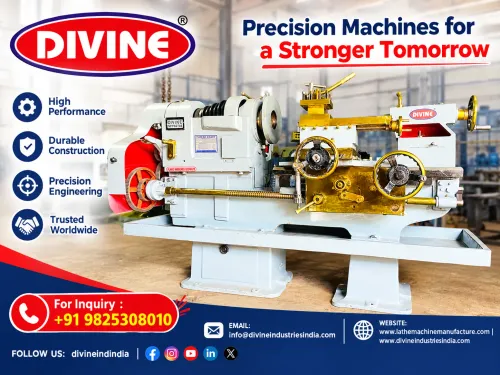
A Heavy Duty Lathe Machine is an industrial machine tool designed to perform turning and other machining operations on large, heavy, or difficult-to-machine components.
Unlike conventional light-duty machines, heavy duty lathes are built with a stronger bed, robust headstock, powerful motor, rigid carriage, and heavy-duty support components. This construction helps the machine remain stable during high-load machining operations.
Typical operations include:
- Turning
- Facing
- Thread cutting
- Boring
- Taper turning
- Drilling
- Chamfering
- Grooving
- Cylindrical machining
The exact capabilities depend on the machine configuration, spindle arrangement, tooling, and accessories.
Key Features of a Heavy Duty Lathe Machine
1. Heavy and Rigid Machine Bed
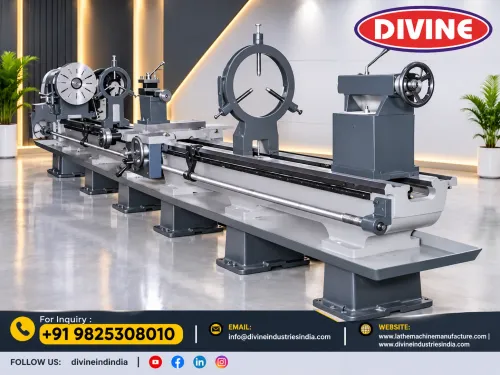
The machine bed forms the foundation of the lathe. A strong, rigid bed helps reduce vibration and supports accurate movement of the carriage and tailstock during machining.
2. Powerful Spindle System
Heavy machining requires sufficient torque. A robust spindle system allows the machine to handle demanding cutting operations and larger workpieces efficiently.
3. Strong Headstock Construction
The headstock houses important components such as the spindle and drive mechanism. A properly engineered headstock provides smooth power transmission and reliable machining performance.
4. Precision Guideways
High-quality guideways help maintain smooth carriage movement and support machining accuracy. Hardened or precision-finished guideways can also improve resistance to wear.
5. Heavy-Duty Carriage
A rigid carriage provides stable tool movement during roughing and finishing operations. Automatic longitudinal and cross feeds can improve productivity in repetitive machining work.
6. Strong Tailstock
The tailstock supports long workpieces during machining. A robust tailstock is particularly important when working with shafts, rollers, and other lengthy components.
7. Flexible Thread-Cutting Capability
Depending on the machine configuration, a heavy duty lathe can be equipped for different thread-cutting requirements, making it suitable for general engineering and specialized machining applications.
Applications of Heavy Duty Lathe Machines
Heavy Duty Lathe Machines are used where conventional machines may not provide sufficient capacity or rigidity.
Common applications include:
- Large shaft machining
- Roller turning
- Flange machining
- Bush and sleeve production
- Thread cutting
- Industrial component repair
- Heavy fabrication work
- General engineering
- Power plant component machining
- Steel and rolling mill applications
- Railway component machining
- Mining equipment manufacturing
- Oil and gas component machining
- Shipbuilding and marine engineering
Industry sources also identify sectors such as power generation, shipbuilding, rolling mills, mining, and heavy engineering as important applications for heavy-duty turning equipment.
Advantages of Using a Heavy Duty Lathe Machine
Better Stability
The rigid construction provides better support during heavy cutting and helps minimize unwanted vibration.
High Machining Capacity
Large swing capacities, longer center distances, and robust spindle systems allow suitable models to handle substantial workpieces.
Improved Productivity
Powerful drives and automatic feed systems can help reduce machining time, especially for repetitive industrial jobs.
Long-Term Durability
A properly manufactured heavy duty lathe is designed for demanding workshop conditions and continuous industrial use.
Versatile Machining
One machine can perform several operations, including turning, facing, boring, threading, and taper machining.
Suitable for Heavy Components
Heavy duty lathes are particularly useful for shafts, rollers, flanges, large cylindrical components, and other industrial parts.
How to Select the Right Heavy Duty Lathe Machine
Selecting the correct machine is important for achieving both productivity and machining accuracy. Before purchasing, consider the following factors:
Swing Over Bed:
Choose a swing capacity suitable for the maximum diameter of your regular workpieces.
Distance Between Centres:
This determines the approximate length of workpiece that can be accommodated between the headstock and tailstock.
Spindle Bore:
A larger spindle bore can be useful when machining components that require the workpiece to pass through the spindle.
Motor Power:
The required motor power depends on material, cutting depth, workpiece size, tooling, and production requirements.
Machine Bed:
A rigid and properly finished bed is important for stability and long-term accuracy.
Spindle Speed Range:
The appropriate speed range provides flexibility for different materials and machining operations.
Accessories:
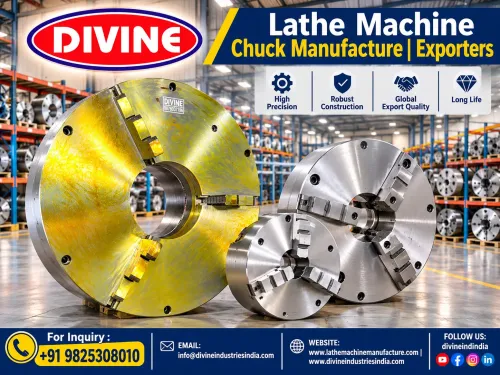
Depending on the application, options such as steady rests, faceplates, taper-turning attachments, coolant systems, digital readouts, and different chuck configurations can add versatility.
Heavy Duty Lathe Machine for Industrial Manufacturing
For industries handling large components, choosing the correct lathe is more than simply comparing machine size. The machine should match the company's workpiece dimensions, materials, production volume, accuracy requirements, and machining processes.
A well-designed heavy duty lathe combines strength, precision, stability, productivity, and serviceability to provide dependable performance in demanding industrial environments.
Why Choose a Reliable Heavy Duty Lathe Machine Manufacturer?
The quality of a lathe machine depends not only on its specifications but also on manufacturing practices, component quality, assembly accuracy, testing, and after-sales support.
A reliable manufacturer should provide:
- Robust machine construction
- Quality mechanical components
- Accurate spindle alignment
- Properly finished guideways
- Reliable drive systems
- Suitable customization options
- Technical support
- Spare parts availability
- Installation and service assistance
Choosing an experienced Heavy Duty Lathe Machine Manufacturer in India can help industries select a machine configuration suited to their actual production requirements.
Heavy Duty Lathe Machine in Ahmedabad
Ahmedabad and the surrounding Gujarat industrial region have a strong ecosystem of engineering, fabrication, automobile, manufacturing, and industrial businesses. For companies looking for a Heavy Duty Lathe Machine in Ahmedabad, selecting a manufacturer with suitable machine-building expertise and service support can be an important part of the purchasing decision.
The right machine can help workshops improve machining capability while maintaining consistent production quality.
Conclusion
A Heavy Duty Lathe Machine is an essential machine tool for industries that require reliable machining of large and heavy components. Its rigid construction, powerful spindle system, strong carriage, stable guideways, and versatile machining capabilities make it suitable for demanding industrial applications.
Whether your requirement involves shaft turning, roller machining, threading, facing, boring, or general heavy engineering work, selecting the correct lathe configuration is essential for achieving the desired combination of precision, productivity, durability, and performance.
For businesses searching for a dependable Heavy Duty Lathe Machine Manufacturer in Ahmedabad, Gujarat, or India, it is important to evaluate machine construction, capacity, specifications, application requirements, and long-term service support before making a final decision.
Keywords