

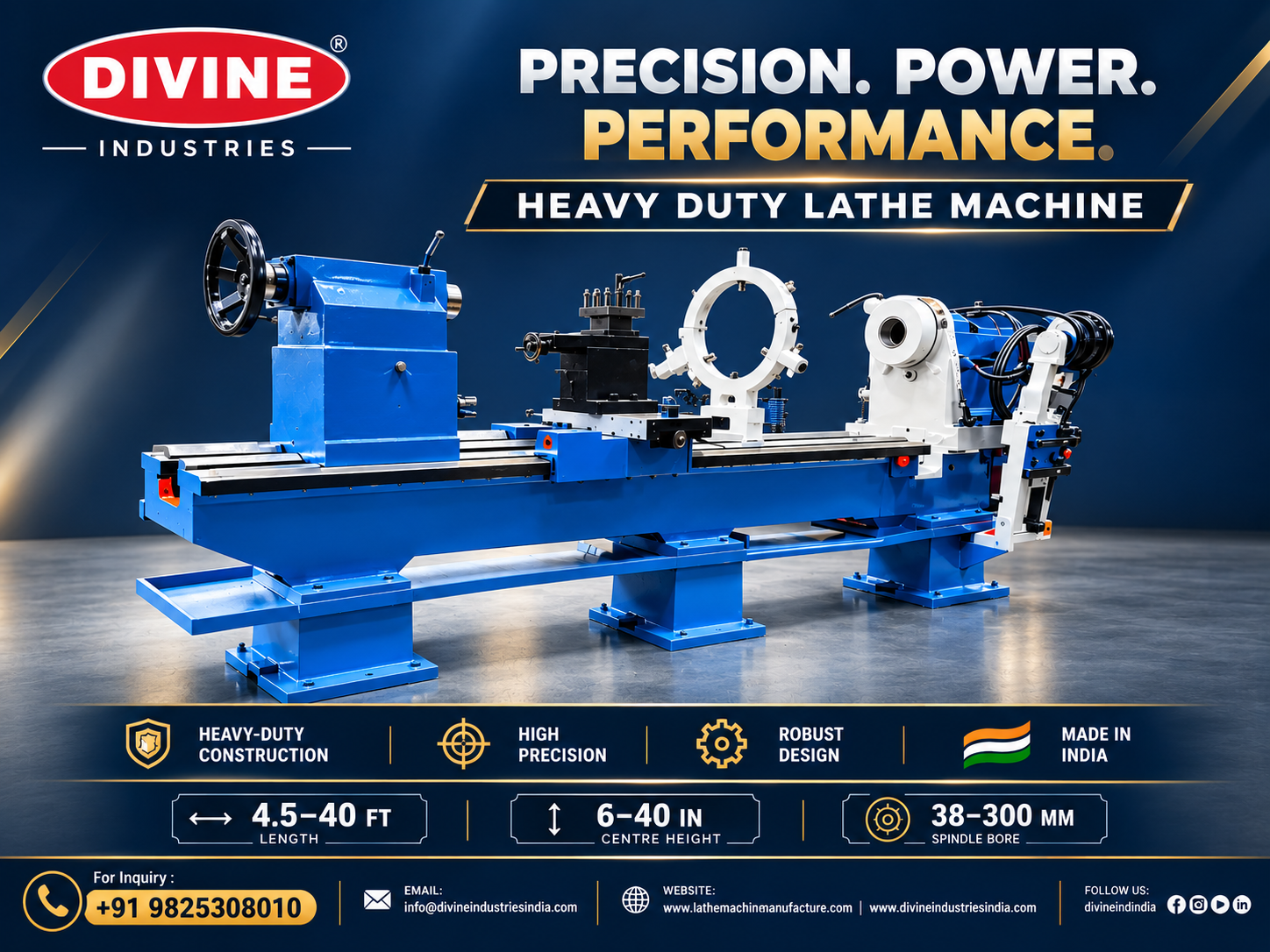
Heavy Duty Metal Lathe Machine – Reliable Solution for Heavy Metal Machining
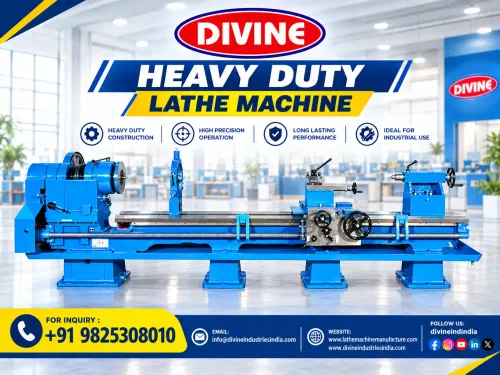
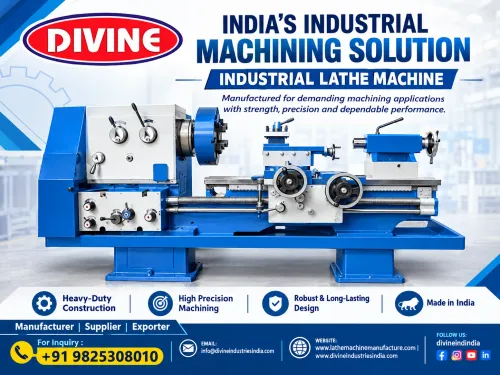
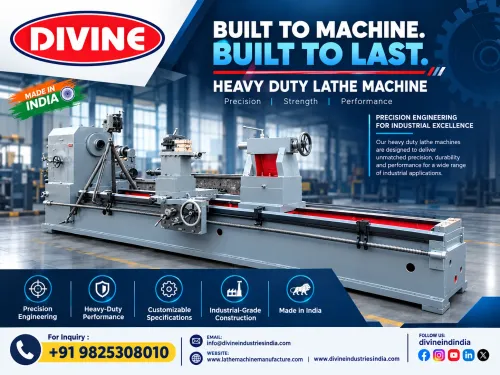
A Heavy Duty Metal Lathe Machine is an essential machine tool for industries that require accurate turning, facing, threading, boring, and other machining operations on large and heavy metal components. Designed for demanding industrial applications, a heavy-duty lathe provides the rigidity, stability, and machining capacity required for continuous production.
For engineering workshops, fabrication units, automobile industries, maintenance plants, and general manufacturing companies, selecting the right lathe machine can directly influence machining quality, productivity, and operational efficiency.
What Is a Heavy Duty Metal Lathe Machine?
A heavy-duty metal lathe is an industrial machine designed to machine large and heavy workpieces. The workpiece is securely held and rotated while cutting tools remove material to achieve the required dimensions and surface finish.
Compared with standard lathes, heavy-duty models are generally built with a stronger bed, robust construction, powerful drive system, and components designed to withstand high machining loads.
These machines are commonly used for machining shafts, rollers, cylinders, bushes, pipes, flanges, gears, and other large metal components.
Key Features of a Heavy Duty Metal Lathe
A quality heavy-duty metal lathe machine may include several features designed for reliable industrial performance:
- Heavy and rigid machine bed
- Strong spindle construction
- High load-bearing capacity
- Powerful motor and drive system
- Accurate carriage movement
- Durable headstock and tailstock
- Suitable for heavy-duty turning operations
- Threading and facing capabilities
- Long-lasting machine components
- Easy-to-operate controls
- Suitable for continuous industrial applications
The exact specifications can be selected according to the customer's workpiece size, material, machining requirements, and production volume.
Applications of Heavy Duty Metal Lathe Machine
Heavy-duty metal lathes are used across a wide range of industries. Typical applications include:
Engineering Industries
Engineering companies use heavy-duty lathes for manufacturing and repairing shafts, rollers, sleeves, bushes, and other precision components.
Automobile Industries
These machines can be used for machining automotive and industrial components that require turning, facing, boring, and threading operations.
Fabrication Workshops
Fabrication and repair workshops often require a robust lathe for handling large metal components and maintenance jobs.
Steel and Manufacturing Plants
Heavy-duty lathes are useful for machining large rollers, shafts, cylinders, and other components used in manufacturing facilities.
Maintenance and Repair
Industrial maintenance departments can use heavy-duty lathes to restore worn components or manufacture replacement parts.
Why Choose a Heavy Duty Lathe Machine?
The main advantage of a heavy-duty lathe is its ability to handle demanding machining operations on larger workpieces. A rigid machine structure can help maintain stability during cutting, while a suitable spindle and drive system can support heavy machining requirements.
Depending on the configuration, a heavy-duty metal lathe can help manufacturers achieve:
- Consistent machining performance
- Better handling of large workpieces
- Reduced machining interruptions
- Efficient material removal
- Accurate component dimensions
- Reliable performance for industrial jobs
Choosing the correct machine specification is important because every application has different requirements.
How to Select the Right Heavy Duty Metal Lathe?
Before purchasing a heavy-duty metal lathe machine, buyers should consider several technical factors.
1. Maximum Swing
The maximum swing determines the approximate diameter of the workpiece that can be accommodated.
2. Centre Distance
Centre distance is important when machining long shafts, rollers, and similar components.
3. Spindle Bore
A larger spindle bore can be beneficial when machining long bars, pipes, and components that need to pass through the spindle.
4. Machine Bed
A strong and rigid bed helps provide stability during heavy cutting operations.
5. Motor Power
Motor power should match the material, workpiece size, cutting requirements, and expected production conditions.
6. Threading Capacity
If the machine will be used for thread production, the available threading ranges and feed mechanisms should be evaluated.
7. Workpiece Weight
Always check the machine's permissible load and support capacity before selecting a model for heavy components.
Heavy Duty Metal Lathe Machine Manufacturer
Choosing an experienced Heavy Duty Metal Lathe Machine Manufacturer is important for industrial buyers looking for reliable machinery and suitable technical specifications. A manufacturer with appropriate production facilities and machining expertise can provide machines configured for different industrial applications.
Manufacturers may offer different bed lengths, swing capacities, spindle specifications, motor configurations, and optional accessories according to customer requirements.
Before placing an order, buyers should discuss their workpiece dimensions, material type, machining operations, required accuracy, and production requirements with the manufacturer.
Heavy Duty Metal Lathe Machine for Industrial Use
Modern manufacturing requires machines that can deliver dependable performance over extended working periods. A properly designed heavy-duty metal lathe can become an important part of an industrial workshop by supporting turning, facing, boring, threading, and related operations.
From small engineering workshops to large manufacturing facilities, these machines can be configured for different types of metalworking requirements.
Conclusion
A Heavy Duty Metal Lathe Machine is a valuable investment for businesses involved in heavy engineering, fabrication, manufacturing, maintenance, and metal component production. Its robust construction and machining capabilities make it suitable for handling demanding turning applications.
When selecting a machine, buyers should compare technical specifications such as swing over bed, centre distance, spindle bore, motor power, bed construction, load capacity, and available accessories.
Working with a reliable heavy duty lathe machine manufacturer can also help ensure that the machine is selected according to the actual requirements of the workshop.
If you are looking for a Heavy Duty Metal Lathe Machine for industrial applications, choose the machine specification according to your workpiece size, material, machining operations, and production requirements.