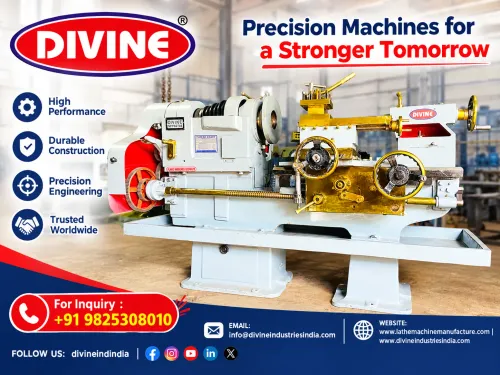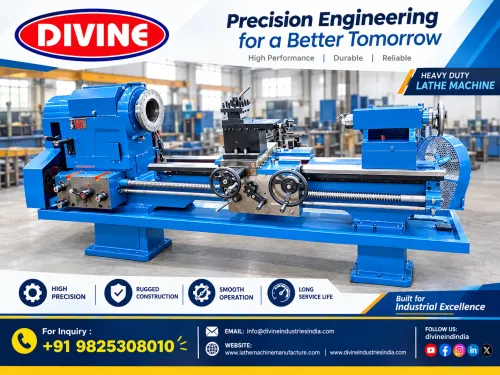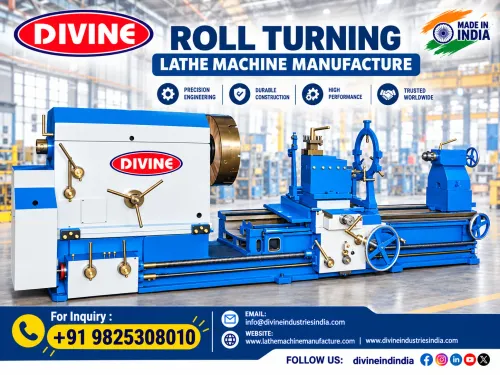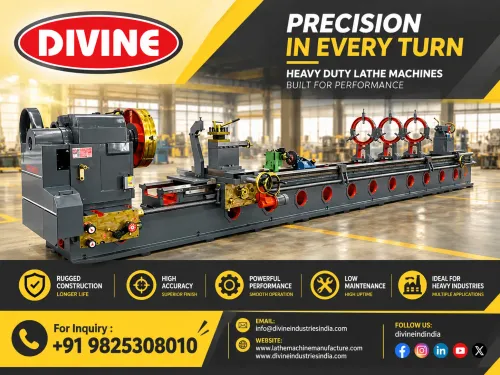
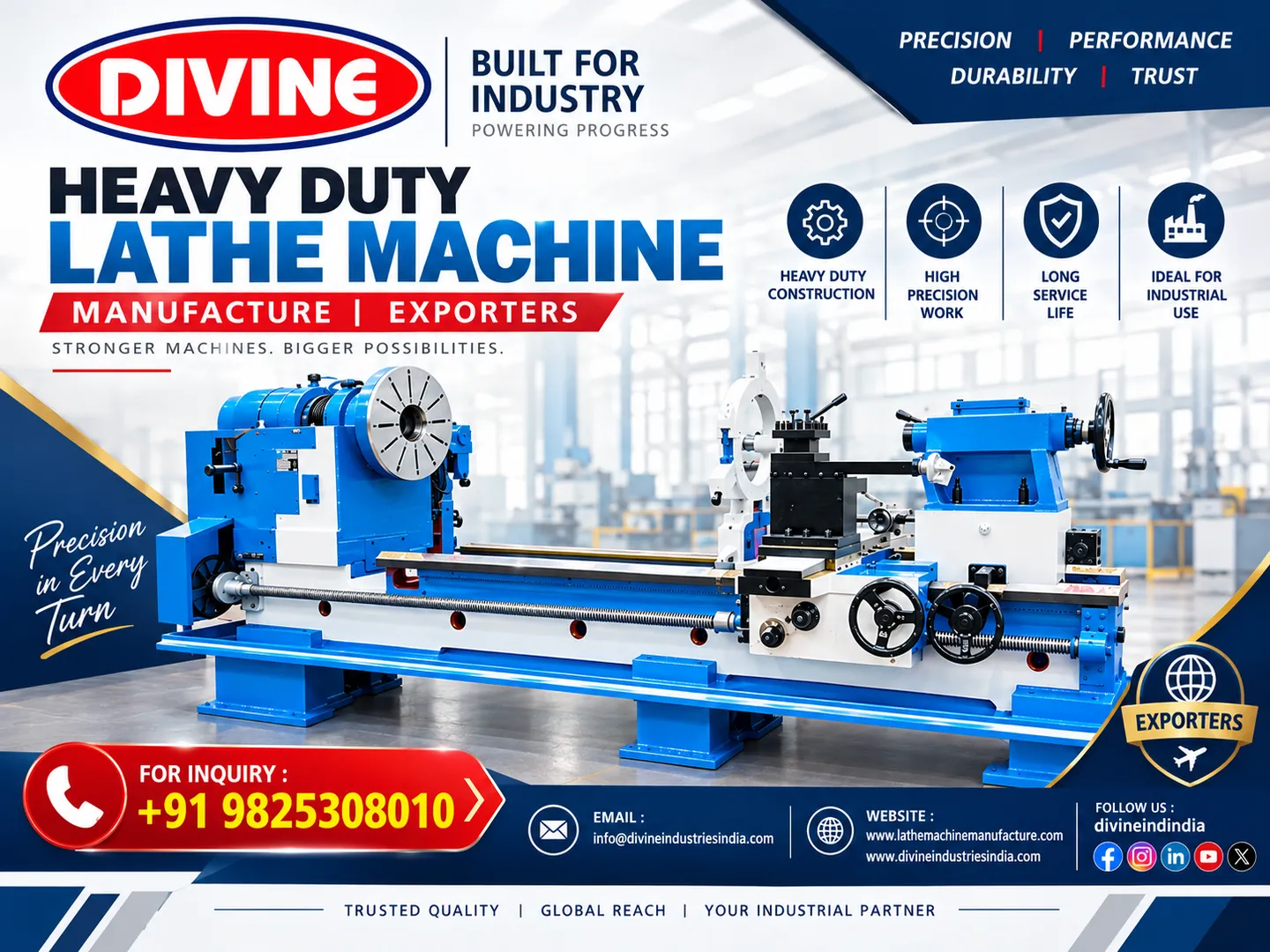
Heavy Lathe Machine: Powerful, Reliable & Precision-Driven Industrial Solution
In modern manufacturing, precision, strength, and productivity are essential for achieving consistent machining results. A Heavy Lathe Machine is designed to handle demanding industrial applications where large, heavy, and long workpieces require accurate turning and machining.
Built for intensive workshop environments, heavy-duty lathe machines combine a strong construction with dependable mechanical performance. They are widely used in engineering workshops, fabrication units, automobile industries, repair centers, and heavy manufacturing applications.
What Is a Heavy Lathe Machine?
A Heavy Lathe Machine is an industrial machining tool primarily used for rotating a workpiece while a cutting tool removes material from its surface. Depending on the application, it can perform operations such as turning, facing, threading, boring, drilling, and taper machining.
Compared with standard lathes, heavy-duty models are engineered to manage larger workpieces and higher machining loads. Their robust body, rigid bed, powerful drive system, and durable components make them suitable for continuous industrial use.
Key Features of Heavy Lathe Machine
A professionally designed heavy lathe machine can offer several important features:
- Heavy-duty machine construction for demanding applications
- Rigid machine bed to support large and heavy workpieces
- High machining stability during cutting operations
- Powerful spindle performance for heavy material removal
- Reliable gearbox and transmission system
- Accurate movement of carriage and cross-slide
- Suitable for long and large-diameter components
- Durable components designed for extended workshop operation
- Versatile machining capability for different industrial jobs
- Easy maintenance and servicing
The exact specifications and configuration can be selected according to the machining requirements of the customer.
Applications of Heavy Duty Lathe Machine
Heavy Lathe Machines are suitable for a wide variety of industrial machining jobs. Common applications include:
1. Shaft Machining
Large shafts used in industrial machinery often require accurate turning and finishing. A heavy lathe provides the rigidity and capacity required for such components.
2. Manufacturing of Industrial Components
Engineering industries use heavy lathes to manufacture different cylindrical and rotational components used in machinery and equipment.
3. Repair and Maintenance Work
Industrial repair workshops can use heavy-duty lathes for restoring worn shafts, rollers, bushes, and other mechanical components.
4. Automobile and Transport Components
Large automotive and transportation components can require turning, facing, threading, and other machining operations that can be performed on a suitable heavy lathe.
5. Fabrication and General Engineering
Heavy engineering and fabrication workshops can benefit from the machine's ability to handle large workpieces and demanding machining conditions.
Why Choose a Heavy Lathe Machine?
Choosing the right lathe can have a direct impact on machining efficiency and production consistency. A heavy-duty model can provide the strength required for operations involving substantial cutting forces.
Its rigid construction helps maintain stability, while its powerful machining system allows operators to work with larger components. This makes the machine particularly useful for industries where ordinary workshop lathes may not provide sufficient capacity.
Benefits for Industrial Production
A Heavy Lathe Machine can provide several practical advantages:
High Load Capacity:
Designed to accommodate heavy workpieces and demanding machining operations.
Better Machining Stability:
A rigid structure helps reduce unwanted movement and vibration during cutting.
Versatile Operations:
Turning, facing, threading, boring, and other machining operations can be performed depending on the machine configuration.
Long-Term Industrial Use:
Strong construction and quality components make heavy lathes suitable for regular workshop applications.
Improved Productivity:
Suitable machine capacity and efficient operation can help reduce machining time for large components.
Consistent Results:
Proper machine setup, tooling, and operator skills can contribute to repeatable machining quality.
How to Select the Right Heavy Lathe Machine?
Before purchasing a heavy lathe, buyers should evaluate several technical factors:
- Maximum swing over bed
- Distance between centers
- Maximum workpiece weight
- Spindle bore
- Spindle speed range
- Motor power
- Bed width and construction
- Machine dimensions
- Threading capacity
- Chuck size
- Available accessories
- Required machining applications
- Service and spare-parts availability
Selecting the machine according to the actual workpiece size and production requirements is important for achieving efficient and reliable performance.
Heavy Lathe Machine for Modern Workshops
Today's engineering workshops require machinery that can provide dependable performance while handling challenging machining jobs. A heavy lathe machine can become an important part of a production or maintenance setup because of its ability to work with substantial components.
For businesses dealing with large shafts, rollers, pipes, cylinders, flanges, and other rotational components, investing in an appropriately configured heavy lathe can improve machining capability and expand the range of jobs a workshop can undertake.
Maintenance Tips for Heavy Lathe Machine
Regular maintenance helps preserve machine performance and operating accuracy. Workshop operators should:
- Keep the machine bed clean and free from metal chips.
- Follow the recommended lubrication schedule.
- Inspect belts, gears, bearings, and moving components regularly.
- Keep the chuck and work-holding equipment properly maintained.
- Check alignment when required.
- Use suitable cutting tools and machining parameters.
- Inspect electrical and drive components periodically.
- Follow the manufacturer's operating and maintenance instructions.
Proper maintenance can help minimize unexpected downtime and extend the useful working life of the machine.
Conclusion
A Heavy Lathe Machine is an important industrial machining solution for workshops that work with large, heavy, and demanding components. Its robust construction, machining capacity, versatility, and stability make it suitable for a broad range of engineering and manufacturing applications.
Whether the requirement is large shaft machining, component repair, general engineering, or heavy industrial production, selecting a lathe according to the required workpiece capacity and machining specifications is essential.
For businesses looking to increase their machining capabilities, a properly configured Heavy Duty Lathe Machine can provide a dependable foundation for efficient and consistent industrial operations.
Keywords