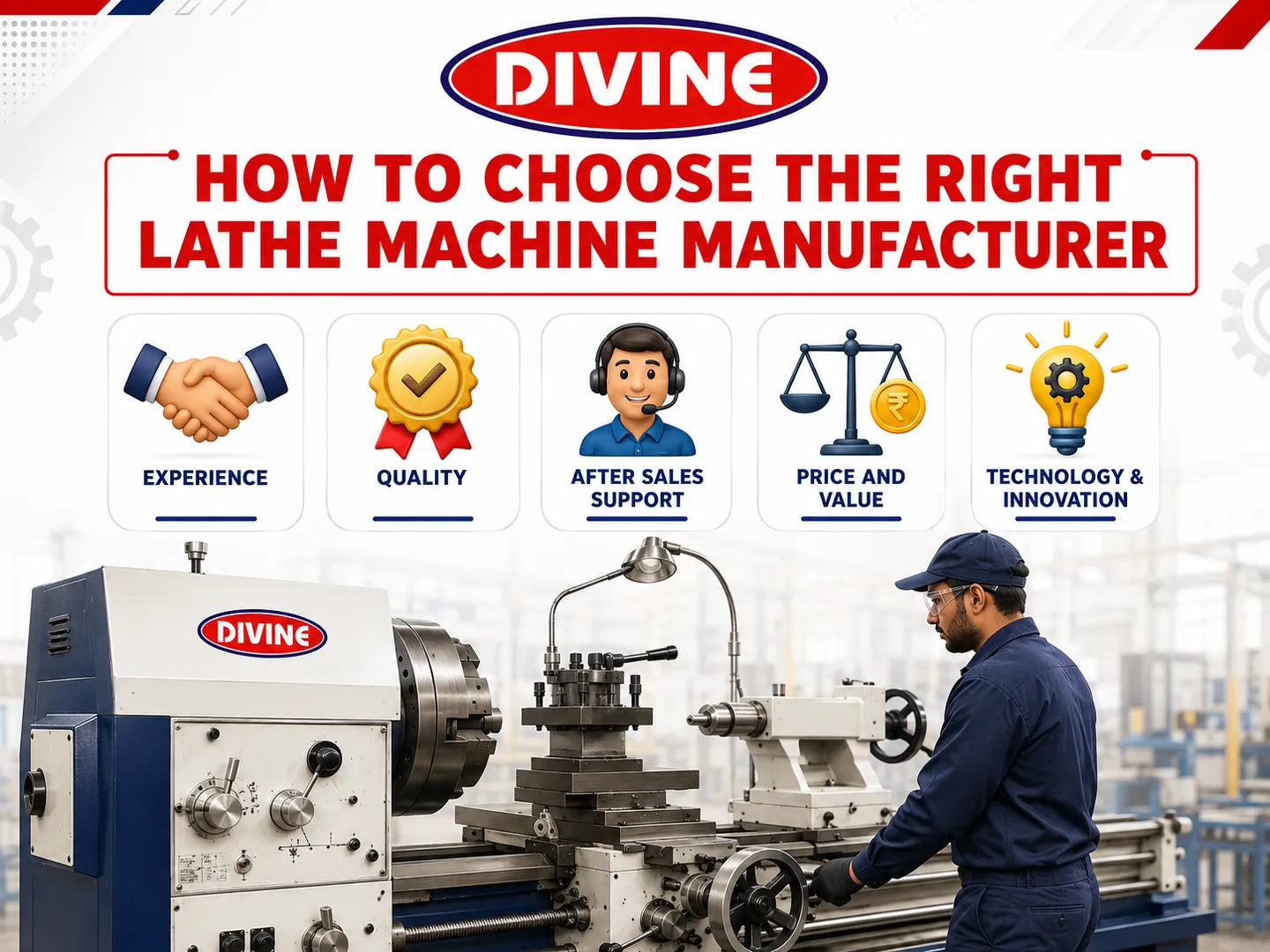
How to Choose the Right Lathe Machine Manufacturer
Choosing the right lathe machine manufacturer is an important decision for any workshop, engineering company, or manufacturing business. A lathe machine is a long-term investment, so selecting a manufacturer based only on price can lead to maintenance problems, poor machining performance, and higher operating costs.
A reliable lathe machine manufacturer should provide a good combination of machine quality, manufacturing accuracy, technical support, customization, service, and overall value.
This guide explains the important factors to consider before selecting a lathe machine manufacturer.
1. Check the Manufacturer’s Experience
Experience is one of the first things to consider when choosing a lathe machine manufacturer. A manufacturer with years of industry knowledge is more likely to understand different machining requirements and workshop applications.
Look at the manufacturer's background, manufacturing capabilities, product range, and experience with different types of lathe machines.
An experienced manufacturer can also help you select a machine according to your workpiece size, material, production volume, and required machining accuracy.
2. Focus on Machine Build Quality
The construction of a lathe machine directly affects its performance and service life.
Before purchasing, check important components such as:
- Machine bed construction
- Headstock design
- Spindle arrangement
- Gearbox quality
- Lead screw and feed mechanism
- Tailstock construction
- Chuck and tooling compatibility
- Electrical and control components
A rigid machine structure can help reduce vibration and improve machining consistency during regular operations.
3. Consider Machining Accuracy
Accuracy is essential when selecting a lathe machine for engineering and manufacturing applications.
Ask the manufacturer about the machine's expected accuracy, spindle performance, alignment, and quality-control procedures. The machine should be manufactured and assembled carefully to deliver consistent results.
If your application requires close dimensional control, discuss your machining requirements with the manufacturer before placing an order.
4. Select the Correct Machine Capacity
Every workshop has different machining requirements. Choosing the correct machine size is therefore extremely important.
Consider factors such as:
- Maximum swing over bed
- Swing over cross slide
- Distance between centres
- Spindle bore
- Maximum workpiece weight
- Bed length
- Motor capacity
- Available feed ranges
For example, a small workshop handling general repair jobs may need a different lathe configuration than a heavy engineering company machining large shafts.
Choosing the correct capacity can improve productivity and prevent unnecessary investment in a machine that is either too small or unnecessarily large.
5. Compare Technology and Features
Modern lathe machines are available with different mechanical and technological features. Depending on your application, you may need features designed for higher productivity, easier operation, or improved machining control.
Discuss options such as:
- Variable-speed arrangements
- Improved spindle systems
- Quick-change tooling
- Digital readout systems
- Special chuck arrangements
- Customized machine configurations
- CNC or conventional machine options
The best choice is not necessarily the machine with the most features. Select features that provide genuine benefits for your particular production requirements.
6. Evaluate After-Sales Service
After-sales support is an important factor that is sometimes overlooked during machine selection.
Even a well-built machine may eventually require servicing, replacement components, adjustments, or technical assistance.
Before purchasing, ask about:
- Installation support
- Machine commissioning
- Spare parts availability
- Service response
- Technical assistance
- Maintenance guidance
- Operator support
A manufacturer that provides dependable support can make machine ownership easier over the long term.
7. Check Spare Parts Availability
Spare parts availability can directly affect machine downtime.
Before selecting a manufacturer, confirm whether commonly required components and replacement parts can be supplied when needed. It is also useful to understand the availability of items such as bearings, belts, electrical components, gears, tooling accessories, and other machine-specific parts.
Good spare-parts support helps keep production running with fewer interruptions.
8. Compare Price and Long-Term Value
Price is important, but it should not be the only deciding factor.
A low-cost machine may appear attractive initially but can become expensive if it requires frequent maintenance or produces inconsistent results.
Instead of comparing only the purchase price, consider the overall value, including:
Machine Quality + Productivity + Service + Maintenance + Operating Life = Long-Term Value
A properly selected machine can provide better returns over many years of operation.
9. Ask About Customization
Different industries often have different machining requirements. A good lathe machine manufacturer should be able to understand special application needs and, where possible, offer suitable configurations.
Customization may involve machine dimensions, chuck requirements, spindle specifications, motor capacity, tooling arrangements, or other application-specific features.
Discuss your requirements clearly with the manufacturer before finalizing the machine.
10. Review the Manufacturer’s Reputation
Before making a purchase, research the manufacturer's reputation in the market.
You can check:
- Customer feedback
- Product information
- Company history
- Machine photographs
- Manufacturing facilities
- Service capabilities
- Industry experience
- Previous installations
Speaking with existing customers can also provide practical information about machine performance and service quality.
11. Look at Quality Control
A professional manufacturer should have a systematic approach to quality control.
Ask how the machine is inspected during manufacturing and final assembly. Important checks may include dimensional inspection, machine alignment, spindle operation, component fitting, electrical testing, and trial machining.
Consistent quality-control practices can reduce the chances of receiving a machine that requires unexpected corrections after installation.
12. Discuss Your Application Before Buying
Do not select a lathe machine simply by looking at specifications on a brochure.
Explain your actual application to the manufacturer.
Provide information such as:
- Type of material being machined
- Typical workpiece dimensions
- Maximum workpiece weight
- Required production quantity
- Desired machining operations
- Required accuracy
- Available workshop space
This allows the manufacturer to recommend a machine that matches your real working conditions.
Why the Right Lathe Machine Manufacturer Matters
The manufacturer you choose can influence your machine’s performance, reliability, maintenance requirements, and long-term operating cost.
A dependable manufacturer focuses not only on supplying a machine but also on understanding the customer's application and providing appropriate technical support.
For workshops and engineering businesses, choosing a suitable machine from a trusted manufacturer can contribute to better productivity and more consistent machining results.
Final Checklist Before Choosing a Lathe Machine Manufacturer
Before placing your order, compare manufacturers based on these points:
✓ Manufacturing experience
✓ Machine construction
✓ Machining accuracy
✓ Machine capacity
✓ Available features
✓ Quality-control process
✓ After-sales service
✓ Spare-parts availability
✓ Customization options
✓ Price and long-term value
✓ Customer reputation
Conclusion
Choosing the right lathe machine manufacturer requires more than comparing prices. You should evaluate machine construction, accuracy, capacity, manufacturing quality, technology, service, spare-parts support, and long-term value.
Take time to understand your machining requirements and compare manufacturers carefully. The right manufacturer can help you select a lathe machine that suits your workshop, production needs, and future growth.
Choose based on quality, capability, service, and value—not price alone.
Keywords