
Lathe Chuck Parts: Complete Guide to Components, Functions & Applications
A lathe chuck is one of the most important workholding components used on a lathe machine. It securely grips a workpiece and keeps it properly positioned while turning, facing, drilling, threading, boring, and other machining operations are performed.
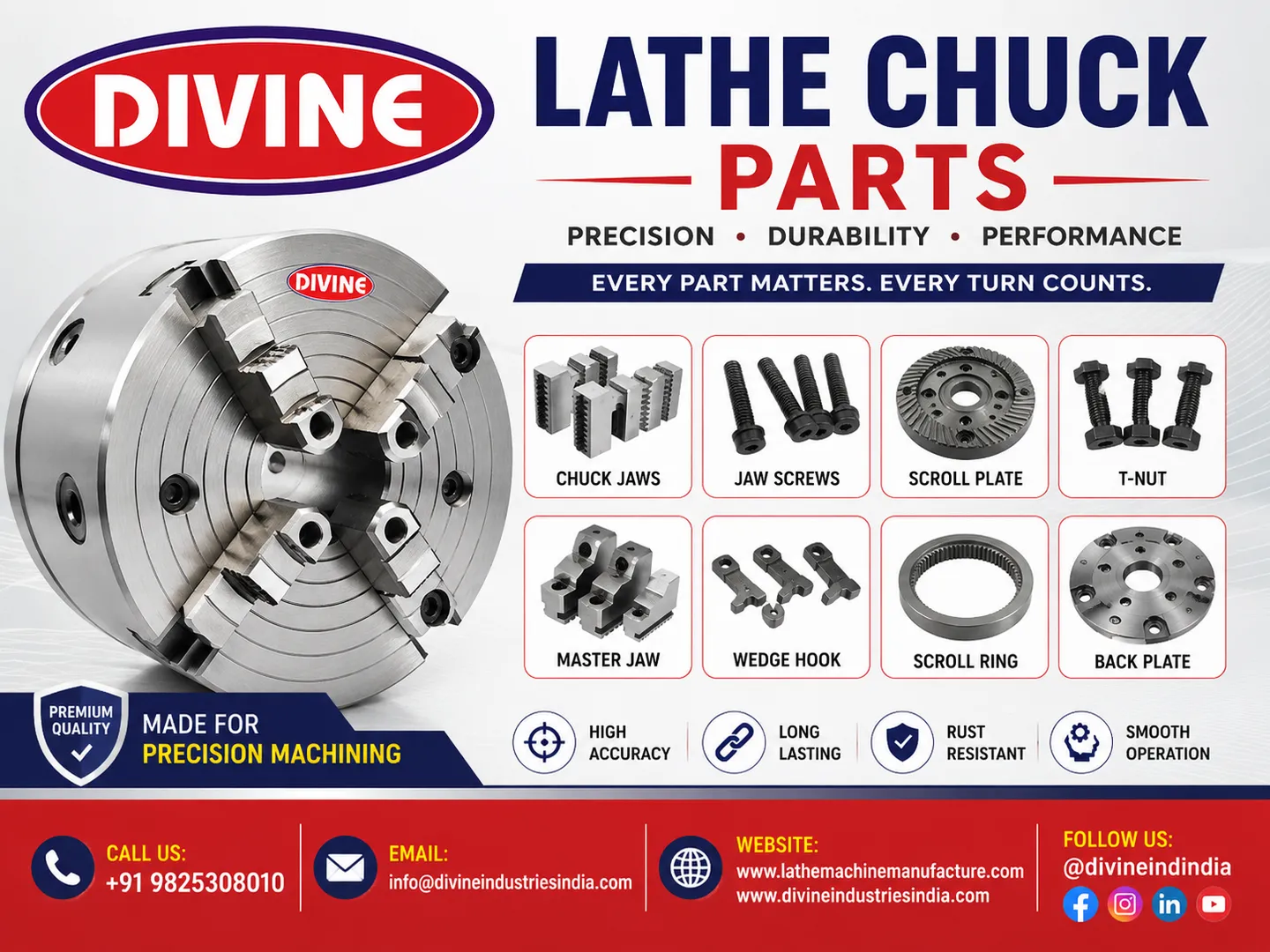
The uploaded image shows a four-jaw lathe chuck, featuring individually adjustable jaws and a heavy-duty chuck body. This type of chuck is especially useful when accurate positioning and independent workpiece adjustment are required.
What Is a Lathe Chuck?
A lathe chuck is a mechanical workholding device mounted on the spindle of a lathe machine. Its primary purpose is to hold a job firmly during machining.
Depending on the chuck design, the jaws can grip round, square, rectangular, or irregularly shaped components. The choice of chuck depends on the workpiece size, shape, required accuracy, and machining application.
Main Lathe Chuck Parts
Understanding the different lathe chuck parts helps operators select, maintain, and use the correct chuck for their machining requirements.
1. Chuck Body
The chuck body is the main structural component of the chuck. It houses the internal mechanism and supports the jaws.
A high-quality chuck body needs to withstand heavy clamping forces, vibration, and repeated machining operations.
2. Jaws
The jaws are the components that directly grip the workpiece.
In the four-jaw chuck shown in the image, each jaw can be adjusted independently. This makes it possible to accurately center a workpiece or intentionally offset it when required.
Jaws are available in different designs depending on the chuck and machining application.
3. Jaw Slides
Jaw slides guide the movement of the jaws across the chuck face. Properly manufactured slides provide smooth adjustment and help maintain reliable gripping performance.
4. Jaw Adjustment Screws
Each jaw in an independent four-jaw chuck is controlled by its own adjustment screw. Turning the screw moves the corresponding jaw inward or outward.
This independent adjustment is one of the biggest advantages of a four-jaw chuck.
5. Scroll or Internal Mechanism
Some lathe chucks use a scroll mechanism to move all jaws together. This arrangement is common in self-centering three-jaw chucks.
A four-jaw independent chuck, such as the type shown, generally uses separate jaw-adjustment mechanisms rather than a common scroll for simultaneous jaw movement.
6. Mounting Arrangement
The rear portion of the chuck connects it to the lathe spindle through the appropriate mounting system.
Correct mounting is essential for chuck stability, alignment, and machining accuracy.
7. Chuck Key or Operating Tool
A chuck key is used to operate the chuck's adjustment mechanism. Depending on the chuck design, the operator uses the key to tighten or loosen individual jaws.
Never leave a chuck key inserted while the spindle is running.
Key Advantages
- Independent adjustment of each jaw
- Suitable for round and non-round workpieces
- Useful for irregular-shaped components
- Allows precise centering using a dial indicator
- Can be used for eccentric machining
- Strong workholding capability
- Suitable for general and heavy machining applications
How to Maintain Lathe Chuck Parts
Proper maintenance can improve chuck performance and extend component life.
Keep the Chuck Clean
Remove chips, dust, and cutting debris from the chuck regularly. Accumulated chips can interfere with jaw movement and accuracy.
Lubricate Moving Components
Use the recommended lubricant on appropriate moving parts according to the chuck manufacturer's instructions.
Inspect the Jaws
Check jaws for excessive wear, damage, or uneven gripping. Damaged jaws can affect workpiece stability and machining accuracy.
Check Mounting Accuracy
Make sure the chuck is correctly mounted and securely fastened to the spindle.
Avoid Excessive Clamping Force
Over-tightening can damage the chuck mechanism, jaws, workpiece, or spindle.
Keywords