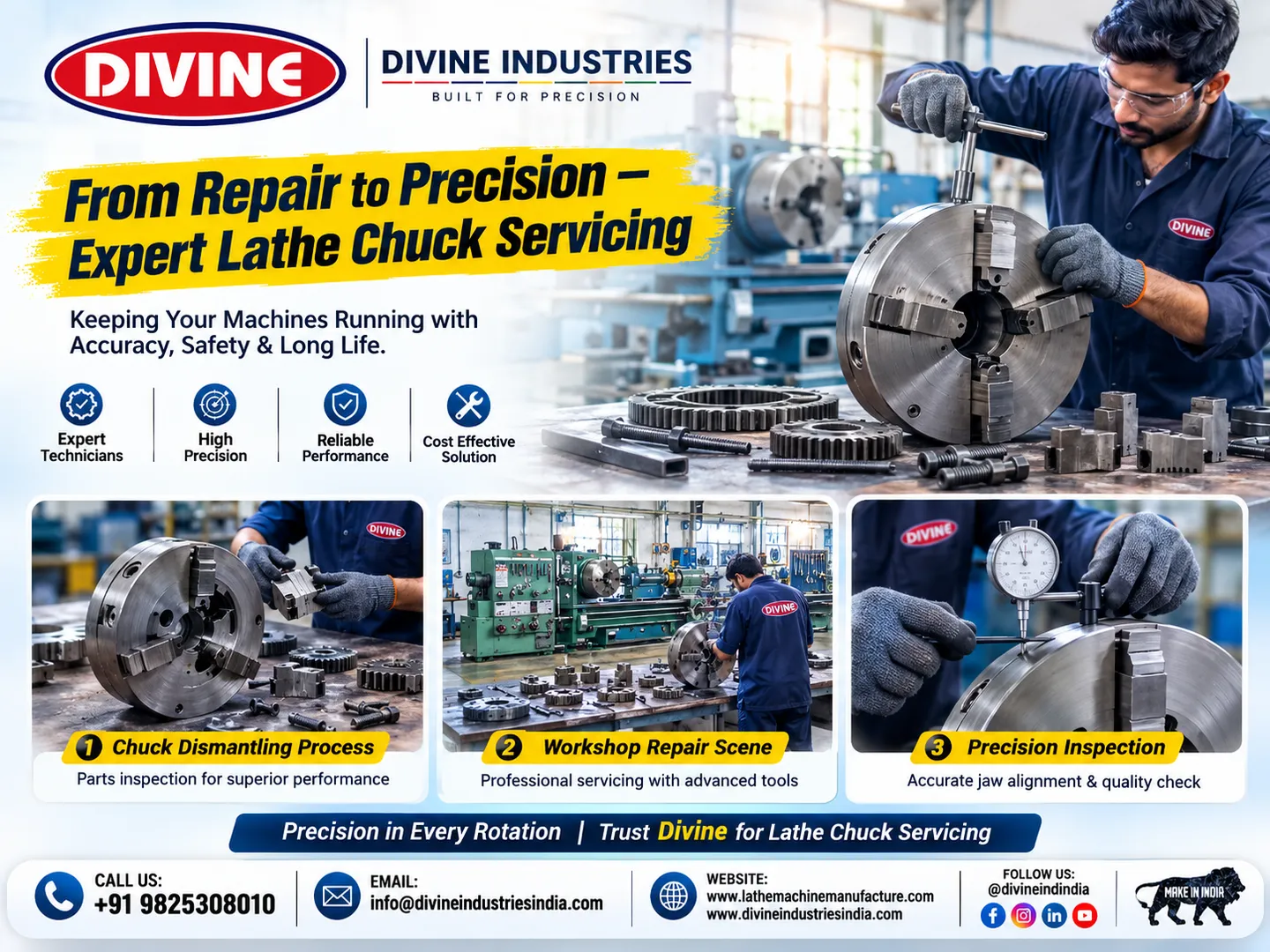
Lathe Chuck Repair: From Worn Components to Precision Performance
A lathe chuck is one of the most important workholding components in a machining workshop. It securely holds the workpiece while the spindle rotates, directly influencing concentricity, machining accuracy, surface finish and operator safety.
Over time, regular production, chips, coolant, insufficient lubrication and component wear can affect chuck performance. Common symptoms include excessive runout, uneven jaw gripping, difficult jaw movement and reduced clamping force. Regular inspection and proper servicing can help identify these problems before they affect production.
At Divine Industries, professional lathe chuck servicing focuses on restoring the chuck's mechanical condition and checking its performance before returning it to production.
What Causes Lathe Chuck Problems?
Several factors can gradually reduce chuck performance:
- Worn or damaged chuck jaws
- Scroll and guide-way wear
- Chips and coolant contamination
- Insufficient or incorrect lubrication
- Damaged jaw teeth or mounting surfaces
- Incorrect jaw installation
- Chuck mounting or spindle alignment problems
- Excessive runout
- Long-term heavy-duty operation
Runout is particularly important because excessive movement between the workpiece axis and spindle axis can affect machining accuracy and repeatability.
Professional Lathe Chuck Repair Process
1. Chuck Inspection
The first step is a detailed visual and functional inspection.
Technicians check the:
- Chuck body
- Jaws
- Scroll mechanism
- Jaw guides
- Pinions
- Mounting surfaces
- Fasteners
- Lubrication points
Cracks, excessive wear or damaged components should be identified before the chuck is returned to service.
2. Chuck Dismantling
The chuck is carefully removed and dismantled using appropriate tools. The individual components are separated so that hidden wear, contamination and damage can be inspected.
For a typical 3-jaw self-centering chuck, the jaws, back plate, pinions and scroll mechanism are dismantled and inspected before cleaning and reassembly.
3. Cleaning & Component Inspection
Accumulated chips, coolant residue and old lubricant can interfere with smooth jaw movement.
Each component should be cleaned and inspected for:
- Wear
- Burrs
- Galling
- Cracks
- Damaged threads
- Excessive clearance
Manufacturer maintenance guidance emphasizes cleaning the chuck's guideways and removing contamination before lubrication and reassembly.
4. Jaw & Scroll Servicing
The condition of the jaws and scroll is critical to chuck performance.
Worn jaws can cause inconsistent gripping and increased runout. Depending on the condition of the components, professional servicing may involve repair, replacement, correction or precision reconditioning.
Grinding or correcting jaws without first checking the chuck body and guideways can mask the actual source of the problem.
5. Lubrication
Proper lubrication helps maintain smooth jaw movement, clamping performance and component life.
Coolant can remove lubricant from chuck mechanisms, while inadequate lubrication can contribute to increased wear, seizing and reduced gripping force.
Important: Always use the lubricant and maintenance interval recommended for the specific chuck by its manufacturer.
6. Precision Reassembly
After cleaning and servicing, components are carefully reassembled in their correct sequence.
For self-centering chucks, correct jaw order and engagement are essential. Incorrect jaw installation can affect chuck operation and accuracy.
7. Runout & Accuracy Check
The final stage is performance verification.
A technician can use precision measuring equipment such as a dial indicator and suitable test workpiece to check chuck and workpiece runout.
If runout remains excessive, the technician should investigate whether the cause is the chuck, jaws, mounting interface, spindle or another part of the machine rather than assuming the chuck alone is responsible.
When Should You Consider Lathe Chuck Repair?
Consider professional servicing when you notice:
✓ Excessive workpiece runout
✓ Uneven gripping by jaws
✓ Difficult jaw movement
✓ Chatter during machining
✓ Reduced clamping performance
✓ Visible jaw or scroll wear
✓ Unusual noise from the chuck
✓ Repeated loss of concentricity
Don't wait for a complete chuck failure. Preventive inspection can help identify wear before it becomes a larger production problem.
Lathe Chuck Repair vs. Chuck Replacement
Repair is not always the right solution. A professional inspection can determine whether a chuck should be:
- Cleaned and serviced
- Repaired
- Reconditioned
- Fitted with replacement components
- Replaced completely
The decision depends on the chuck's condition, required accuracy, component availability and application.
Why Professional Chuck Servicing Matters
A properly serviced chuck can help your workshop achieve:
- Better workholding consistency
- Improved machining accuracy
- Smoother jaw operation
- More reliable clamping
- Reduced unexpected downtime
- Longer component service life
Modern chuck-maintenance guidance continues to emphasize routine cleaning, lubrication and periodic inspection as important parts of reliable workholding.
Keep Your Lathe Chuck Ready for Precision
A lathe chuck may look simple from the outside, but its internal components work together to provide reliable and accurate workholding. Regular maintenance + professional inspection + correct lubrication + precision verification can make a significant difference to chuck performance.
If your chuck is showing excessive runout, worn jaws, difficult movement or reduced gripping performance, professional lathe chuck repair and servicing can help bring it back to dependable working condition.
🔧 Need Lathe Chuck Repair or Servicing?
Keywords