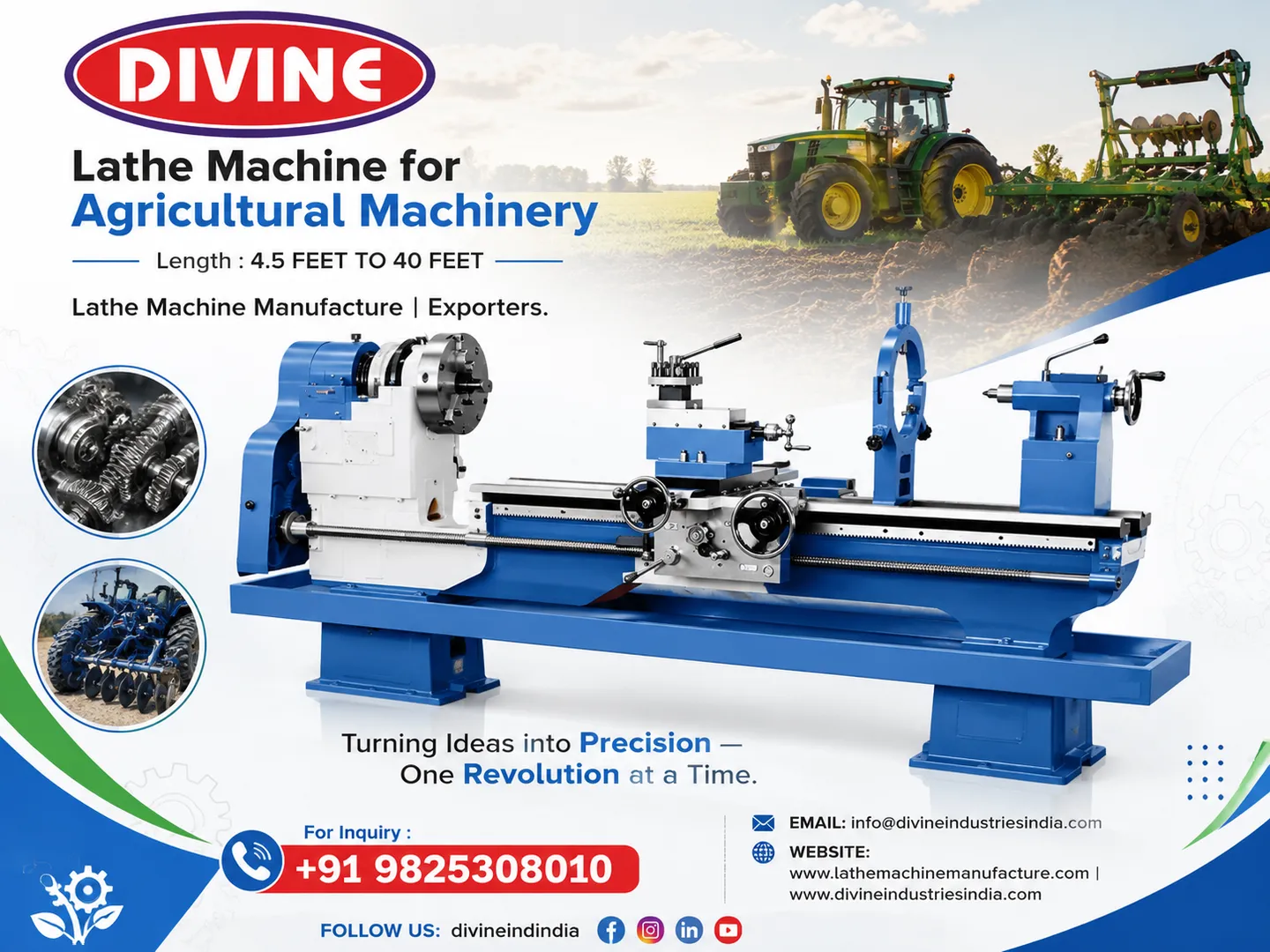
Lathe Machine for Agricultural Machinery: Precision Manufacturing for Modern Farming Equipment
Agricultural machinery plays an important role in improving productivity, reducing manual effort, and supporting efficient farming operations. Behind many tractors, harvesters, cultivators, pumps, tillers, and other farm equipment are precisely machined metal components. A lathe machine for agricultural machinery is one of the essential workshop machines used to manufacture and repair these components.
A lathe works by rotating a workpiece while a cutting tool removes material to achieve the required shape, diameter, length, or surface finish. Common lathe operations include turning, facing, threading, boring, drilling, knurling, and taper turning.
What Is a Lathe Machine for Agricultural Machinery?
A lathe machine used in agricultural machinery manufacturing is designed to machine components commonly found in farm equipment. These components may include shafts, bushings, pins, sleeves, hubs, rollers, spacers, threaded parts, and other cylindrical components.
Agricultural implement manufacturing is among the applications where lathe machines are used for machining shafts, hubs, and implement parts.
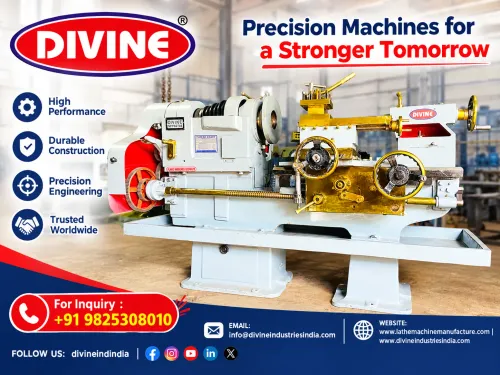
Depending on production requirements, workshops may choose conventional, heavy-duty, all-geared, or CNC lathe machines.
Why Is a Lathe Machine Important in Agriculture Equipment Manufacturing?
Agricultural machinery operates under demanding conditions such as dust, vibration, heavy loads, and repeated mechanical movement. Components therefore need suitable dimensions, proper alignment, and reliable surface finishes.
A lathe machine helps manufacturers:
- Produce accurate cylindrical components
- Repair worn shafts and pins
- Manufacture custom replacement parts
- Create internal and external threads
- Machine bushes and sleeves
- Produce tapered components
- Restore damaged or worn components
- Support small-batch and customized agricultural equipment production
Agricultural Machinery Components Made Using a Lathe
A lathe can be useful for manufacturing or repairing numerous agricultural equipment parts.
1. Shafts
Drive shafts, rollers, transmission shafts, and other cylindrical shafts can be machined to the required diameter and length.
2. Bushes and Sleeves
Bushes and sleeves are commonly used around moving or supporting components. Lathe machining can provide the required outside and inside dimensions.
3. Pins
Pivot pins and connecting pins can be manufactured with accurate diameters and appropriate surface finishes.
4. Hubs
Wheel and implement hubs may require turning, boring, and other machining operations.
5. Threaded Components
Agricultural equipment contains many threaded components. A suitable lathe can perform internal or external thread cutting according to the required specification.
6. Rollers and Spacers
Cylindrical rollers and spacers can be produced efficiently by turning the workpiece to the desired dimensions.
Common Lathe Operations for Agricultural Machinery
The versatility of a lathe makes it suitable for several agricultural engineering applications.
Turning: Removes material from the outside diameter of a component.
Facing: Produces a flat and accurately positioned end surface.
Boring: Enlarges or finishes an existing hole to the required diameter.
Threading: Produces internal or external threads.
Drilling: Creates axial holes using a suitable drill held in the tailstock.
Taper Turning: Produces a gradually changing diameter along the component.
Knurling: Creates a patterned surface where additional grip may be required.
These are established lathe operations used for producing cylindrical, threaded, tapered, and other rotationally symmetrical components.
Choosing the Right Lathe Machine for Agricultural Applications
The correct machine depends on the size and type of agricultural components being manufactured or repaired.
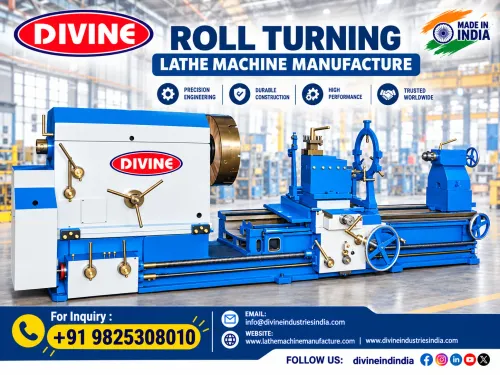
Conventional Lathe Machine
A conventional lathe can be a practical choice for repair workshops, maintenance departments, and general agricultural machinery manufacturing where job sizes vary.
Heavy-Duty Lathe Machine
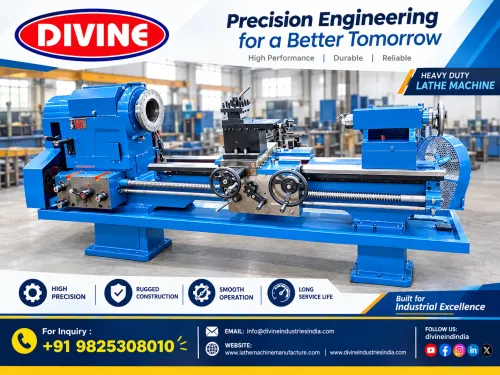
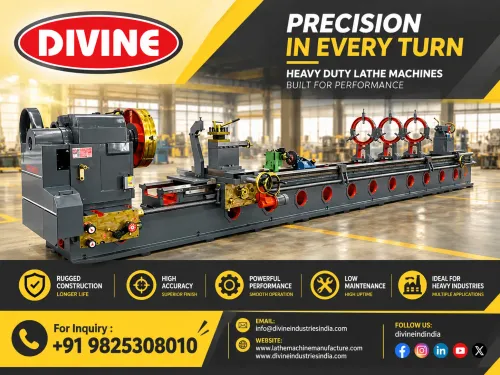
For larger shafts, hubs, rollers, and heavy components, a rigid heavy-duty machine can provide the necessary machining capability.
All-Geared Lathe Machine
An all-geared lathe can be useful for workshops requiring different spindle speeds and regular turning, threading, and other machining operations.
CNC Lathe Machine
CNC lathes are suitable when agricultural component production requires repeatability, automated machining, and consistent dimensions across multiple parts.
Benefits of Using a Lathe Machine in Agricultural Machinery Manufacturing
Using an appropriate lathe machine can provide several practical benefits:
- Precision: Components can be machined to specified dimensions.
- Versatility: One machine can perform multiple machining operations.
- Repair Capability: Damaged or worn cylindrical parts can often be restored or reproduced.
- Customization: Special-purpose agricultural components can be manufactured according to drawings or requirements.
- Productivity: Suitable machines can improve machining efficiency for repeated jobs.
- Maintenance Support: Workshops can manufacture replacement parts without depending entirely on outside suppliers.
Lathe Machine for Agricultural Machinery Repair
Lathe machines are also valuable in agricultural machinery repair workshops. Farm equipment can experience component wear after extended operation. Instead of replacing an entire assembly, a workshop may be able to machine a replacement shaft, bush, pin, sleeve, or other compatible component.
This makes a lathe particularly useful for tractor repair, farm implement maintenance, agricultural pump servicing, and general machinery workshops.
Factors to Consider Before Buying a Lathe Machine
Before selecting a lathe for agricultural machinery applications, consider:
- Swing over bed – important for determining the maximum workpiece diameter.
- Center distance – determines the approximate maximum length that can be supported between centers.
- Spindle bore – important when machining longer shafts or bar stock.
- Motor capacity – should match the expected machining workload.
- Machine rigidity – important for heavy components and vibration control.
- Spindle speed range – allows machining of different materials and diameters.
- Chuck capacity – should accommodate the workpieces commonly handled by the workshop.
- Availability of spare parts and service – important for long-term machine operation.
Conclusion
A lathe machine for agricultural machinery is a valuable manufacturing and maintenance solution for producing and repairing precision components. From shafts and bushes to hubs, pins, sleeves, rollers, and threaded parts, the machine can handle a wide variety of agricultural engineering jobs.
For agricultural equipment manufacturers and repair workshops, selecting a lathe according to component size, production volume, machining requirements, accuracy, and workload can help create an efficient and dependable machining setup.
Keywords