Lathe Machine for Construction Equipment: Precision Machining for Heavy-Duty Components
The construction industry depends on powerful machines such as excavators, loaders, cranes, bulldozers, drilling machines, and concrete equipment. Behind the reliable performance of these machines are hundreds of accurately manufactured metal components. A lathe machine for construction equipment plays an important role in producing, repairing, and finishing many of these cylindrical and precision components.
From shafts and pins to bushes, rollers, hydraulic components, and threaded parts, industrial lathes provide the accuracy and strength required for demanding construction applications. Modern heavy-duty lathes are particularly useful when workshops need to machine large and heavy workpieces with stability and consistent results.
What Is a Lathe Machine?
A lathe machine is a machine tool that rotates a workpiece while a cutting tool removes material from its surface. This process can create accurate cylindrical shapes, reduce diameters, produce threads, create grooves, and finish surfaces.
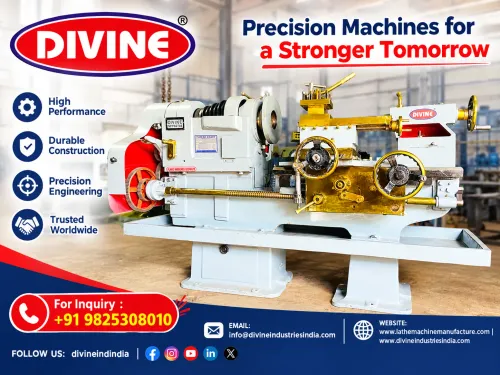
The basic structure of a conventional lathe includes the bed, headstock, spindle, chuck, carriage, tool post, and tailstock. These components work together to hold, rotate, support, and machine the workpiece accurately.
For construction equipment manufacturers and maintenance workshops, selecting the right lathe is important because components can be large, heavy, and made from tough engineering materials.
Why Lathe Machines Are Important for Construction Equipment
Construction machinery operates under demanding conditions involving heavy loads, vibration, dust, impact, and continuous use. Components must therefore be manufactured and maintained with suitable dimensional accuracy.
A lathe machine helps workshops perform essential machining operations without depending entirely on outside suppliers. It can be used for both new component manufacturing and maintenance work.
Some important advantages include:
- Accurate machining of cylindrical components
- Manufacturing of customized replacement parts
- Restoration of worn shafts and pins
- Thread cutting for mechanical components
- Improved surface finishing
- Support for repair and maintenance operations
- Ability to handle different component sizes with suitable machine configurations
Metal lathes are commonly used to manufacture cylindrical components such as shafts, pins, bushings, and spacers, making them particularly useful in heavy engineering applications.
Construction Equipment Components Machined on a Lathe
A suitable industrial lathe can be used for producing or repairing a wide range of construction equipment components.
1. Shafts
Shafts transmit power and rotational movement in many types of construction machinery. A lathe can perform turning, facing, grooving, and other operations needed to achieve the required dimensions.
2. Pins
Excavators, loaders, cranes, and other machines use heavy-duty pins in joints and linkages. Lathe machining can help produce accurate pin diameters and smooth surfaces.
3. Bushes and Sleeves
Bushes and sleeves are commonly used to reduce wear between moving components. A lathe can machine their outside and inside diameters to the required dimensions.
4. Hydraulic Components
Hydraulic systems are essential in excavators, loaders, cranes, and other equipment. Lathe machines can be used for machining selected cylindrical hydraulic components, rods, sleeves, and related parts.
5. Rollers
Construction machinery may contain rollers and cylindrical support components. Heavy-duty lathes provide the rigidity needed to machine larger workpieces effectively.
6. Threaded Components
Threading is another important lathe operation. It can be used to create external or internal threads for mechanical assemblies, fittings, and customized components.
Common Lathe Operations for Construction Machinery
Different machining operations can be selected according to the component and its final requirements.
Turning
Turning removes material from the outside diameter of a rotating workpiece. It is one of the most common operations used for shafts, pins, rods, and cylindrical parts.
Facing
Facing produces a flat surface at the end of a component. It is often performed before additional machining operations.
Boring
Boring enlarges or improves an existing hole and can be useful when machining sleeves, bushes, and other components.
Threading
Thread cutting creates accurate internal or external threads for mechanical connections.
Grooving
Grooving creates narrow channels on a workpiece. These grooves may be required for retaining rings, seals, or other assembly requirements.
Taper Turning
Taper turning produces a gradual change in diameter along the length of a component. It is useful for specialized mechanical parts.
Lathe machines can perform operations including turning, facing, boring, drilling, threading, knurling, grooving, and taper turning, depending on the machine configuration and tooling.
Heavy-Duty Lathe Machine for Construction Equipment
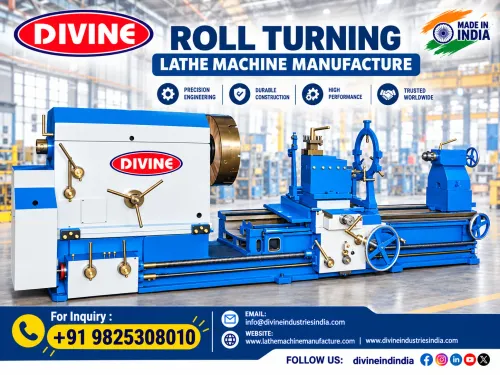
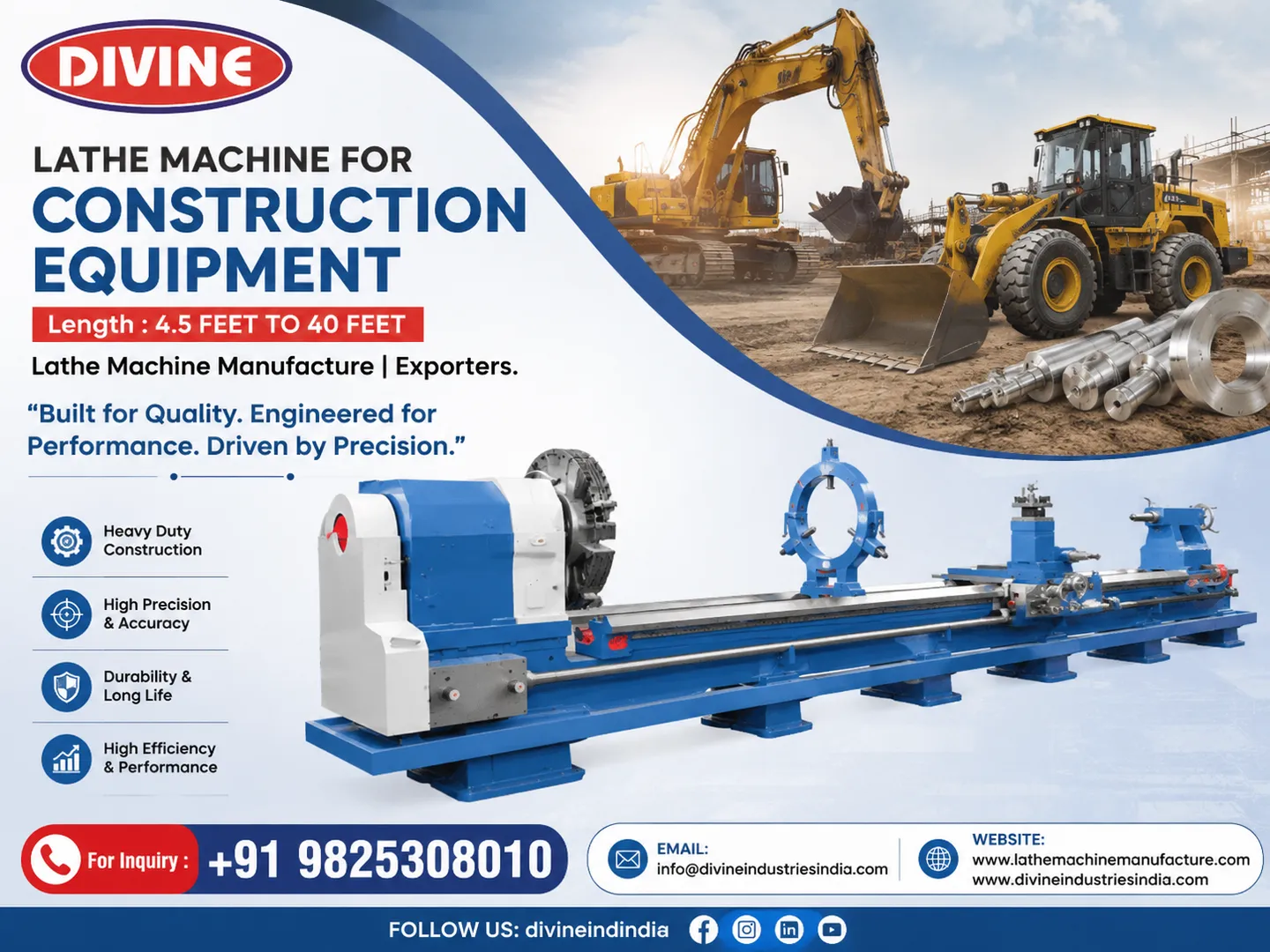
Construction equipment components are often larger and heavier than standard workshop parts. For these applications, a heavy-duty lathe machine can provide the rigidity and machining capacity required for demanding jobs.
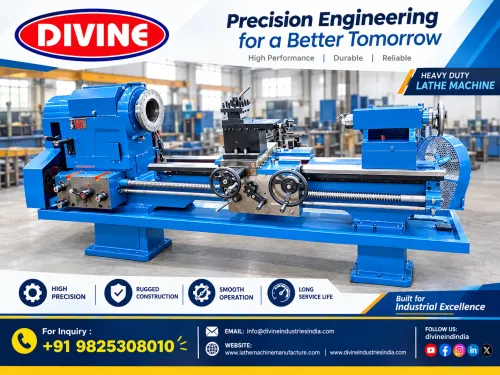
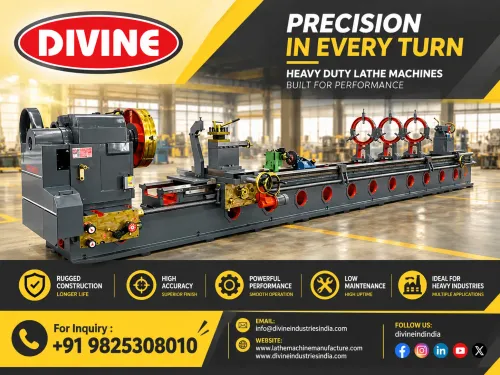
A heavy-duty lathe generally features a robust machine bed, powerful spindle system, suitable workholding arrangements, and a strong feed mechanism. These features help reduce vibration during machining and support consistent results on large workpieces.
For example, heavy-duty and gap-bed configurations can be useful when machining larger components that cannot easily fit on a standard lathe. Gap-bed lathes are specifically designed to accommodate workpieces with larger diameters by providing additional clearance.
CNC Lathe Machine for Construction Equipment Components
For manufacturers producing repeated quantities of components, a CNC lathe machine can offer advantages in accuracy, repeatability, and automated tool movement.
CNC lathes use programmed instructions to control operations such as spindle rotation and tool movement. This makes them suitable for production environments where consistent dimensions and repeatable machining are important.
A CNC solution can be especially useful when construction equipment manufacturers need to produce multiple batches of similar shafts, bushes, pins, fittings, or other precision components.
Benefits of Using Lathe Machines in Construction Equipment Manufacturing
High Precision
Properly selected machines and tooling can produce components with accurate dimensions and repeatable results.
Strong and Reliable Components
Accurate machining helps components achieve the required fit within mechanical assemblies.
Flexible Production
A lathe can handle different types of jobs, from individual replacement parts to regular production work.
Easier Maintenance
Construction equipment workshops can use lathes to repair or reproduce selected worn components, potentially reducing equipment downtime.
Customized Machining
When an original replacement component is difficult to source, a workshop may be able to manufacture a suitable replacement based on engineering drawings, measurements, and material specifications.
Suitable for Heavy Components
Heavy-duty lathe configurations are designed for larger workpieces and demanding machining conditions.
How to Select the Right Lathe Machine for Construction Equipment
Choosing the right machine requires consideration of the actual components that will be machined.
Important factors include:
Swing Over Bed: Determines the maximum workpiece diameter that can be accommodated.
Distance Between Centres: Important when machining long shafts, rods, and similar components.
Spindle Bore: A larger spindle bore can be beneficial when working with larger-diameter bars and components.
Machine Bed: A rigid and stable bed helps control vibration during heavy machining.
Motor and Spindle Power: The power requirement depends on workpiece material, diameter, cutting depth, and machining operation.
Chuck Capacity: The workholding system should match the dimensions and weight of the components.
Machine Type: Depending on production requirements, manufacturers may consider conventional, all-geared, heavy-duty, extra-heavy-duty, gap-bed, or CNC lathe machines.
Accessories: Steady rests, taper-turning attachments, digital readouts, coolant systems, and other accessories can improve machining flexibility for specific applications.
Role of Lathe Machines in Construction Equipment Maintenance
A lathe is not only valuable for manufacturing new components. It can also be an important machine in construction equipment repair workshops.
Over time, shafts, pins, bushes, rollers, and other components may experience wear. Depending on the component and engineering requirements, machining may be used to restore dimensions or manufacture a replacement part.
This capability can help maintenance teams respond faster to equipment repair requirements and reduce dependence on external machining facilities.
Conclusion
A lathe machine for construction equipment is an important machining solution for manufacturing and maintaining heavy-duty machinery components. From shafts and pins to bushes, sleeves, rollers, and threaded parts, lathe machines provide the versatility required for a wide range of engineering applications.
For construction equipment manufacturers and repair workshops, the right combination of machine capacity, rigidity, spindle performance, workholding, tooling, and operator skill can make a significant difference in machining quality and productivity.
Whether the requirement is for occasional repair work, customized components, or regular production, selecting a lathe machine according to the size, material, and machining requirements of the workpieces is essential for achieving reliable results.
Looking for a reliable lathe machine for construction equipment component manufacturing or repair? Choose a machine configuration that matches your component size, production volume, and precision requirements.
Keywords