Lathe Machine for Steel Industry: Applications, Benefits and How to Choose the Right Machine
The steel industry depends on strong, reliable, and precise machinery to manufacture and maintain heavy components. Among the most important machine tools used in steel processing and engineering workshops is the lathe machine. From machining steel shafts and rolls to repairing large cylindrical components, industrial lathes play an essential role in maintaining production efficiency.
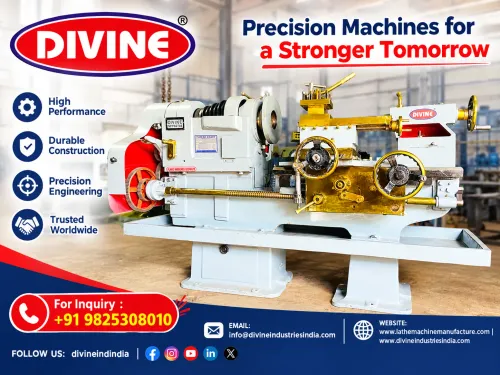
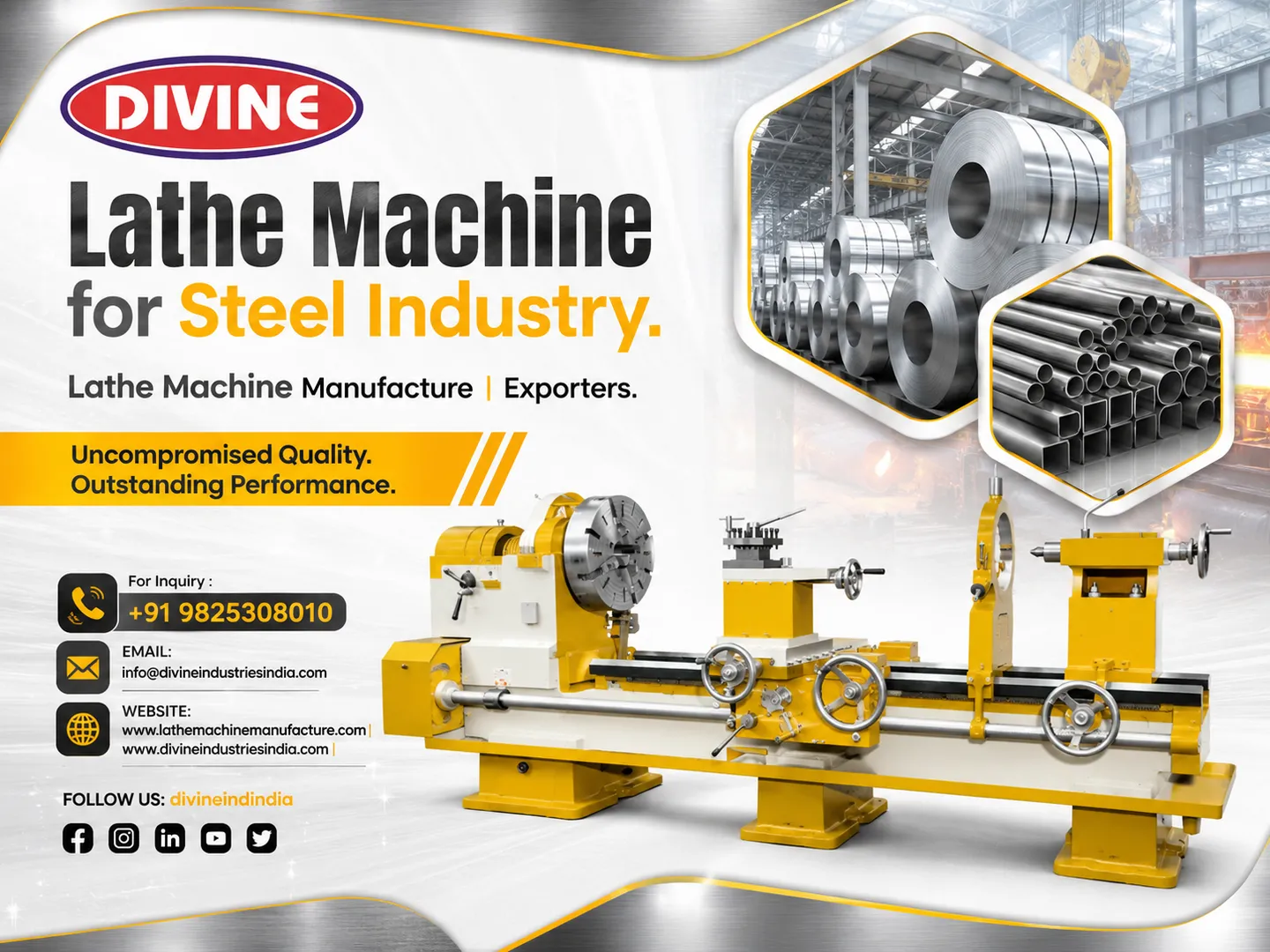
A modern lathe machine for the steel industry is designed to handle demanding machining operations, including turning, facing, threading, boring, drilling, and finishing. Heavy-duty models are particularly suitable for large and high-weight steel components where rigidity, power, and accuracy are important.
What Is a Lathe Machine?
A lathe machine is a machine tool in which the workpiece rotates while a cutting tool removes material to achieve the required shape and dimensions. This basic principle makes the lathe particularly useful for producing cylindrical and symmetrical components.
In steel manufacturing and related industries, lathes are commonly used for machining shafts, rollers, bushings, pins, couplings, pipes, and other precision components. Common lathe operations include turning, facing, boring, threading, drilling, grooving, and knurling.
Why Lathe Machines Are Important in the Steel Industry
Steel plants and rolling mills regularly work with components that are large, heavy, and exposed to demanding operating conditions. These parts may require machining during initial manufacturing as well as periodic maintenance and refurbishment.
A suitable industrial lathe provides several important advantages:
- Accurate dimensional machining
- High rigidity during heavy cutting
- Capability to machine large-diameter components
- Consistent surface finishing
- Reduced component repair time
- Versatility for different machining operations
- Support for maintenance and reconditioning work
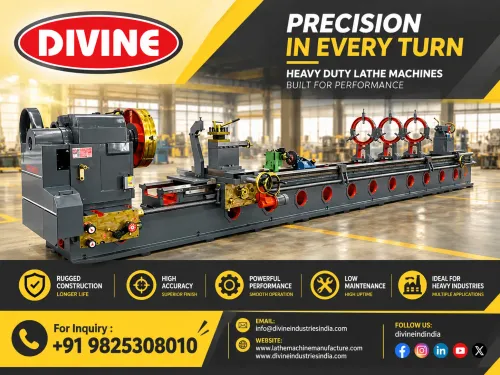
Heavy-duty lathes are especially useful where large workpieces require substantial cutting capacity and stable machining conditions.
Major Applications of Lathe Machines in Steel Plants
1. Roll Turning
Rolling mills use large rolls that can gradually wear during continuous operation. A roll turning lathe can be used to re-machine and restore the required roll profile and surface condition.
This helps steel plants extend component life and reduce the need for frequent replacement.
2. Machining Steel Shafts
Steel shafts are used in numerous industrial machines and production systems. A lathe can turn the shaft to the required diameter and create shoulders, grooves, threads, and other features.
3. Manufacturing and Repairing Couplings
Couplings connect rotating components and require accurate dimensions for reliable operation. Lathe machining helps achieve the required concentricity and surface finish.
4. Large-Diameter Component Machining
Heavy-duty and gap-bed lathes can accommodate larger workpieces than conventional workshop machines. This makes them suitable for large steel cylinders, pipes, rollers, and other industrial components.
5. Boring Operations
Boring is used to enlarge or accurately finish an existing hole. In steel engineering applications, this can be important when repairing housings, cylinders, and other components that require precise internal dimensions.
6. Thread Cutting
Industrial lathes can produce internal and external threads on steel components. Threading is useful for manufacturing fasteners, shafts, pipe-related components, and specialized machine parts.
7. Component Reconditioning
Steel plants operate expensive machinery for long periods. Instead of replacing every worn cylindrical component, machining can sometimes restore the component to usable dimensions. This makes a heavy-duty lathe valuable for maintenance workshops.
Types of Lathe Machines Suitable for Steel Industry
Different steel applications require different machine configurations.
Heavy Duty Lathe Machine
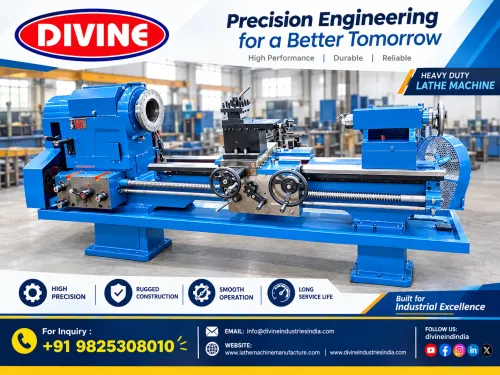
A heavy-duty lathe machine is designed for demanding machining of large and heavy workpieces. Its rigid construction and high torque make it suitable for industrial workshops and heavy engineering applications.
Roll Turning Lathe
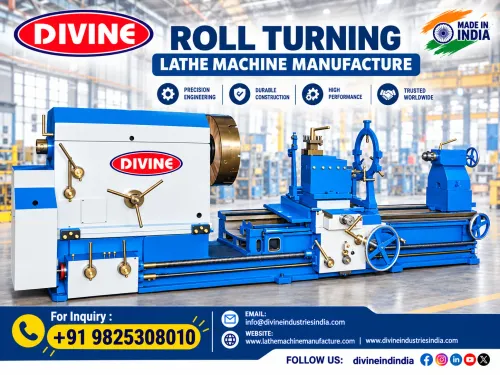
Roll turning lathes are designed specifically for machining large rolls used in rolling mills. They are suitable when accurate roll dimensions and surface profiles are critical.
CNC Lathe Machine
CNC lathes use computer-controlled machining to produce components with repeatable dimensions and programmed operations. They can be advantageous for production environments where consistency and automation are priorities.
Vertical Turning Lathe
A vertical turning lathe, or VTL, is particularly useful for large-diameter and heavy components. The vertical arrangement can make loading and machining certain large workpieces more practical.
Gap Bed Lathe
A gap-bed configuration provides additional space for machining larger-diameter components that may not fit over a standard lathe bed.
Important Features to Consider When Selecting a Lathe
Choosing a lathe for a steel plant should be based on the actual machining requirements rather than machine size alone.
1. Swing Over Bed
This determines the maximum diameter of workpiece that can rotate over the bed. A larger swing is important for large steel components.
2. Distance Between Centres
This determines the maximum practical length of a workpiece that can be supported between centres.
3. Spindle Bore
A larger spindle bore can be useful when machining long bars, shafts, and tubular components.
4. Motor Power
Steel machining, especially heavy cutting, can require substantial power. The motor should be selected according to workpiece material, diameter, cutting conditions, and production requirements.
5. Bed Rigidity
A rigid machine structure helps minimize unwanted vibration during heavy machining. This can contribute to better dimensional accuracy and surface finish.
6. Speed and Feed Range
The machine should provide appropriate spindle speeds and feed rates for the range of steel components being machined.
7. Workholding Capacity
The chuck, faceplate, centres, steady rests, and other workholding equipment should be suitable for the size and weight of the components.
8. Maintenance and Service Support
For a production environment, machine availability is important. Before purchasing, consider spare-parts availability, technical support, installation, and after-sales service.
Benefits of Using a Lathe Machine in Steel Manufacturing
A properly selected lathe can provide significant operational benefits.
Improved Precision:
Accurate machining helps components meet required dimensional specifications.
Greater Productivity:
Efficient turning and finishing operations can reduce machining time.
Component Reuse:
Worn cylindrical components may be reconditioned instead of immediately replaced.
Versatility:
One machine can perform several operations with suitable tooling.
Reduced Maintenance Downtime:
In-house machining capability can help maintenance teams restore components more quickly.
Long-Term Value:
A robust industrial lathe can serve a steel plant for many years when properly operated and maintained.
Manual vs CNC Lathe for Steel Applications
The choice between a conventional and CNC lathe depends on production requirements.
A manual lathe can be suitable for maintenance work, repair jobs, prototypes, and applications where component quantities are relatively low.
A CNC lathe can be advantageous for repetitive production, complex machining sequences, and applications where consistent automated machining is required.
For large steel components, however, machine rigidity, workholding, spindle capacity, and overall machine configuration remain important regardless of the control system.
How to Maintain a Lathe Machine
Regular maintenance helps protect machine accuracy and operating life.
Important maintenance practices include:
- Clean the machine after machining operations.
- Lubricate moving parts according to manufacturer recommendations.
- Inspect guideways and leadscrews regularly.
- Check chuck and workholding components.
- Monitor unusual vibration or noise.
- Keep cutting tools properly maintained.
- Check alignment periodically.
- Follow recommended electrical and safety inspections.
- Replace worn components before they affect machining accuracy.
Conclusion
A lathe machine for the steel industry is more than a conventional metal-cutting machine. It is an important production and maintenance tool capable of machining, repairing, and reconditioning a wide range of steel components.
For steel plants, rolling mills, heavy engineering workshops, and maintenance facilities, selecting the right lathe requires careful consideration of workpiece size, weight, diameter, machining operations, accuracy, spindle capacity, motor power, and production requirements.
Whether the requirement is for heavy-duty turning, roll machining, shaft manufacturing, boring, threading, or component refurbishment, the right industrial lathe can improve machining efficiency and support reliable plant operations.
Frequently Asked Questions
What is a lathe machine used for in the steel industry?
A lathe is used for turning, facing, boring, threading, drilling, grooving, and finishing steel components such as shafts, rolls, pipes, couplings, and cylindrical parts.
Which lathe is best for heavy steel components?
A heavy-duty lathe, roll turning lathe, or vertical turning lathe may be appropriate depending on the component's diameter, length, weight, and machining requirements.
Can a lathe machine be used for steel shafts?
Yes. Lathes are widely used for machining steel shafts to achieve specific diameters, lengths, shoulders, grooves, threads, and surface finishes.
What should I check before buying a lathe for a steel plant?
Consider swing over bed, distance between centres, spindle bore, motor power, machine rigidity, chuck capacity, speed range, workpiece weight, tooling requirements, and after-sales service.
Keywords