Lathe Machines: A Complete Guide to Precision, Performance and Industrial Applications
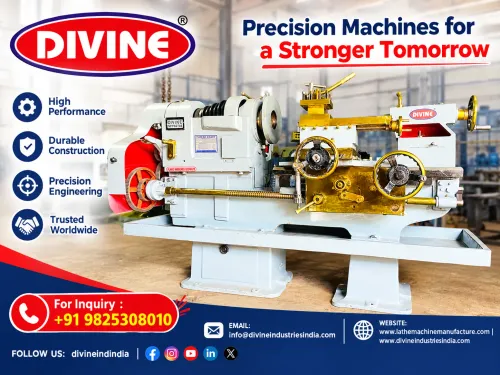
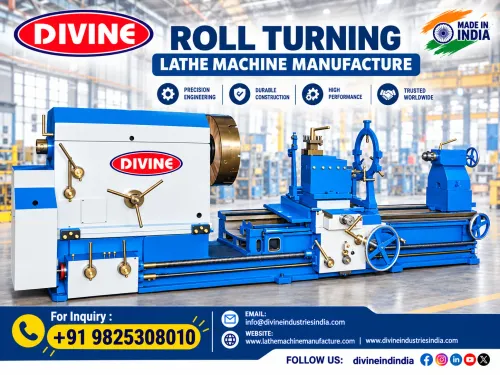
Lathe machines are among the most important tools used in modern manufacturing and metalworking industries. They are designed to rotate a workpiece while a cutting tool removes unwanted material to create accurate shapes, dimensions, threads, grooves, and smooth surfaces. Because of their versatility and reliable performance, lathe machines are widely used in engineering workshops, fabrication units, automobile industries, maintenance facilities, and heavy manufacturing plants.
What Is a Lathe Machine?
A lathe machine is an industrial machine tool used for machining cylindrical and other symmetrical components. During operation, the workpiece is firmly held and rotated around its axis. A cutting tool then moves against the rotating material to perform the required machining operation.
Depending on the machine design and application, a lathe can be used for turning, facing, threading, drilling, boring, knurling, taper turning, and several other operations.
Modern lathe machines are available in different sizes and configurations, allowing manufacturers to select equipment according to their production requirements, component dimensions, material type, and desired accuracy.
How Does a Lathe Machine Work?
The basic working principle of a lathe machine is simple but highly effective.
The workpiece is secured in a chuck or another suitable holding device. The spindle rotates the workpiece at a selected speed. A cutting tool is positioned against the material and gradually removes excess metal as the workpiece rotates.
The operator can control factors such as:
- Spindle speed
- Feed rate
- Cutting depth
- Tool position
- Workpiece support
Proper adjustment of these parameters helps achieve the required component size, surface finish, and machining accuracy.
Main Components of a Lathe Machine
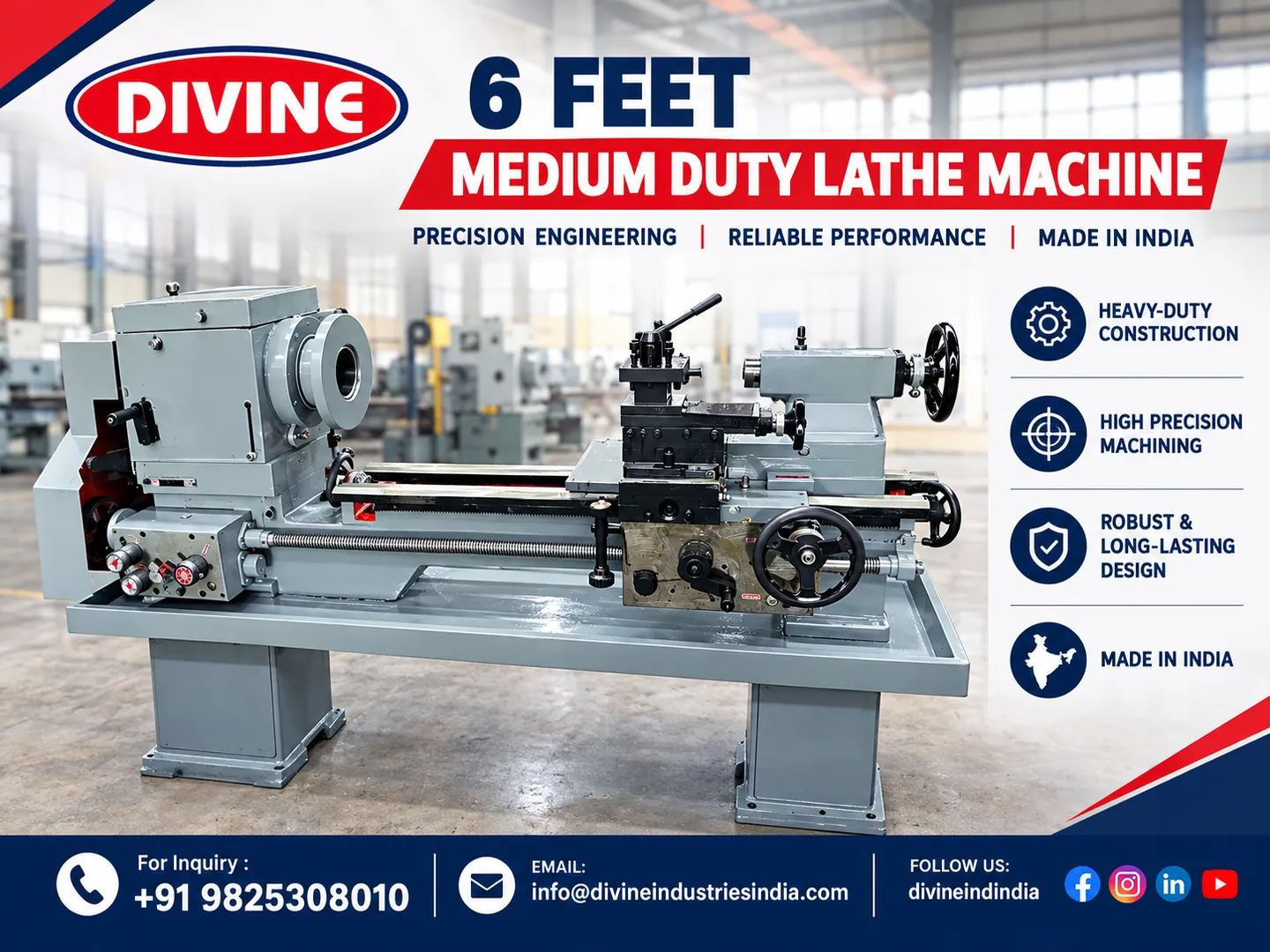
A conventional lathe machine consists of several important components that work together to deliver stable machining performance.
1. Bed
The bed is the main supporting structure of the machine. It provides a rigid foundation and supports components such as the headstock, tailstock, and carriage.
2. Headstock
The headstock houses the spindle and drive mechanism. It supplies rotational movement to the workpiece and plays an important role in controlling machining speed.
3. Tailstock
The tailstock supports the opposite end of longer workpieces. It can also accommodate tools such as drills and reamers for specific machining operations.
4. Carriage
The carriage carries and guides the cutting tool along the workpiece. It allows controlled tool movement during turning and other operations.
5. Chuck
A chuck holds the workpiece securely during machining. Different chuck configurations can be selected according to component shape and machining requirements.
6. Tool Post
The tool post holds the cutting tool firmly and allows the operator to position it accurately for machining.
Common Types of Lathe Machines
Different manufacturing applications require different types of lathes. Some commonly used varieties include:
Heavy Duty Lathe Machine
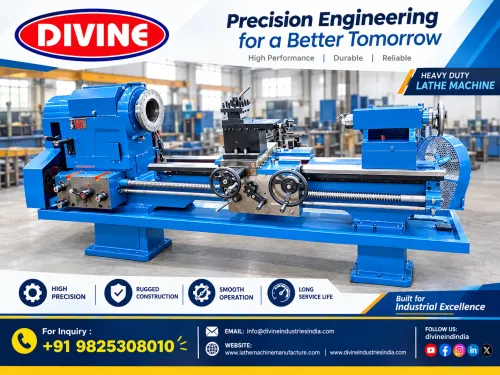
Heavy duty lathes are designed for demanding machining applications involving large and heavy components. Their robust construction makes them suitable for industries where high rigidity and dependable performance are required.
Centre Lathe Machine
Centre lathes are widely used for general-purpose machining. They can perform several operations and are commonly found in engineering and maintenance workshops.
CNC Lathe Machine
CNC lathe machines use computer-controlled systems to automate machining operations. They are suitable for applications requiring repeatability, consistent dimensions, and efficient production.
Precision Lathe Machine
Precision lathes are designed for applications where dimensional accuracy and surface quality are particularly important.
Extra Long Bed Lathe Machine
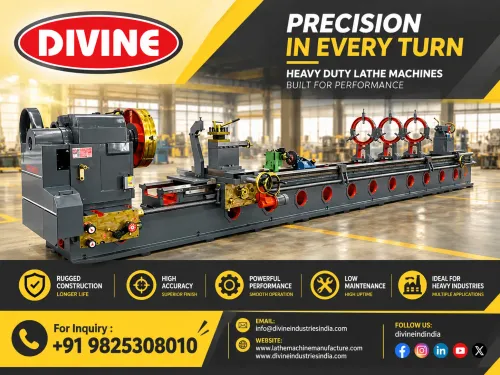
Extra-long bed machines are suitable for machining extended workpieces that cannot be accommodated on standard machines.
Major Lathe Machine Operations
A lathe machine can perform a wide range of machining processes.
Turning: Removes material from the outer surface to reduce the diameter or create a required profile.
Facing: Produces a flat surface at the end of a workpiece.
Threading: Creates internal or external threads according to the required specification.
Drilling: Produces holes using a drill mounted on the machine.
Boring: Enlarges or improves an existing hole with greater dimensional control.
Knurling: Creates a textured pattern on the surface for improved grip or appearance.
Taper Turning: Produces a conical or tapered surface on the workpiece.
Industrial Applications of Lathe Machines
Lathe machines are used across many industries because of their flexibility and machining capabilities.
Common applications include:
- Automobile component manufacturing
- Industrial machinery production
- Agricultural equipment manufacturing
- Pump and valve component machining
- Shaft and bush manufacturing
- Engineering workshops
- Fabrication and repair industries
- Heavy equipment manufacturing
- General maintenance operations
- Tool and component production
From small engineering components to large industrial shafts, the right lathe machine can support a wide variety of manufacturing requirements.
Benefits of Using a Quality Lathe Machine
Investing in a properly designed lathe machine can provide several operational advantages.
Reliable Machining
A rigid machine structure helps maintain stability during cutting and contributes to consistent machining results.
Versatile Applications
One machine can perform multiple operations, reducing the need for separate equipment for every machining process.
Better Productivity
Efficient cutting performance and suitable machine configuration can help reduce machining time and improve workshop productivity.
Consistent Component Quality
Accurate machine movement and appropriate tooling help manufacturers produce components with repeatable dimensions.
Long-Term Value
A well-built industrial lathe can provide dependable service for many years when operated correctly and maintained regularly.
How to Select the Right Lathe Machine?
Choosing a lathe machine should be based on the actual requirements of the workshop or manufacturing facility.
Consider the following factors:
- Workpiece size – Check the maximum diameter and length of components you need to machine.
- Machine capacity – Select a suitable swing, centre distance, and bed length.
- Material type – Consider whether you will machine mild steel, stainless steel, cast iron, aluminium, or other materials.
- Required accuracy – Precision appli
Keywords