Lifting Belt Manufacturer: Heavy-Duty Webbing Slings for Safe Material Handling
In modern industries, safe and efficient material handling is essential for maintaining productivity and protecting valuable equipment and loads. A lifting belt is one of the most widely used solutions for lifting, positioning, and handling heavy materials in construction, manufacturing, warehouses, logistics, engineering, and industrial applications.
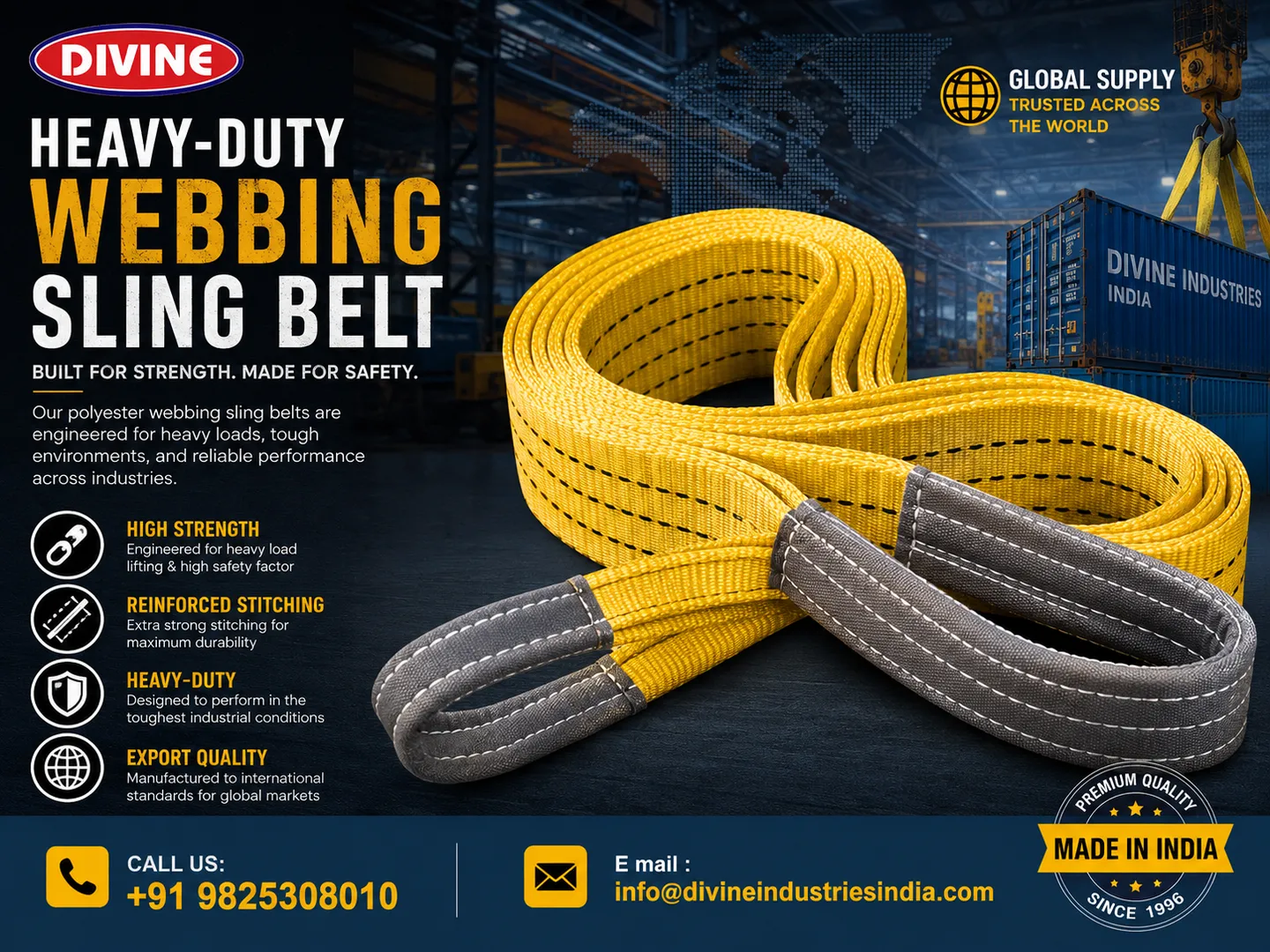
As an experienced lifting belt manufacturer, we focus on producing durable and reliable lifting solutions designed for demanding working environments. Our webbing lifting belts are manufactured using high-strength synthetic webbing and reinforced stitching to provide dependable performance during lifting operations.
What Is a Lifting Belt?
A lifting belt, commonly known as a webbing sling or lifting sling, is a flexible load-handling device used with cranes, hoists, and other lifting equipment. Unlike rigid lifting accessories, webbing slings can easily adapt to different load shapes and provide a practical solution for handling various materials.
The flexibility and lightweight construction of polyester lifting belts make them convenient for transportation, installation, and regular industrial use.
Why Choose a Quality Lifting Belt?
Selecting the right lifting belt is important for workplace safety and operational efficiency. A properly manufactured webbing sling can offer several advantages:
- High-strength synthetic webbing construction
- Reinforced stitching for improved durability
- Flexible design for different load shapes
- Lightweight and easy to handle
- Suitable for various lifting applications
- Easy storage and transportation
- Available in different lengths and configurations
- Reduced risk of damage to properly handled loads
For industrial buyers, choosing a reliable manufacturer is just as important as selecting the correct lifting capacity and configuration.
Applications of Webbing Lifting Belts
Lifting belts are used across a wide range of industries. Common applications include:
Construction Industry
Construction companies use webbing slings for lifting steel structures, pipes, machinery, building components, and other heavy materials at project sites.
Manufacturing Plants
In manufacturing facilities, lifting belts can be used for moving machinery, fabricated components, equipment, and finished products.
Warehousing and Logistics
Webbing slings are useful for material handling operations where heavy or oversized products need to be lifted and positioned efficiently.
Engineering and Fabrication
Fabrication workshops frequently use lifting belts for handling metal components, structural sections, machinery parts, and fabricated assemblies.
Heavy Machinery Handling
Specialized lifting belts can assist with positioning and moving industrial machinery when used with suitable lifting equipment and within their rated capacity.
Polyester Webbing Sling Manufacturing
The quality of a lifting belt depends heavily on the materials, webbing construction, stitching, and manufacturing process.
A professional polyester webbing sling manufacturer should maintain consistent production standards throughout the manufacturing process. The webbing must be suitable for the intended application, while reinforced stitching and properly formed lifting eyes help provide structural integrity.
Different lifting requirements may call for different belt widths, lengths, configurations, and working load limits. Therefore, industrial buyers should select products according to the actual lifting application rather than choosing a sling based only on appearance or size.
Lifting Belt Manufacturer and Supplier
When purchasing lifting belts in bulk, buyers should look beyond price. Important factors include product consistency, manufacturing capability, customization options, packaging, documentation, and supply reliability.
A professional lifting belt supplier can provide products according to customer requirements, including different lengths, widths, lifting configurations, and quantities.
For international buyers, dependable packaging and export handling are also important considerations when sourcing lifting slings from India.
Why Source Lifting Slings from India?
India has a growing manufacturing sector with strong capabilities in textiles, engineering products, industrial equipment, and material-handling accessories.
Indian manufacturers can offer competitive manufacturing costs while supplying products for domestic and international industrial markets. For importers, distributors, contractors, and industrial procurement companies, sourcing from a capable Indian lifting sling manufacturer can provide a practical combination of manufacturing capacity and competitive pricing.
How to Select the Right Lifting Belt
Before purchasing a lifting belt, consider the following factors:
1. Load Weight:
Determine the weight of the material that needs to be lifted.
2. Sling Configuration:
Choose the appropriate configuration according to the lifting method and application.
3. Required Length:
Select a suitable sling length based on the dimensions and lifting arrangement.
4. Working Load Limit:
Always check the manufacturer's rated capacity and ensure the lifting arrangement is suitable for the intended load.
5. Load Characteristics:
Consider sharp edges, surface conditions, temperature, chemicals, and other environmental factors that may affect the sling.
6. Inspection Requirements:
Lifting equipment should be inspected regularly and removed from service if it shows damage or deterioration.
Quality and Safety in Lifting Belt Manufacturing
Lifting accessories are safety-critical products. Manufacturing quality, correct product selection, proper usage, inspection, and safe lifting practices all play an important role in preventing accidents.
Users should always follow applicable lifting regulations, manufacturer's instructions, and site safety procedures. A lifting belt should never be used beyond its rated capacity or outside the conditions for which it is designed.
Customized Lifting Belts for Industrial Requirements
Different industries have different material-handling requirements. For this reason, manufacturers may offer lifting belts in various sizes and configurations.
Depending on the application, buyers may request specific lengths, widths, eye configurations, webbing specifications, labeling, packaging, and other requirements.
Customization can be particularly useful for distributors, OEM buyers, contractors, and exporters looking for consistent products under specific procurement requirements.
Choose a Reliable Lifting Belt Manufacturer
A reliable lifting belt manufacturer should combine suitable raw materials, controlled manufacturing processes, reinforced construction, consistent quality, and dependable customer service.
Whether you require lifting belts for construction, machinery handling, fabrication, logistics, or industrial material handling, selecting a suitable product for the specific application is essential.
If you are looking for a lifting belt manufacturer, webbing sling manufacturer, polyester sling supplier, or lifting sling exporter from India, choose a manufacturer that can support your required specifications and quantity with consistent product quality.
Conclusion
Lifting belts provide a flexible and practical solution for many industrial lifting and material-handling applications. Their lightweight construction, flexibility, and high-strength webbing make them useful across construction, manufacturing, engineering, warehousing, and logistics.
For businesses sourcing lifting belts, working directly with a dependable lifting belt manufacturer can help ensure consistent supply, suitable product specifications, and reliable support for industrial requirements.
Keywords