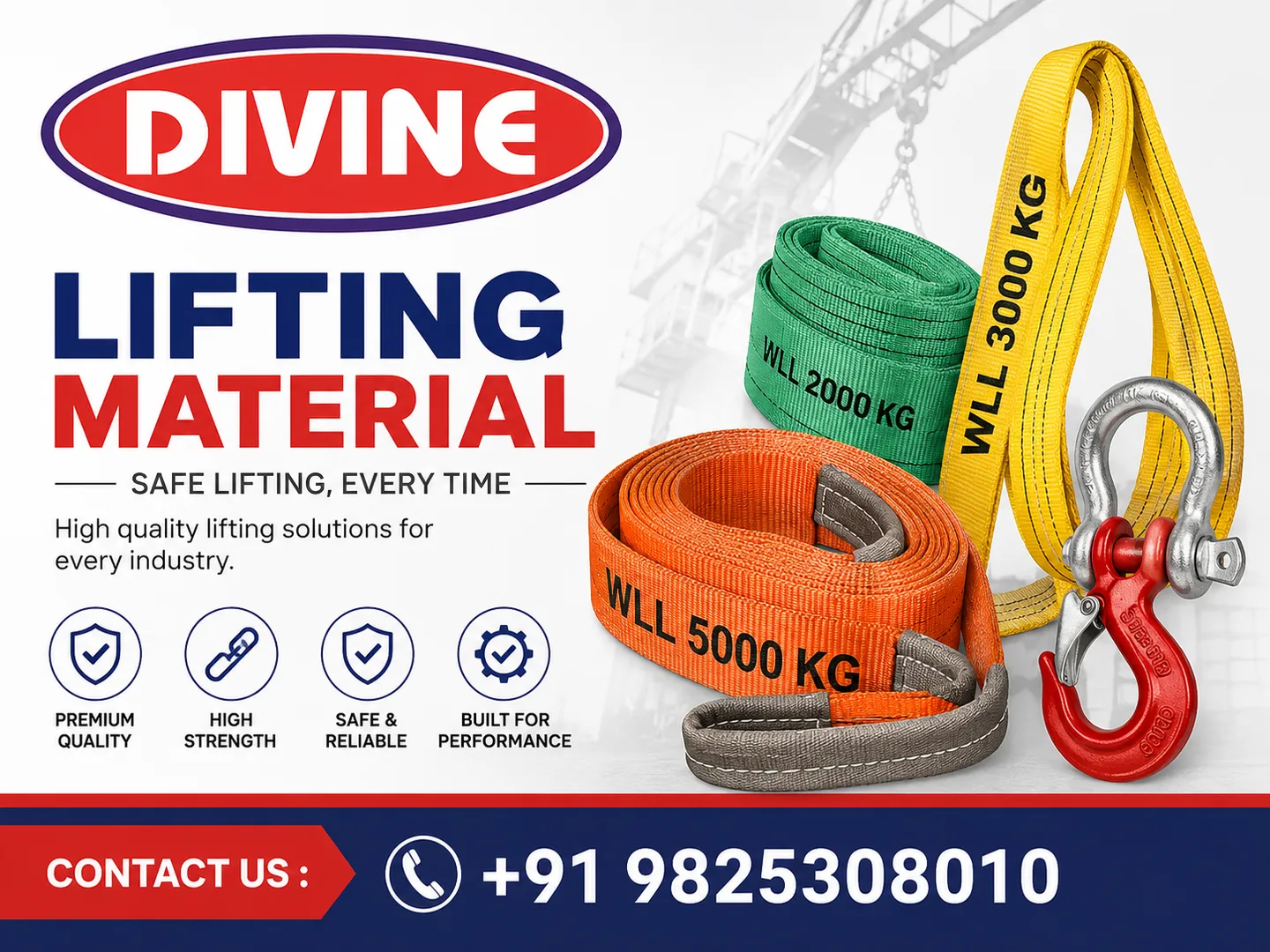
Lifting Sling Manufacturer in India – Complete Guide to Safe and Reliable Lifting Solutions
Introduction
India's industrial sector is growing rapidly, increasing the demand for safe, reliable, and high-performance material handling equipment. Among the most essential lifting products used across industries are lifting slings. From manufacturing plants and construction sites to ports, warehouses, steel industries, and heavy engineering facilities, lifting slings play a critical role in handling heavy loads safely and efficiently.
As a trusted Lifting Sling Manufacturer in India, manufacturers today offer a wide range of lifting solutions designed to meet different load capacities, applications, and operational requirements.
This blog explains the different types of lifting slings, their applications, benefits, and how to choose the right lifting sling for industrial use.
What is a Lifting Sling?
A lifting sling is a flexible material handling device used for lifting, moving, securing, and positioning heavy loads with cranes, hoists, and other lifting equipment.
Unlike rigid lifting equipment, slings provide flexibility and can safely handle loads of different shapes and sizes.
Common materials used for lifting slings include:
- Polyester
- Nylon
- Wire Rope
- Alloy Steel Chain
- High-performance synthetic fibers
The selection of the right sling depends on factors such as load weight, lifting method, working environment, temperature, and the shape of the material being lifted.
Types of Lifting Slings Available in India
1. Polyester Webbing Sling
A Polyester Webbing Sling is one of the most widely used lifting solutions in modern industries. It is manufactured using high-tenacity polyester yarn and designed for safe and efficient lifting operations.
Webbing slings are lightweight, flexible, and easy to handle. They are commonly used for lifting machinery, fabricated components, pipes, steel structures, and delicate finished products.
Key Benefits:
- Lightweight and easy to handle
- Flexible construction
- Helps protect delicate load surfaces
- Resistant to moisture
- Available in different capacities and lengths
- Suitable for various lifting applications
2. Round Lifting Sling
Round slings are manufactured with continuous polyester load-bearing fibers enclosed inside a protective outer cover.
They provide excellent flexibility and are ideal for lifting cylindrical, irregular, and sensitive loads.
Round slings are commonly used in:
- Heavy engineering industries
- Steel plants
- Construction projects
- Shipping and logistics
- Power plants
- Manufacturing industries
3. Flat Endless Sling
Flat endless slings are designed in a continuous loop configuration. They offer multiple contact points and can be used in vertical, choker, and basket lifting methods.
This design allows the sling to be rotated regularly, helping distribute wear across different sections of the sling.
4. Multi-Leg Lifting Slings
Multi-leg lifting slings are designed for lifting heavy and balanced loads using multiple lifting points.
Common configurations include:
- Two-leg lifting sling
- Three-leg lifting sling
- Four-leg lifting sling
These slings are commonly used for machinery, fabricated structures, containers, and heavy industrial equipment.
5. Wire Rope Slings
Wire rope slings are suitable for demanding industrial environments where high strength and abrasion resistance are required.
They are commonly used in:
- Construction
- Mining
- Steel industries
- Marine applications
- Heavy machinery lifting
6. Chain Slings
Chain slings are manufactured using high-strength alloy steel chains and are suitable for heavy-duty lifting applications.
They are especially useful in high-temperature environments where synthetic slings may not be suitable.
Chain slings are widely used in:
- Foundries
- Steel plants
- Heavy engineering
- Shipyards
- Manufacturing industries
Why Choose Polyester Webbing Slings?
Polyester webbing slings have become increasingly popular in India because of their flexibility, lightweight construction, and ease of use.
Compared with traditional steel lifting equipment, synthetic webbing slings can reduce the risk of damaging painted, polished, or finished surfaces.
High-quality webbing sling belts are manufactured using high-tenacity polyester fibers and are available in different capacities and customized lengths.
Applications include:
- Crane lifting
- Machinery handling
- Industrial fabrication
- Loading and unloading
- Warehouse operations
- Construction material handling
- Marine and port operations
Applications of Lifting Slings
Lifting slings are used across a wide range of industries.
Construction Industry
Construction companies use lifting slings for handling steel structures, concrete materials, pipes, machinery, and fabricated components.
Manufacturing Industry
Manufacturers use lifting slings for moving machinery, raw materials, heavy components, and finished products.
Steel Industry
Heavy-duty lifting slings are used for handling steel coils, pipes, plates, fabricated structures, and industrial equipment.
Shipping and Logistics
Ports and logistics companies use lifting and lashing products for cargo handling and transportation.
Oil and Gas Industry
Specialized lifting solutions are required for handling pipes, valves, machinery, and heavy industrial components.
Power Plants
Lifting slings are used during installation, maintenance, and repair of turbines, generators, transformers, and other heavy equipment.
How to Choose the Right Lifting Sling?
Selecting the correct lifting sling is essential for workplace safety.
Before purchasing a sling, consider the following factors:
1. Load Capacity
Always select a sling with an appropriate Safe Working Load (SWL) for the application.
2. Length of Sling
The required sling length depends on the size of the load and the lifting angle.
3. Lifting Method
Different lifting methods include:
- Vertical lifting
- Choker hitch
- Basket hitch
- Multi-leg lifting
Each method affects the working load capacity of the sling.
4. Type of Load
Consider the shape, surface, edges, and weight distribution of the load.
Sharp edges may require protective sleeves or corner protectors.
5. Working Environment
Environmental conditions such as heat, chemicals, moisture, abrasion, and outdoor exposure should be considered before selecting a sling.
Importance of Quality in Lifting Slings
Lifting operations involve significant safety risks. Therefore, selecting a reliable Lifting Sling Manufacturer in India is extremely important.
A quality manufacturer focuses on:
- High-quality raw materials
- Accurate manufacturing processes
- Proper stitching and construction
- Load testing
- Product identification labels
- Quality inspection
- Safe working load markings
- Customized lifting solutions
Regular inspection and proper usage are equally important for maintaining lifting safety.
Lifting Sling Safety Tips
To improve workplace safety, follow these important guidelines:
- Never overload a lifting sling.
- Inspect the sling before every use.
- Do not use damaged or worn-out slings.
- Protect slings from sharp edges.
- Avoid twisting or knotting webbing slings.
- Ensure proper load balance before lifting.
- Follow recommended lifting angles.
- Store slings in a clean and dry location.
- Train operators in safe lifting practices.
Proper inspection and maintenance can significantly increase the service life of lifting equipment.
Why Indian Lifting Sling Manufacturers Are Growing Globally
India has become an important manufacturing hub for industrial lifting and material handling equipment.
Indian manufacturers are increasingly supplying products to domestic and international markets due to:
- Competitive manufacturing capabilities
- Availability of skilled engineering professionals
- Customized product manufacturing
- Advanced production technology
- Export-quality industrial products
- Cost-effective solutions
Modern lifting sling manufacturers in India offer customized capacities, lengths, designs, and configurations according to customer requirements.
Conclusion
Choosing the right lifting equipment is essential for improving productivity, protecting valuable materials, and ensuring workplace safety.
Whether you require a Polyester Webbing Sling, Round Sling, Flat Endless Sling, Multi-Leg Sling, Wire Rope Sling, or Chain Sling, it is important to select the correct product according to your lifting application.
A reliable Lifting Sling Manufacturer in India can provide customized, high-quality, and durable lifting solutions for industries such as manufacturing, construction, engineering, logistics, shipping, steel, and infrastructure.
With the right product selection, regular inspection, and proper lifting practices, businesses can achieve safer and more efficient material handling operations.
Frequently Asked Questions (FAQs)
Q1. What is the most commonly used lifting sling?
Polyester webbing slings and polyester round slings are among the most commonly used lifting slings because they are lightweight, flexible, and suitable for a wide range of industrial applications.
Q2. What is a webbing sling used for?
A webbing sling is used for lifting and handling machinery, fabricated components, pipes, industrial equipment, and other heavy loads.
Q3. Can lifting slings be customized?
Yes. Many lifting sling manufacturers provide customized lengths, capacities, configurations, and designs according to specific application requirements.
Q4. How often should lifting slings be inspected?
Lifting slings should be visually inspected before use and regularly checked according to workplace safety procedures and manufacturer recommendations.
Q5. Why choose a professional lifting sling manufacturer?
A professional manufacturer can provide quality-controlled products, proper identification, technical support, and lifting solutions suitable for specific industrial applications.
Keywords