Medium Lathe Machine Manufacturer: A Complete Guide to Precision, Performance, and Industrial Applications
Introduction
Medium lathe machines play an important role in modern manufacturing by helping industries produce accurate, consistent, and high-quality machined components. From general engineering workshops to industrial production facilities, these machines are widely used for turning, facing, threading, drilling, and other essential machining operations.
Choosing the right medium lathe machine manufacturer is an important decision for businesses that require dependable performance, machining accuracy, and long-term operational value. A well-designed medium lathe machine can support a wide range of machining requirements while providing a practical balance between machine capacity, versatility, and workshop space.
In this guide, we explore medium lathe machine manufacturing, key features, applications, selection criteria, and the factors businesses should consider before purchasing an industrial lathe machine.
What Is a Medium Lathe Machine?
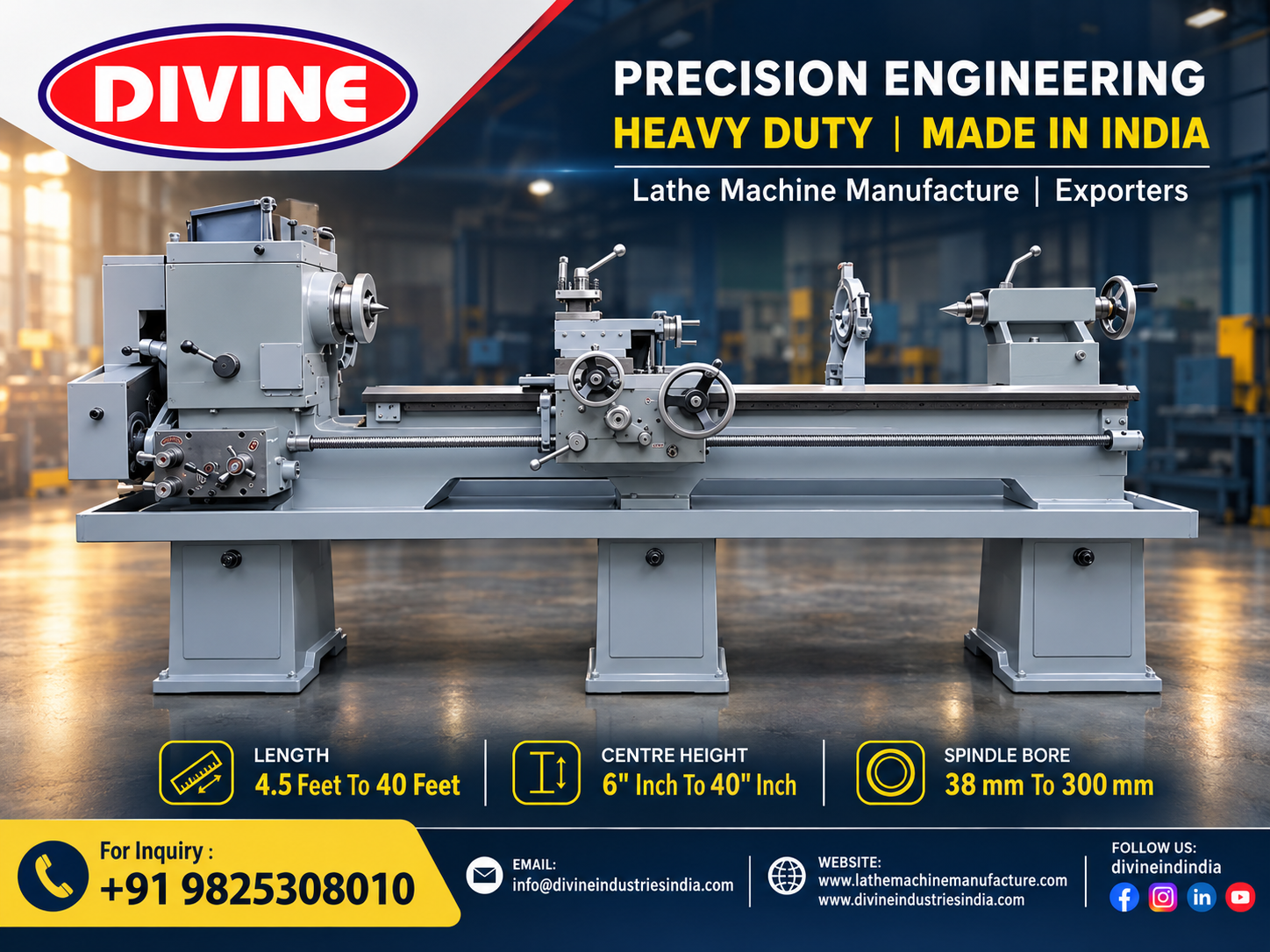
A medium lathe machine is an industrial machine tool designed to rotate a workpiece against a cutting tool to remove material and achieve the required shape, dimensions, and surface finish.
It is commonly used for machining cylindrical components, shafts, bushes, threaded parts, rollers, and various engineering products. Compared with smaller workshop lathes, medium lathe machines can offer greater machining capacity and flexibility for demanding industrial applications, depending on their specifications.
The ideal machine configuration depends on the workpiece dimensions, material type, production volume, and required machining tolerances.
How Is a Medium Lathe Machine Manufactured?
Manufacturing a reliable medium lathe machine requires careful engineering, quality-conscious production, and attention to the performance of individual components.
1. Machine Bed Manufacturing
The machine bed provides the main structural foundation. Its rigidity and guideway accuracy influence machine stability, alignment, and machining performance. Proper manufacturing and finishing processes help establish the foundation for accurate operations.
2. Headstock and Spindle Assembly
The headstock houses the spindle and associated drive components. The spindle assembly must be designed according to the required speed range, workpiece capacity, and operating conditions.
3. Carriage and Tool Post Assembly
The carriage supports the cutting tool and enables controlled movement along the machine bed. The cross-slide and tool post help operators perform turning, facing, and other machining operations.
4. Lead Screw and Feed Mechanism
The feed mechanism controls the movement of the cutting tool. Depending on the machine configuration, it supports automatic feeds and thread-cutting operations across selected settings.
5. Tailstock Assembly
The tailstock supports longer workpieces using a suitable centre and can hold compatible drilling accessories. Its alignment with the spindle is important for machining accuracy.
6. Assembly, Inspection, and Testing
Final assembly brings the machine components together. Inspection and operational testing help verify alignment, movement, functional performance, and the machine's readiness for its intended applications.
Key Features to Look for in a Medium Lathe Machine
When evaluating a medium lathe machine for industrial use, buyers should consider the following features:
- Rigid machine construction: Helps provide stability during machining operations.
- Accurate spindle assembly: Supports consistent workpiece rotation and machining results.
- Suitable speed and feed ranges: Allows the machine to accommodate different materials and machining requirements.
- Reliable carriage movement: Supports controlled tool movement and repeatable operations.
- Practical workpiece capacity: Ensures the machine can handle the required job dimensions.
- Convenient operation and maintenance: Helps simplify routine use, servicing, and inspection.
- Quality-conscious manufacturing: Supports dependable operation when combined with proper installation and maintenance.
The actual performance of a machine depends on its engineering, component quality, configuration, operating conditions, and maintenance practices.
Industrial Applications of Medium Lathe Machines
Medium lathe machines are used across a variety of industries because they can accommodate many conventional turning operations.
General Engineering
Engineering workshops use medium lathe machines to manufacture and repair shafts, bushes, spacers, threaded components, and custom-machined parts.
Automotive and Automobile Components
Suitable configurations can support machining work on selected automotive components, including cylindrical parts, pins, and shafts.
Industrial Machinery Manufacturing
Machinery manufacturers use lathe machines to produce components required for equipment assembly, maintenance, and replacement.
Fabrication and Maintenance Workshops
Maintenance teams use these machines to repair worn components, manufacture replacement parts, and perform machining work for industrial equipment.
Agricultural Equipment Manufacturing
Depending on capacity and tooling, medium lathe machines can be used to manufacture various turned components for agricultural machinery and related equipment.
How to Choose the Right Medium Lathe Machine Manufacturer
Selecting a manufacturer involves more than comparing the initial purchase price. Buyers should evaluate the machine's specifications, manufacturing capabilities, and suitability for their actual work requirements.
Consider these important factors:
1. Manufacturing experience: Look for a manufacturer with relevant experience in producing industrial lathe machines.
2. Machine specifications: Compare swing over bed, distance between centres, spindle bore, spindle speeds, and other relevant specifications.
3. Build quality: Ask about the machine bed, spindle system, guideways, drive mechanism, and component quality.
4. Application suitability: Explain the dimensions, materials, weights, and types of components you intend to machine.
5. Inspection and testing: Ask what quality checks and operational tests are performed before dispatch.
6. Technical support: Confirm the availability of installation guidance, operating instructions, spare parts, and after-sales support.
7. Overall value: Evaluate expected productivity, maintenance requirements, operating costs, and service support alongside the purchase price.
A manufacturer that understands your application can help you select a machine configuration that better matches your production requirements.
What Determines the Price of a Medium Lathe Machine?
The price of a medium lathe machine varies according to its size, specifications, construction, and configuration. There is no single price suitable for every industrial requirement.
Common price factors include:
- Distance between centres and swing capacity
- Spindle bore and spindle speed range
- Motor power and drive configuration
- Machine bed construction and guideway design
- Included accessories, tooling, and attachments
- Custom specifications and special requirements
- Transportation, installation, and service arrangements
For an accurate quotation, buyers should share their required machining capacity, component dimensions, material type, and intended applications with the manufacturer.
Medium Lathe Machine vs. Small Lathe Machine
The main difference is the intended work capacity and application.
A small lathe machine may be suitable for compact components, limited workshop space, and lighter machining tasks. A medium lathe machine may be more appropriate when a workshop needs greater workpiece capacity and flexibility for a broader range of industrial jobs.
However, size alone does not determine performance. Buyers should compare the machines' actual specifications and select the option that meets their machining requirements without unnecessary investment.
Why Quality Matters in Medium Lathe Machine Manufacturing
Machine quality affects more than the appearance of the finished equipment. Structural rigidity, spindle condition, alignment, feed performance, and component quality can all influence machining results.
A properly selected and maintained machine can help workshops improve consistency, reduce avoidable interruptions, and manage a range of production and maintenance jobs.
For manufacturers, maintaining quality throughout design, component production, assembly, and final inspection is an important part of delivering machinery that meets the buyer's intended application.
Frequently Asked Questions About Medium Lathe Machines
1. What is a medium lathe machine used for?
A medium lathe machine is used for turning, facing, threading, drilling with suitable accessories, and machining cylindrical or related components. Common applications include engineering workshops, industrial machinery manufacturing, and equipment maintenance.
2. How do I choose the best medium lathe machine manufacturer?
Compare manufacturing experience, technical specifications, machine construction, inspection procedures, application knowledge, spare-part availability, and after-sales support before making a purchase.
3. What specifications should I check before buying a medium lathe machine?
Important specifications include swing over bed, distance between centres, spindle bore, spindle speed range, motor power, feed options, thread-cutting capacity, and included accessories.
4. What is the price of a medium lathe machine?
The price depends on machine capacity, specifications, construction, accessories, and customization. Request a quotation based on your required workpiece dimensions and machining operations for a relevant estimate.
5. Can a medium lathe machine be used for heavy-duty industrial work?
It can be suitable for demanding industrial applications when its rated capacity, structural design, spindle performance, and tooling match the job requirements. The manufacturer's specifications should always be checked before machining heavy workpieces.
6. Which industries use medium lathe machines?
General engineering, industrial machinery, automotive component manufacturing, agricultural equipment manufacturing, and maintenance workshops are among the industries that use medium lathe machines.
7. How can I maintain a medium lathe machine?
Follow the manufacturer's maintenance schedule, lubricate specified points, keep guideways clean, inspect belts and drive components, monitor unusual vibration or noise, and verify machine alignment when required.
Conclusion
A medium lathe machine is a versatile investment for industrial workshops and manufacturing businesses that require reliable turning capabilities across different types of components. Selecting the right machine involves understanding its specifications, evaluating construction quality, and matching its capacity to the intended application.
Working with an experienced medium lathe machine manufacturer can help buyers make informed decisions about machine configuration, inspection, technical support, and long-term operational requirements.
Before purchasing, clearly define your machining needs and request detailed specifications and a quotation to identify the most suitable machine for your workshop.
Looking for a medium lathe machine for your industrial application? Contact a reliable manufacturer to discuss your required capacity, technical specifications, and customization needs.
Keywords