Roll Turning Lathe Machine: A Complete Guide to Efficient Roll Machining
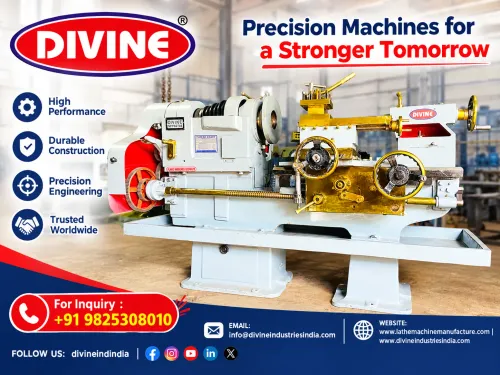
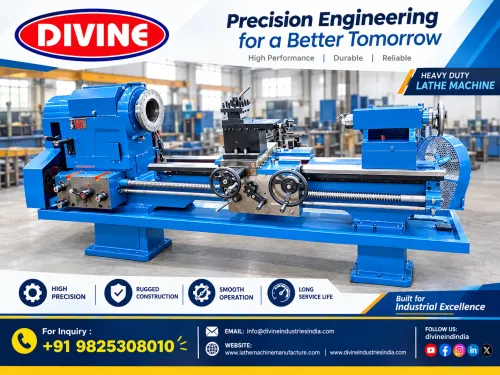
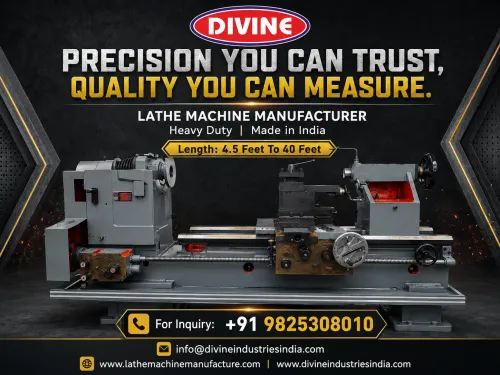
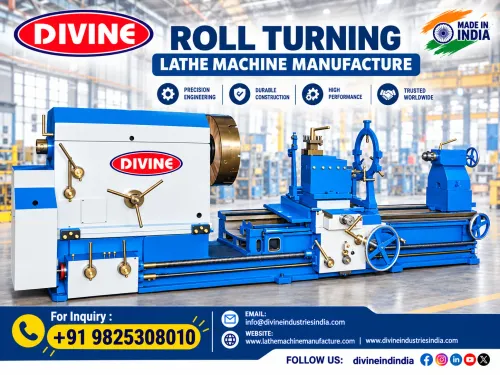
In modern manufacturing industries, precision machining plays an important role in maintaining product quality and production efficiency. A Roll Turning Lathe Machine is a specialized machine tool designed for machining large and heavy cylindrical rolls with accuracy and consistency. These machines are widely used in industries where rollers and shafts need precise turning, finishing, and dimensional control.
From steel and paper manufacturing to rubber, textile, printing, and other heavy engineering applications, roll turning machines help manufacturers achieve accurate roll dimensions and high-quality surface finishes.
What Is a Roll Turning Lathe Machine?
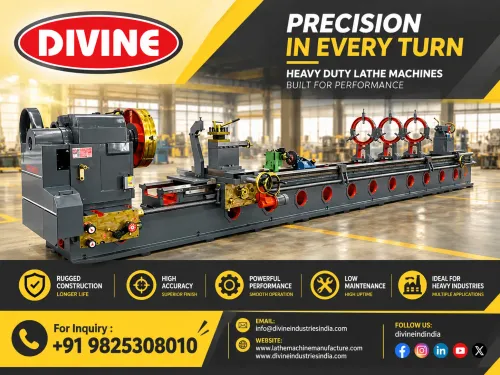
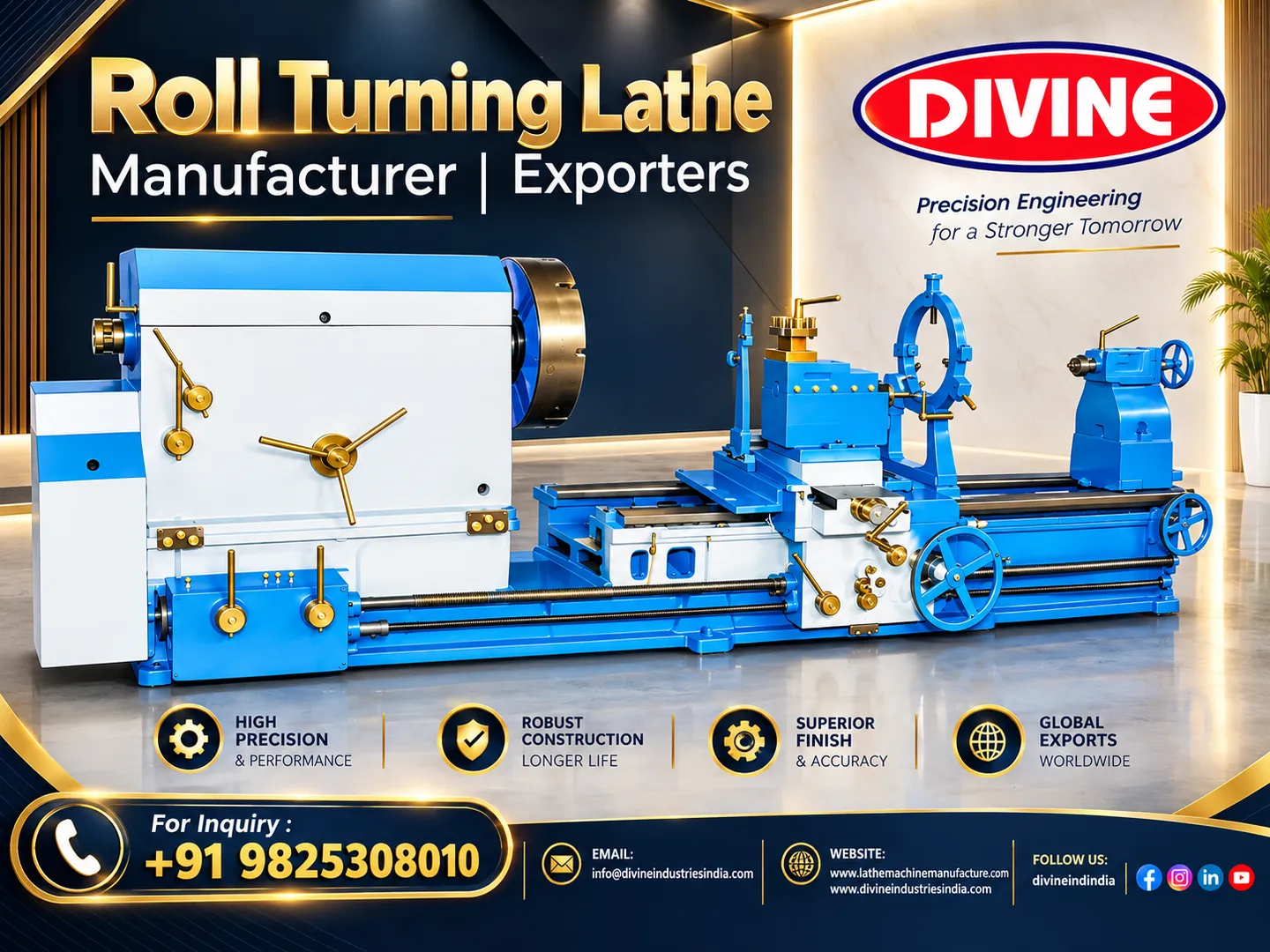
A Roll Turning Lathe Machine is an industrial lathe specifically designed to turn, machine, and finish large cylindrical rolls. Unlike conventional lathes, these machines are engineered to handle long workpieces with substantial weight and diameter.
The machine removes unwanted material from the surface of a roll through controlled cutting operations. Depending on the application, it can perform rough turning, finish turning, grooving, chamfering, and other machining operations.
Its rigid construction and powerful drive system make it suitable for demanding industrial environments.
How Does a Roll Turning Lathe Machine Work?
The basic working principle is similar to a conventional turning lathe. The roll is securely mounted and rotated at a controlled speed while a cutting tool moves along the workpiece.
The general machining process includes:
- Workpiece Loading: The roll is positioned and secured properly on the machine.
- Alignment: The workpiece is accurately aligned to minimize runout and machining errors.
- Machine Setup: Cutting tools, spindle speed, feed rate, and depth of cut are selected according to the material and machining requirement.
- Rough Turning: Excess material is removed to bring the roll closer to the required dimensions.
- Finish Turning: Fine machining is carried out to achieve the desired size and surface quality.
- Inspection: The finished roll is checked for diameter, straightness, surface finish, and other required parameters.
Advanced machines may also incorporate CNC controls for improved repeatability and automated machining.
Key Features of a Roll Turning Lathe Machine
A good roll turning machine is designed to provide stability, precision, and reliable performance. Common features include:
- Heavy-duty machine bed for improved rigidity
- High-torque spindle drive
- Strong workholding arrangement
- Accurate carriage movement
- Suitable support for long rolls
- Precision-engineered components
- Variable spindle speed options
- CNC control on selected models
- Efficient chip removal
- Reliable operation for continuous industrial production
The exact configuration can vary according to roll size, material, production requirements, and application.
Applications of Roll Turning Lathe Machines
Roll turning lathes are used in many manufacturing sectors. Some common applications include:
Steel Industry
Steel plants use large rolls in various production processes. Roll turning machines are used to restore roll dimensions and maintain the required surface profile.
Paper Industry
Paper manufacturing equipment uses different types of rollers. Precision machining helps maintain the required roll geometry and surface condition.
Rubber Industry
Rubber processing machinery often requires cylindrical rolls with accurate dimensions and smooth surfaces. Roll turning machines can be used for machining these components.
Textile Industry
Textile machinery uses rollers for material handling and processing. Accurate roll machining contributes to consistent machine operation.
Printing Industry
Printing equipment requires precisely manufactured rollers for controlled material movement and printing processes.
Heavy Engineering
Large shafts, cylinders, rollers, and similar components can be machined using heavy-duty roll turning equipment.
Benefits of Using a Roll Turning Lathe Machine
Choosing a specialized roll turning machine can provide several advantages for industrial manufacturers.
1. High Machining Accuracy
The rigid machine structure and controlled tool movement help achieve consistent dimensions across the workpiece.
2. Suitable for Large Workpieces
These machines are designed to handle long and heavy rolls that may be difficult to machine efficiently on standard lathes.
3. Better Surface Finish
Proper tooling and finishing operations can produce the required surface quality for different industrial applications.
4. Improved Productivity
Powerful drives and optimized machining parameters allow manufacturers to process large rolls efficiently.
5. Repeatable Performance
CNC-controlled configurations can improve repeatability when multiple rolls require similar machining operations.
6. Reduced Manual Intervention
Modern machine controls can simplify setup and machining operations, reducing dependence on continuous manual adjustments.
Roll Turning Lathe Machine vs. Conventional Lathe
Although both machines operate on the basic turning principle, their construction and intended applications are different.
A conventional lathe is generally suitable for small and medium-sized components, while a roll turning lathe is engineered for large-diameter, long, and heavy cylindrical workpieces.
Roll turning machines typically provide:
- Greater load-bearing capacity
- More rigid construction
- Larger workpiece capacity
- Higher cutting power
- Specialized support arrangements
- Better suitability for long rolls
This makes them particularly useful for heavy-duty industrial machining.
Factors to Consider Before Buying a Roll Turning Lathe Machine
Selecting the right machine requires careful evaluation of the application. Important factors include:
Maximum Roll Diameter
Determine the largest diameter of roll that needs to be machined.
Maximum Workpiece Length
The machine should provide sufficient center distance and working travel for the longest roll.
Maximum Workpiece Weight
Check the machine's load capacity before selecting a model.
Spindle Power
Higher spindle power may be required for heavy material removal and difficult-to-machine materials.
CNC Control
For applications requiring repeatable machining and automated operations, CNC control can be an important consideration.
Cutting Tool Compatibility
Check whether the machine supports the tooling required for roughing, finishing, grooving, or profile machining.
Machine Construction
A rigid machine structure is important for minimizing vibration and maintaining machining accuracy during heavy cutting.
Maintenance Tips for Roll Turning Lathe Machines
Regular maintenance can help maintain machining accuracy and extend machine service life.
Some useful maintenance practices include:
- Keep guideways and machine surfaces clean.
- Follow the recommended lubrication schedule.
- Inspect cutting tools regularly.
- Check spindle and drive components periodically.
- Monitor unusual vibration or noise.
- Keep electrical and control systems clean.
- Verify workpiece alignment before machining.
- Inspect chuck, steady rests, and other workholding components.
- Follow the manufacturer's maintenance recommendations.
Preventive maintenance is generally more effective than waiting for a machine problem to affect production.
Why Precision Matters in Roll Machining
Rolls often operate as important components within larger production systems. Even a small dimensional or geometric variation can affect how a roll interacts with other components.
Accurate machining helps control important characteristics such as:
- Roll diameter
- Cylindricity
- Straightness
- Concentricity
- Surface finish
- Profile acc
Keywords